Address
304 North Cardinal
St. Dorchester Center, MA 02124
Work Hours
Monday to Friday: 7AM - 7PM
Weekend: 10AM - 5PM
Address
304 North Cardinal
St. Dorchester Center, MA 02124
Work Hours
Monday to Friday: 7AM - 7PM
Weekend: 10AM - 5PM
Many people confuse straw and hay, but these two materials serve entirely different purposes in farming and animal care.
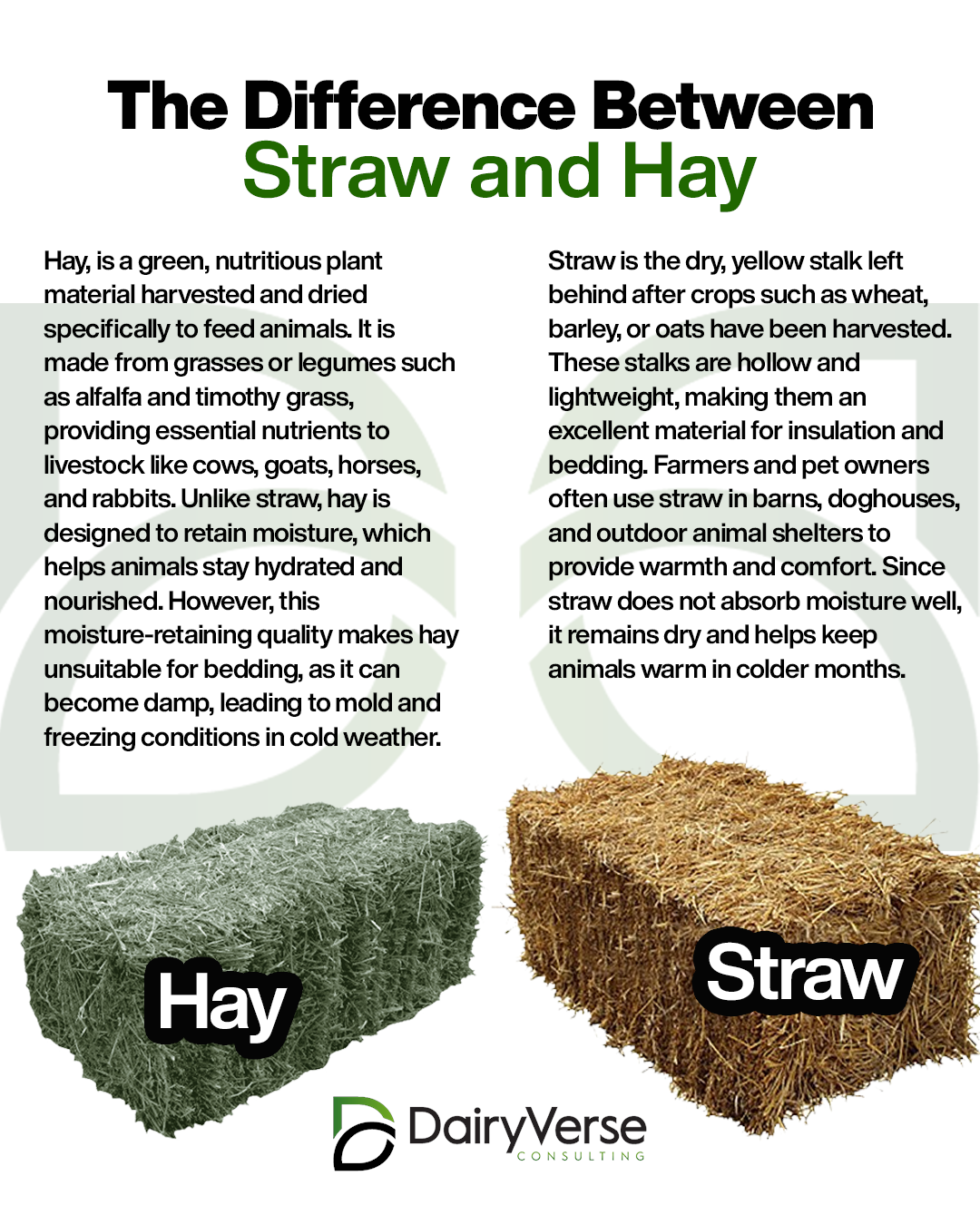


Many people confuse straw and hay, but these two materials serve entirely different purposes in farming and animal care. While they may appear similar at first glance, understanding their distinctions is crucial for their proper use.
Straw is the dry, yellow stalk left behind after crops such as wheat, barley, or oats have been harvested. These stalks are hollow and lightweight, making them an excellent material for insulation and bedding. Farmers and pet owners often use straw in barns, doghouses, and outdoor animal shelters to provide warmth and comfort. Since straw does not absorb moisture well, it remains dry and helps keep animals warm in colder months.
Hay, on the other hand, is a green, nutritious plant material harvested and dried specifically to feed animals. It is made from grasses or legumes such as alfalfa and timothy grass, providing essential nutrients to livestock like cows, goats, horses, and rabbits. Unlike straw, hay is designed to retain moisture, which helps animals stay hydrated and nourished. However, this moisture-retaining quality makes hay unsuitable for bedding, as it can become damp, leading to mold and freezing conditions in cold weather.
When it comes to nutritional value, hay is significantly more nutrient-rich than straw. Hay is grown and harvested specifically for animal consumption, containing essential vitamins, minerals, and proteins that help maintain livestock health. Straw, on the other hand, is a byproduct of harvested crops and has minimal nutritional content, making it unsuitable as a primary food source for animals.
While straw and hay may look alike, their uses are vastly different. Straw is an excellent bedding material due to its insulating properties, while hay provides essential nutrition to livestock. Understanding their differences ensures that animals receive the proper care, whether through comfortable bedding or a nutritious diet.