Why Your Cow Is Struggling to Conceive

Understanding the Hidden Causes Behind Delayed Conception

Reproductive challenges in cows can be frustrating, especially when everything seems normal at first glance. If your cow has been served but keeps coming back on heat—or isn’t getting pregnant at all—there may be more going on than meets the eye. Let’s explore some common (yet often overlooked) reasons your cow might be struggling to conceive:


1. Poor Body Condition

Cows that are too thin or too fat may experience hormonal imbalances. A cow needs just the right body condition score (BCS) to ovulate normally and sustain a pregnancy.

What to do:
Ensure she’s on a balanced diet rich in energy, protein, and minerals. Use dairy meal and mineral supplements to support her condition—especially during the dry season or post-calving recovery.


2. Silent or Weak Heat Signs

Sometimes a cow may not show clear signs of heat, making it easy to miss the right time for service. This is often due to stress, poor nutrition, or underlying reproductive issues.

What to do:
Observe cows at least twice a day for heat signs—early morning and late evening. You can also use heat detection aids like tail paint or mount detectors.


3. Uterine Infections (Metritis or Endometritis)

After calving, a cow’s uterus needs to clean out properly. If not, bacteria can thrive and cause infections that affect fertility.

What to do:
Watch for abnormal discharge, bad odor, or delayed return to heat. A vet can help with diagnosis and treatment—often with antibiotics or uterine flushing.


4. Poor Timing of Insemination

Even with a healthy cow, if insemination doesn’t happen at the right time, fertilization may fail. The egg is only viable for a few hours.

What to do:
Inseminate 12–18 hours after first signs of standing heat. Work closely with an experienced AI technician.


5. Mineral Deficiencies

Lack of key minerals like phosphorus, selenium, and copper can affect hormone production, heat expression, and embryo survival.

What to do:
Add mineral blocks or powdered supplements to their daily feed. Talk to your agrovet about fertility-specific supplements.


6. Bull Issues (for Natural Service)

If you’re using a bull, he could be the reason—not the cow. Low libido, poor sperm quality, or STIs like trichomoniasis can cause low conception rates.

What to do:
Get the bull checked by a vet, especially if multiple cows aren’t conceiving after being served by the same bull.


7. Heat Stress or Disease

High temperatures, mastitis, foot rot, or other illnesses can reduce fertility. Stress reduces appetite, hormone levels, and immune strength—all critical for reproduction.

What to do:
Provide shade, clean water, and treat any illnesses early. A healthy cow is a fertile cow.

Consider Using a Fertility Support Product

Products like Fertility+® are specially formulated to address reproductive challenges and improve conception outcomes in dairy cows:

  • Fertility+® addresses reproductive challenges, including delayed and silent heat, dystocia (difficult labor), and retained afterbirth.
  • It guarantees improved fertility and conception rates in heifers.

Ask your agrovet for more details or a recommendation based on your cow’s condition.


How to Take Care of a Lactating Cow

Maintain High Milk Yield, Health & Timely Heat Return

A lactating cow is like a high-performance engine, she gives her best only if cared for right. From the moment she calves, how you feed her, manage her environment, and monitor her health determines how much milk she produces, how soon she returns to heat, and how long she stays productive.

Here’s how to do it right:


✅ 1. Prioritize Nutrition

Milk production drains a cow’s energy fast, especially in early lactation.

  • Give high-energy feeds like maize germ, dairy meal, or total mixed rations (TMR).
  • Provide quality forages (e.g. Napier grass, lucerne, silage).
  • Include protein supplements like sunflower or cottonseed cake.
  • Add minerals & salts daily — they support milk production and hormone balance.

🟡 Tip: Appetite often drops after calving. Use appetite boosters like Tranzpro® to kickstart feed intake.

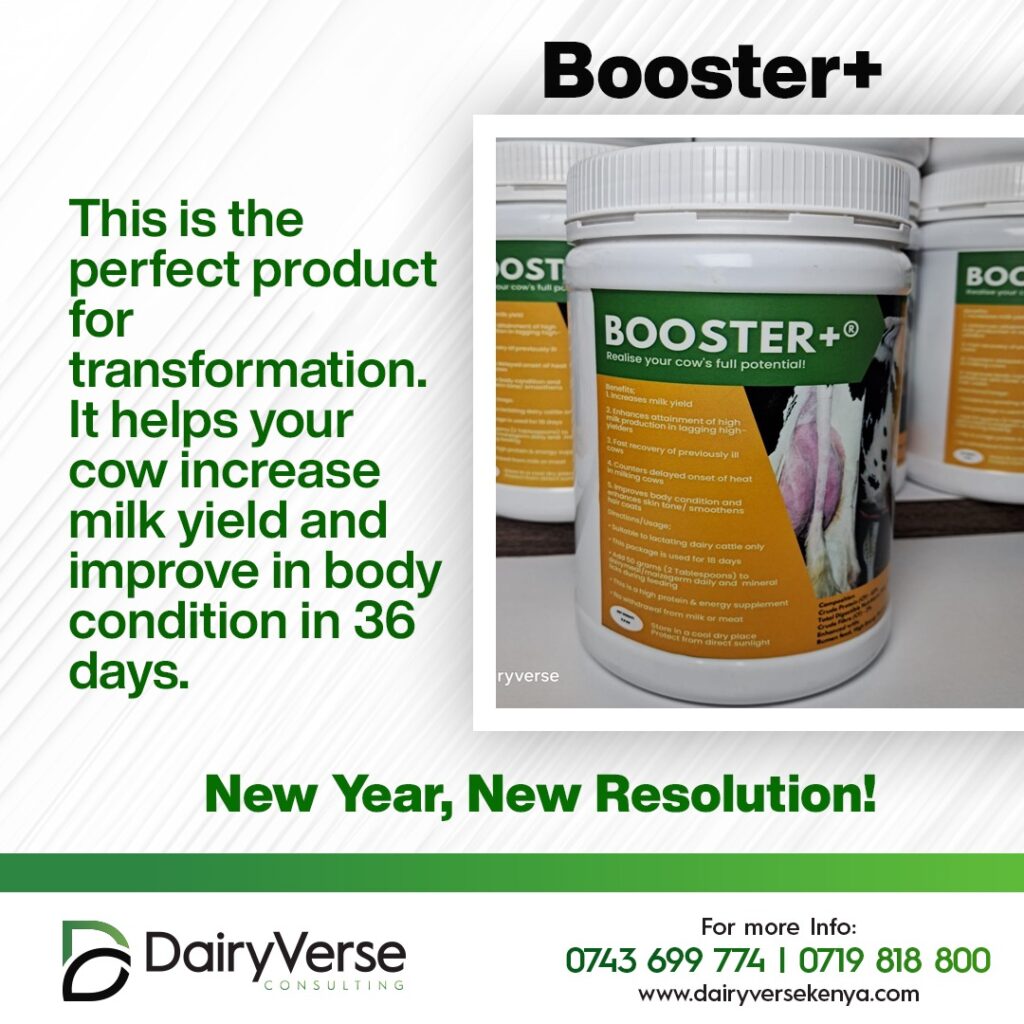
💪 Don’t forget the power of Booster+®:

  • Increased Milk Yield – Especially useful for cows lagging in milk production.
  • Recovery Support – Helps sick or weak cows bounce back quickly to full strength.

✅ 2. Ensure Clean Water Supply

Milk is over 85% water.
🚰 A cow producing 20+ liters of milk needs 80–120 liters of clean, fresh water daily.
Place water near feeding points to encourage drinking.


✅ 3. Hygiene = Health

  • Keep the udder clean to avoid mastitis.
  • Wash teats before and after milking.
  • Milk in a stress-free and calm environment.

📌 Disinfect teats with iodine or udder sanitizers after every session.


✅ 4. Watch Her Body Condition

  • Too thin? She might be losing energy too fast.
  • Too fat? She could delay coming into heat.
    Aim for a Body Condition Score (BCS) of 2.5 to 3.5 during lactation.

✅ 5. Monitor Heat Signs & Cycle

A healthy cow should come to heat within 45–60 days after calving.
If she’s eating well, healthy, and stress-free, her body resumes cycling fast.

📌 Use heat detection aids or simply observe early morning and late evening behaviors like mounting or mucus discharge.


✅ 6. Support Her Recovery After Calving

Post-calving recovery affects everything.

  • Use Tranzpro® immediately after calving to prevent retained placenta and boost recovery.
  • Booster+® also supports quick recovery, especially for cows that were sick or had difficult calving.
  • Deworm and supplement with vitamins within 2 weeks.

✅ 7. Give Her Rest Time

Allow her to lie down for at least 12 hours a day.
This improves blood flow to the udder, boosting milk production.


🌟 Bottom Line

A lactating cow is your farm’s engine.
If you fuel her right, clean her space, and listen to her signals, she’ll give you more milk, stay healthy, and be ready to conceive again.

Dairyverse Tip:
Don’t wait until she drops in production, daily care equals daily profit.


Hypomagnesaemia in Cows (Also Known as Grass Staggers)

Did you know? Your cow doesn’t store magnesium in her body! That means she depends entirely on daily feed to get enough of it. When the body loses more magnesium than it gets, she can fall into a dangerous state called Hypomagnesaemia, a condition especially common in lactating cows grazing on lush, fast-growing grass.


🌱 Why It Happens:

  • Young, rapidly growing grasses (especially ryegrass) are low in magnesium.
  • High levels of potassium fertilizer in pastures can block magnesium absorption.
  • Lactating cows lose more magnesium through milk production, increasing their risk.
  • During spring, when pasture is lush but low in minerals, cases often rise.

⚠️ Signs to Watch For:

  • Restlessness or nervousness
  • Staggering or uncoordinated movements
  • Twitching, convulsions, or sudden collapse
  • Aggressive or overly excitable behavior
  • In severe cases, cows may die suddenly with no warning.

💊 Treatment & Prevention:

  • Give magnesium supplements (e.g., magnesium oxide or magnesium sulfate).
  • Offer mineral licks or blocks high in magnesium.
  • Avoid over-applying potassium-rich fertilizers on grazing fields.
  • Provide slower-growing forages like clovers and legumes which have more magnesium.
  • Act fast if symptoms appear — early treatment can save lives!

👨🏽‍🌾 Farmer Tip: Prevention is cheaper and safer than treatment. Don’t wait for symptoms, talk to your vet or nutritionist about your cows’ magnesium needs today.


Blood in Cow Milk? Here’s What Every Dairy Farmer Should Know.

At Dairyverse, we know how worrying it is to spot blood in your cow’s milk — especially when you’re doing everything right. But take a deep breath. This issue is more common than you think, and the cause is often manageable when addressed early.

Let’s walk through the causes, what to do, and how to prevent it from happening again.


🔍 What Causes Blood in Cow Milk?

1. Udder Trauma (The Silent Injury)
One of the most common causes. When a cow hits her udder — maybe she was kicked by another animal, lay awkwardly, or bumped against a structure — small blood vessels inside the udder can rupture. This leads to reddish or pinkish milk, especially in one quarter.

2. Mastitis (The Invisible War)
Mastitis is an infection of the udder tissue. In some cases — especially hemorrhagic mastitis — blood leaks into the milk due to inflammation and broken blood vessels. Signs include:

  • Hot or swollen udder
  • Milk clots or flakes
  • Reduced yield
  • Cow appearing dull or uncomfortable

3. First-Time Heifers
It’s common for freshly calved cows to have small traces of blood in their first milk. This is due to the stress on blood vessels as the udder adjusts to milk production.

4. Rough or Faulty Milking
Improper hand milking or poorly adjusted machines can tug the teats harshly, damaging internal capillaries. This can lead to bleeding — especially in high-producing cows.

5. Nutritional Deficiencies
A lack of key nutrients like Vitamin C, Vitamin K, or Copper can weaken blood vessels. Stress or poor feeding post-calving amplifies this.

6. Udder Conditions Like Hematoma or Tumors
In rare cases, internal growths or cysts in the udder could rupture, causing blood in milk. A vet should assess such cases immediately.


🛠️ What You Should Do Immediately

Step 1: Don’t Panic. Isolate the Milk.
Do not mix it with clean milk. It may not be fit for sale or consumption.

Step 2: Check the Udder
Feel each quarter. Look for heat, swelling, injury, or blood clots. A warm, painful quarter points to mastitis.

Step 3: Call a Vet If…

  • Blood persists for more than 2–3 days
  • The udder is unusually hard or leaking pus
  • The cow has a fever or appears dull

Step 4: Improve Milking Practices
Ensure your machines are working well. Avoid rough milking — even by hand. Teach farmhands proper techniques.

Step 5: Use Nutritional Support Products

Like Booster+® and Tranzpro to help cows recover faster and maintain a healthy udder.


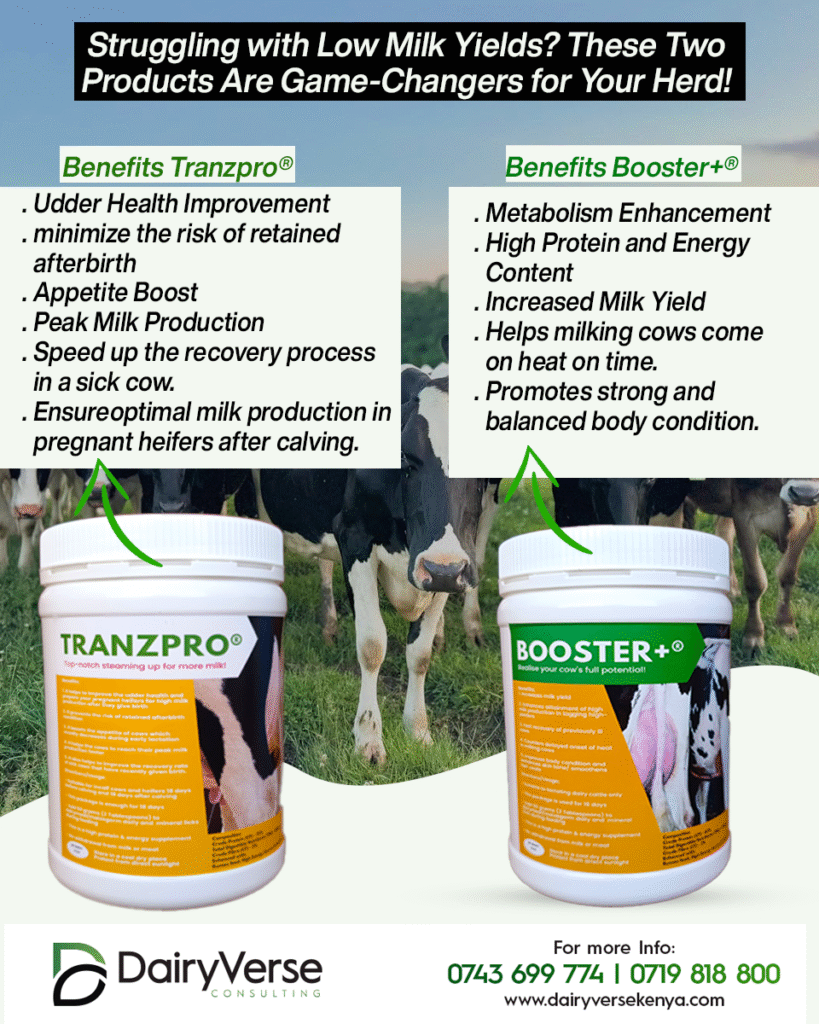
Powerful products that help your cows stay healthy and produce more milk.

Tranzpro® and Booster+® are two powerful products that help your cows stay healthy and produce more milk.

✅ Tranzpro® is given 18 days before calving and continued for 36 days after. It helps:

Keep the udder healthy

Prevent problems like retained afterbirth

Improve appetite after calving

Speed up recovery in sick cows

Boost milk production, especially in heifers after giving birth

Just give 2 tablespoons (50g) every day.

✅ Booster+® is given for 18 days. It helps:

Improve the cow’s metabolism (how the body uses food and energy)

Add more protein and energy to the cow’s diet

Increase milk production

Help cows come on heat at the right time

Improve body condition and reduce stunted growth

Just give 2 tablespoons daily.

These two products work together to support your cows before and after calving, making sure they recover well, eat better, and give more milk. 🐄💪🥛


Cattle Shed Floor Plan for a scalable dairy cow barn, Smart, Simple & Efficient.

At DairyVerse Consulting, we believe that the success of any dairy farm begins with smart design. That’s why we’ve created a practical and well-measured cattle shed floor plan tailored for a scalable herd, ensuring comfort, hygiene, and productivity.

This layout is designed to give each cow ample space to feed, rest, and move with ease. The shed includes:

✅ Feeding Trough – A dedicated feeding space along the front ensures efficient feeding.

💧 Water Pots – Strategically placed for easy access, helping maintain hydration and improve milk output.

🛌 Lying Area – Each cow has a clean, separate resting space, divided by fences to reduce stress and injuries.

💩 Drainage – A 1’ wide drain system keeps the shed clean and dry, reducing infection risk.

👶 Calf Space – Calves have a separate area at the back, ensuring safety while staying close to the cows.

🐄 Heifers’ space – Allowing continuity of the farm.

🍼 Modern Milking parlour design that can allow multiple cows to be milked at the same time.

🏬🐮 Fodder storage area – Well positioned to ensure that hygiene is well taken care of.

🚰 Water storage Area – With a capacity of 80,000 litres, you can be able to handle all farm needs with upto 100 animals! A well is also included.

🕳 Waste water collection and solid waste management is also put into consideration neatly.

🧋 Milk Value Addition! – Milk cooling at the farm level not only gives you a chance to look for market for your produce but also enhances chances of fetching better prices!

🐄🐮🐂 Segmenting the herd into respective groups helps in better management of the farm and enhanced profitability. You are able to feed them with precision and take good care of the entire herd.

👨‍🌾 Staff Welfare – Provision of good quality housing for your workers is the most progressive step towards succeeding as a dairy investors!

🛣🚧 Good paths throughout your farm are important for biosecurity and ease of operations in and out of the barn.

Key Considerations for Cow Shed
DimensionsSpace per Cow: Adult Dairy Cows: 50–60 sq ft (4.6–5.6 m²) per cow in free-stall barns or loose housing systems.

Dry Cows/Heifers: 40–50 sq ft (3.7–4.6 m²) per cow.

Calves: 25–30 sq ft (2.3–2.8 m²) per calf in individual pens or group housing.

Beef Cattle: 20–25 sq ft (1.9–2.3 m²) in confined systems, more if open yard.

Stall Dimensions (for Free-Stall Barns):
Width: 4 ft (1.2 m) per stall for Holstein cows; 3.5 ft (1.1 m) for smaller breeds like Jerseys.
Length: 8–9 ft (2.4–2.7 m) for head-to-head stalls; 7–8 ft (2.1–2.4 m) for single-row stalls.

Lying Area: Ensure a comfortable bed length of 6.5–7 ft (2–2.1 m) to allow cows to lie down and rise easily.

Feeding Area:Feed Alley Width: 12–14 ft (3.6–4.3 m) for two-way cow traffic; 8–10 ft (2.4–3 m) for one-way traffic.

Manger Space: 2–2.5 ft (0.6–0.75 m) per cow for simultaneous feeding; 3 ft (0.9 m) for high-producing dairy cows.

Walking and Movement Areas:Alley Width: 8–10 ft (2.4–3 m) for main alleys; 4–6 ft (1.2–1.8 m) for cross alleys.

Loafing Area: 100–120 sq ft (9.3–11.1 m²) per cow in loose housing for resting and socializing.

Height:
Roof Height: 10–12 ft (3–3.6 m) at the eaves for ventilation; higher (15–20 ft or 4.5–6 m) at the ridge for better airflow

Side Walls: 3–4 ft (0.9–1.2 m) high for open-sided sheds to allow natural ventilation.

Other Features:
Watering Space: 2–3 ft (0.6–0.9 m) of trough space per 10–15 cows; ensure 1 waterer per 20 cows.

Milking Parlor (if applicable): Plan 10–12 ft² (0.9–1.1 m²) per cow in the holding area.

Manure Management: Scraper alleys should be 8–10 ft (2.4–3 m) wide; include a 1–2% slope for drainage.

Example Layout for a 50-Cow Dairy Shed;
Total Area: 2,500–3,000 sq ft (232–279 m²) for loose housing (50 cows × 50–60 sq ft).

Shed Dimensions: Approximately 50 ft wide × 60 ft long (15 m × 18 m) for a rectangular layout.

Stalls: 50 stalls, each 4 ft wide × 8 ft long, arranged in two rows.

Feed Alley: 12 ft wide, running centrally or along one side.

Manure Alley: 8 ft wide, behind stalls, with a scraper system.

Roof: Sloped, 12 ft at eaves, 18 ft at ridge, with open sides for ventilation.

Additional Tips

Orientation: Orient the shed east-west to minimize direct sunlight and improve ventilation.

Flooring: Use concrete with a grooved surface for traction; provide soft bedding (sand, straw, or mats) in resting areas.

Ventilation: Ensure 50–60 air changes per hour; use fans or natural ventilation through open sides.

Scalability: Design with future expansion in mind, leaving space for additional stalls or storage

This layout not only promotes animal well-being but also supports better hygiene and ease of management for the farmer.

Tell our experts the problems you are facing in your farm now!
Feel free to reach out to our team on Call/WhatsApp:- 0743 699 774.


Making Sorghum Silage for Dairy Cows, When to Harvest & What Ratio Works Best.

🌾 The Best Stage to Harvest Sorghum for Silage

To get the most energy and digestibility from your sorghum, timing is everything. Here are the three main stages and what they mean:

  1. Young Stage (Vegetative):

    • Too early.
    • High water content, low sugar and energy.
    • Poor fermentation, watery silage.

  2. Milky Stage:

    • Kernels are soft and milky when pressed.
    • Still too early—can lead to lower dry matter and unstable silage.

  3. Dough Stage (Ideal):

    • Grains feel dough-like, not runny or too hard.
    • Best balance of sugar, dry matter, and energy.
    • Ensures proper fermentation and nutrient density.

🔸 Dairyverse Tip: Harvest sorghum for silage when it reaches the soft-dough to early-dough stage for best results.


🧪 How to Make Good Sorghum Silage

Here’s a quick guide:

  1. Chop into short pieces (about 1–2 cm length)
  2. Pack tightly in a silo, pit, or drum to remove air
  3. Cover properly with airtight plastic to block oxygen
  4. Let it ferment for 21–30 days before opening

Optional but beneficial:

  • Add molasses or fermenters to improve sugar levels and fermentation
  • Mix with legume fodder (like lucerne or desmodium) for protein boost

🐄 Feeding Ratio: How Much Sorghum Silage to Give?

A good feeding ratio depends on your cow’s weight, milk production, and other feeds available.

But here’s a general guide for lactating cows:

  • 15–25 kg of sorghum silage per cow per day
  • Combine with:

    • 3–5 kg of dairy meal (or another protein source)
    • 1–2 kg legume hay if possible
    • Clean water & minerals freely available

Remember, silage is energy-rich but low in protein, so balance is key.


📌 Final Word from Dairyverse

Feeding sorghum silage can greatly support milk production, especially when:

  • Harvested at the right stage
  • Stored and fermented well
  • Balanced with protein and minerals


Understanding Vaginal Prolapse in Cattle: Causes, Treatment, and Prevention

What Is Vaginal Prolapse?

Vaginal prolapse is a condition in which part of a cow’s vaginal tissue protrudes outside the vulva, usually appearing as a swollen, reddish-pink mass. This often occurs during the last trimester of pregnancy, especially as calving approaches. Although it may look alarming, with timely treatment and proper care, many cows can recover and carry their pregnancy to term.


⚠️ Is It Harmful?

Yes, it can be harmful if left untreated:

  • The exposed tissue is vulnerable to injury, drying, and infection.
  • It can cause discomfort, difficulty urinating, and complications during calving.
  • In severe or repeated cases, it may lead to miscarriage or threaten the life of the cow.

❓ What Causes Vaginal Prolapse?

Several factors contribute to the condition:

  • High estrogen levels in late pregnancy (relaxes pelvic ligaments and soft tissues)
  • Excess body condition (overweight cows are more prone)
  • Multiple pregnancies (looser tissues from past deliveries)
  • Poor-quality feed leading to bloating or constipation (causes straining)
  • Genetic predisposition
  • Environmental factors like lying on sloped ground or prolonged recumbency

🧪 How Common Is It?

  • It’s relatively common in heavily pregnant cows and heifers.
  • Frequency varies by breed, genetics, nutrition, and management.
  • Some herds may hardly see it, while others may experience multiple cases in a season — especially if genetic susceptibility is present.

🛠️ How Is It Treated?

  1. Veterinary intervention is critical. The vet will:

    • Clean the exposed tissue with antiseptic
    • Gently reposition it
    • Stitch the vulva using methods like the Bühner suture to prevent recurrence

  2. Care after treatment:

    • Keep the area clean and dry
    • Provide soft, digestible feed to prevent straining
    • Monitor the cow daily


🛡️ How to Prevent It

While you can’t always prevent prolapse, the risk can be reduced:

  • Avoid overfeeding in late pregnancy
  • Feed high-fiber diets to prevent constipation and bloating
  • Provide flat, comfortable resting areas
  • Cull cows with repeated prolapse cases — as it may be hereditary
  • Watch for early signs and call the vet immediately

✅ Summary

Vaginal prolapse in cattle is a serious but manageable condition. Early detection, proper treatment, and good management practices can ensure the cow recovers and gives birth safely. However, repeated prolapse is a red flag, and such animals are often removed from the breeding program to protect the herd’s future health.


Would you like this as a downloadable PDF or formatted post for Facebook farming groups?

Ask ChatGPT

You said:

can you generaTE SUCH IMAGE

ChatGPT said:

Image created

Generated image
Generated image
Generated image

Share

You said:

NO AN IMAGE OF A COW WITH Vaginal Prolapse

ChatGPT said:

Image created

Generated image
Generated image
Generated image

Share

You said:

GIVE ME THE PROMPT PLEASE

ChatGPT said:

Here’s the prompt you can use to generate a similar image of a cow with vaginal prolapse:


Prompt:

“A realistic photo of a cow with vaginal prolapse, showing the back view of a brown and white Holstein cow in a rural farm setting. The cow is standing on dirt ground near a wooden barn or shed, with a large red swollen mass protruding from its vulva. The background includes natural lighting, green trees, and a rustic environment. The image should be medically accurate, detailed, and suitable for educational or veterinary awareness use.”


Let me know if you’d like a version with less graphic detail or for a different angle/viewpoint.

You said:
Uploaded image

NEED A CAPTION FOR THIS

ChatGPT said:

Sure! Here’s a caption you can use:


🐾 Ever wondered how long your farm animals can live?
From cows to chickens, every animal has its own lifespan — and good care can make a big difference.
Swipe to learn and care better! 🐄🐐🐖🐎🐇🐑🦆🐓🐶🐱
#FarmLife #AnimalCare #VetFacts #AnimalLovers #FarmersEducation #AnimalWelfare


Would you like a Swahili version or a shorter one for WhatsApp status too?

You said:

SWIPE WHAT

ChatGPT said:

Great catch! Since it’s a single image (not a carousel), “swipe” doesn’t apply here. Let me revise the caption to match this format perfectly:


🐾 How Long Do Farm Animals Live?
From cows and goats to chickens and cats — every farm animal has a lifespan you should know.
Better care = longer, healthier life. 🐄🐐🐖🐎🐇🐑🦆🐓🐶🐱
#FarmLife #AnimalCare #VetFacts #AnimalWelfare #KnowYourAnimals #FarmingTips


Would you like a version that’s more casual, local (Kenyan tone), or even in Swahili?

You said:

MAKE THIS ARTICLE SHORTER FOR INSTAGRAM POST

ChatGPT said:

Sure! Here’s a shortened version of the vaginal prolapse article, perfect for an Instagram post:


🐄 VAGINAL PROLAPSE IN COWS — WHAT YOU NEED TO KNOW

This condition happens when part of a cow’s vaginal tissue pushes out, mostly during late pregnancy.

🔸 Is it serious?
Yes. If untreated, it can get infected, cause discomfort, or lead to miscarriage.

🔸 What causes it?
• Late pregnancy hormones
• Overfeeding (too much fat)
• Straining from constipation
• Genetics

🔸 Treatment:
A vet will clean, reposition, and stitch it up to prevent it from coming out again.

🔸 Prevention tips:
✔ Avoid overfeeding
✔ Give high-fiber feed
✔ Keep lying areas flat
✔ Cull cows that prolapse often

🧠 Early action = safe delivery. Always call a vet immediately when you notice signs.

#VetTips #CowCare #LivestockFarming #DairyFarming #AnimalHealth #ProlapseAwareness #FarmingInKenya


Let me know if you want a Swahili version or a carousel caption style.


What Causes Scours in Calves?

Help! My Calf Has Scours, What Should I Do?

Scours, commonly known as calf diarrhea, is one of the most distressing conditions a young calf can face. While it might seem like a minor issue, scours can lead to dehydration, weight loss, and even death if not addressed quickly. For dairy farmers, especially those raising calves from day one, understanding and managing scours is essential to protecting both animal health and economic productivity.


What Causes Scours in Calves?

Scours is usually triggered by:

  • Infections – bacteria (E. coli, Salmonella), viruses (Rotavirus, Coronavirus), or parasites (Cryptosporidium)
  • Poor colostrum intake – calves need high-quality colostrum within the first few hours of life
  • Unclean environments – dirty pens, feeding equipment, or bedding
  • Sudden changes in diet, stress, or cold weather

Signs to Watch Out For:

  • Loose or watery stool (yellow, white, or grey)
  • Weakness and fatigue
  • Dry mouth or sunken eyes (signs of dehydration)
  • Loss of appetite
  • Weight loss

How to Respond Immediately:

  1. Rehydrate – Use oral electrolytes to restore fluid and mineral balance.
  2. Separate the calf – Avoid infecting others; scours is often contagious.
  3. Clean the environment – Disinfect feeding bottles, pens, and hands.
  4. Call a vet – They’ll help diagnose the cause and determine if medication is needed.

Prevention Is Better Than Cure

Prevention begins with good hygiene, proper nutrition, timely vaccinations, and regular observation. Ensuring calves get enough high-quality colostrum and live in a clean, warm environment drastically reduces risk.


🟢 Where NdamaPlus® Comes In

While treatment is vital during scours, post-recovery nutrition and growth support are just as important. That’s where NdamaPlus® by DairyVerse shines.

NdamaPlus® is ideal for calves aged 1 to 15 months, formulated to:

  • Promote faster and healthier weight gain
  • Improve digestion and reduce bloat
  • Enhance coat condition for a visibly healthier animal
  • Completely eliminate pot-bellies within 3 months
  • Strengthen immunity and reduce post-scours recovery time

It’s not just about treating illness, it’s about building stronger calves from the inside out.


6 Things to Consider Before Serving a Heifer

Serving a heifer too early or under the wrong conditions can cost you more in the long run — from poor conception rates to calving complications and stunted milk production.

Here are 6 key things to check before deciding she’s ready:


1. Age and Weight

Heifers should be at least 15–18 months old and have reached 60–70% of their mature body weight.
Too young or too light = poor pregnancy outcomes.


2. Body Condition Score (BCS)

She should have a moderate BCS of 2.5–3.5 (on a 5-point scale).
Too fat = calving problems. Too thin = poor fertility.


3. Reproductive Readiness

She must have shown at least one or two normal heat cycles.
Don’t serve a heifer that hasn’t cycled naturally.


4. Health Status

Ensure she’s dewormed, vaccinated, and in good health.
No signs of disease, lameness, or stress.


5. Genetic Planning & Bull Match

Choose a bull with calving ease genetics to avoid hard births.
Avoid serving her with large or aggressive bulls.


6. Feeding Before and After Service

A heifer needs proper nutritional support before and after service.
Low energy or mineral deficiency at this stage can lead to early embryo loss or weak pregnancy. Support her with balanced feed and mineral licks.


✅ Final Word:

Serving a heifer is a long-term decision. When done right, it leads to better fertility, easier calving, and stronger lifetime production.