Unveiling the World of Dairy: Inside the Extensive Dairy Production System

Dive deep into the heart of dairy farming with our latest video, where we explore the extensive dairy production system that feeds millions around the globe.

What You’ll Learn:
Understanding Extensive Dairy Farming: Discover what sets extensive dairy systems apart from others, focusing on pasture-based methods and open land usage.
The Dairy Cow’s Life: We’ll walk you through the daily life of dairy cows in an extensive system, from grazing to milking, highlighting welfare and environmental considerations.
Sustainability and Efficiency: Learn how these systems can be both environmentally friendly and economically sustainable, balancing productivity with ecological health.
Challenges and Innovations: Explore common challenges such as land management, water usage, and adapting to climate change, alongside innovations that are shaping the future of dairy farming.
Global Perspectives: See how different regions around the world implement extensive dairy farming, adapting practices to local climates, cultures, and market demands.

Why Watch?
Whether you’re a consumer curious about your milk’s journey from farm to glass, an agriculture student, or a professional in the dairy industry looking for insights into sustainable practices, this video offers valuable knowledge and perspective.

Watch;

Timestamps:
00:00 – Introduction to Dairy Farming
00:15 – What is Extensive Dairy Production?
01:00 – A Day in the Life of a Dairy Cow
03:20 – Sustainability in Dairy Farming
04:45 – Overcoming Challenges
05:30 – Innovations in the Field
06:10 – Worldwide Practices
07:00 – Conclusion & Future Outlook

Subscribe for More:
Don’t forget to hit that subscribe button for more videos on agriculture, food production, and sustainability. Turn on notifications to stay updated with our latest content!

Hashtags:
#DairyFarming #Agriculture #SustainableFarming #DairyCows #FarmLife #EcoFriendly #FoodProduction

Join the conversation in the comments below! Share your thoughts, ask questions, or share your experiences with dairy farming.

Disclaimer: This video is for educational purposes only. Practices may vary based on location and regulatory frameworks. Always consult local guidelines when considering dairy production methods.

Reach our team via 0719 818 800/ 0734 725 728/ 0707 198 516 or
Whatsapp:- https://wa.me/254743699774
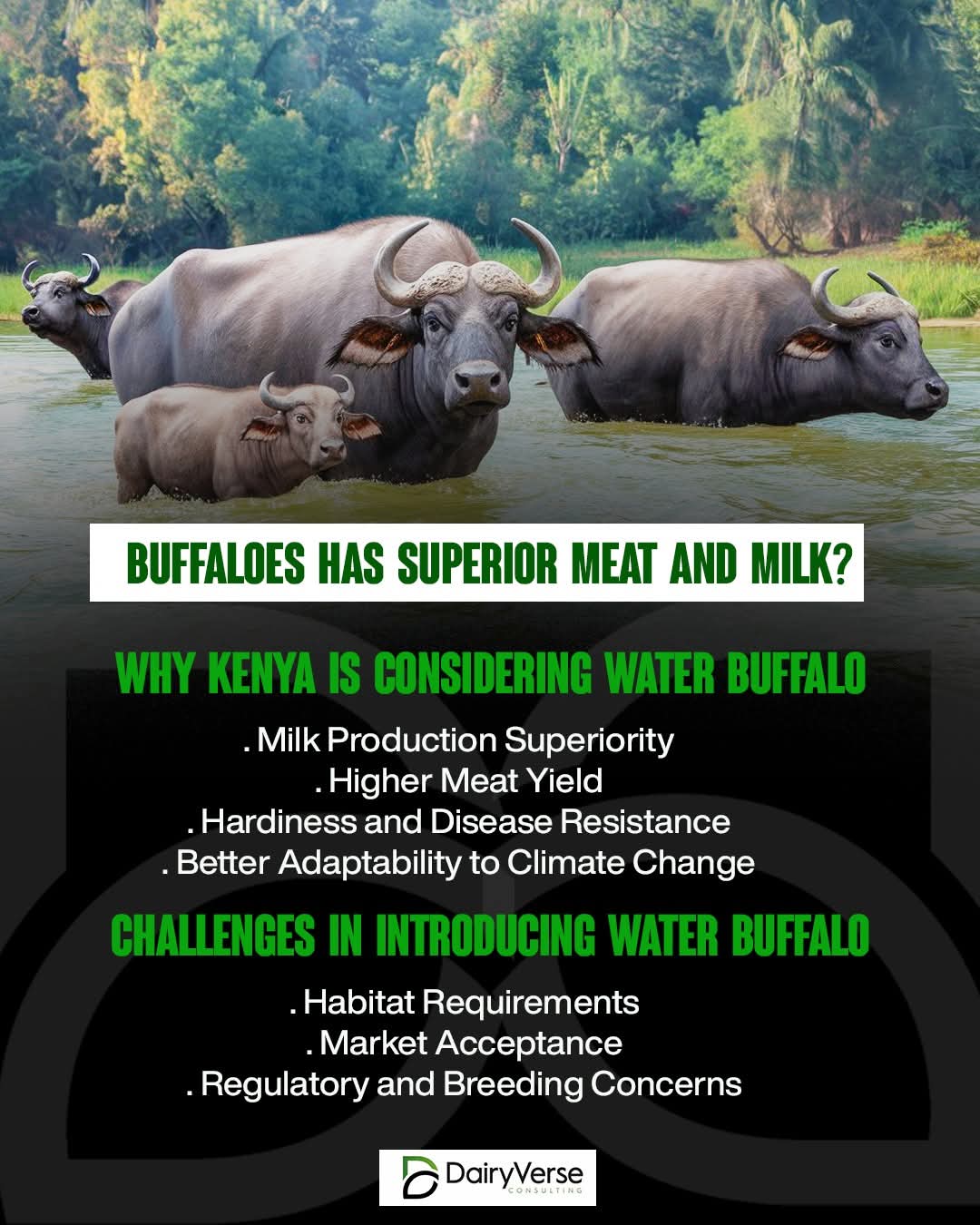


Why Kenya is Considering Water Buffalo

Kenya’s agricultural and livestock sectors are on the verge of a transformative shift with the potential introduction of South Asian water buffalo. Known for their superior meat and milk production, these buffalo species have been a cornerstone of the dairy and meat industries in countries like India, Pakistan, and Bangladesh. The question remains: Can they thrive in Kenya, and will they offer the expected economic and nutritional benefits?

Understanding South Asian Water Buffaloes
South Asian water buffaloes (Bubalus bubalis) are distinct from African buffaloes (Syncerus caffer). Unlike their African counterparts, which are mostly wild and untamed, South Asian water buffaloes have been domesticated for centuries, playing a significant role in dairy farming and meat production. These animals thrive in wetland areas, often submerging themselves in water to regulate body temperature and prevent heat stress.

The two major types of domesticated water buffalo are:
River Buffaloes – Primarily used for dairy production, yielding high-fat-content milk.

Swamp Buffaloes – More suited for labor and meat production, found predominantly in Southeast Asia and China.

The Appeal: Why Kenya is Considering Water Buffalo
1. Milk Production Superiority
Water buffalo milk is rich in butterfat (7-8%) compared to cow’s milk (3-4%), making it ideal for producing dairy products like cheese, yogurt, and ghee. This higher fat content results in creamier, nutrient-dense dairy products. With Kenya’s rising demand for milk and dairy derivatives, these buffaloes could provide an alternative to traditional cattle dairy farming.

2. Higher Meat Yield
Water buffalo meat is leaner than beef, with lower cholesterol and higher protein content. It is widely consumed in many Asian countries and could become a viable alternative to beef in Kenya, providing a more affordable yet nutritious protein source.

3. Hardiness and Disease Resistance
One of the key challenges facing cattle farming in Kenya is the prevalence of diseases like East Coast Fever and Foot-and-Mouth Disease. Water buffaloes have a higher resistance to these diseases, making them more sustainable for farmers who struggle with veterinary costs.

4. Better Adaptability to Climate Change
Given the unpredictability of climate conditions, water buffaloes’ ability to thrive in wetland ecosystems could be beneficial in Kenya. They are more resistant to droughts compared to traditional cattle and can utilize marshy lands unsuitable for other livestock.

Challenges in Introducing Water Buffalo to Kenya
1. Habitat Requirements
Water buffaloes thrive in environments with access to water bodies like rivers, dams, or swamps. Given Kenya’s semi-arid landscape in many regions, only select areas might be suitable for large-scale water buffalo farming.

2. Market Acceptance
Kenyan consumers are accustomed to cow’s milk and beef. While water buffalo milk is superior in nutrition, it has a distinct taste and composition that may require consumer education and marketing efforts.

3. Regulatory and Breeding Concerns
The introduction of non-native species requires strict biosecurity measures to prevent the spread of foreign diseases. Additionally, breeding programs would need to be established to ensure genetic diversity and adaptability to Kenya’s environment.

Global Success Stories
Countries like India and Pakistan have successfully integrated water buffalo into their agricultural systems, contributing to the world’s largest production of buffalo milk. Similarly, the Philippines has developed a hybrid buffalo breed known as the ‘Murrah Buffalo,’ which significantly boosts dairy output. If well implemented, Kenya could replicate such success in its livestock sector.

The introduction of South Asian water buffalo to Kenya presents promising opportunities for dairy and meat industries. Their superior milk and meat production, resilience to disease, and adaptability to climate change make them a compelling choice for livestock farming. However, success will depend on suitable rearing conditions, consumer acceptance, and regulatory compliance.

Would you be open to trying buffalo milk or meat as part of your diet? Share your thoughts!


Say No To Milk Fever, Ketosis and Low Milk Yield with Dairyverse High-yielder Protocol (DHYP Protocol)

Milk fever, ketosis and low milk yield  in recent calvers is preventable!

Adopt Dairyverse High-yielder Protocol (DHP Protocol);
1. Dry-off your cow exactly 8 weeks before calving. Give her dry cow mineral licks, 2 kg of dairymeal and plenty of fodder. Silage should be limited. Keep off DCP or any high calcium supplements.

2. 18 days before calving, increase quantity of dairymeal to 5 Kgs per day and introduce Tranzpro® at the rate of 2 tablespoons every morning. This will provide your cow with the necessary trace elements, proteins and energy guaranteeing over 20 litres in milk yield and zero cases of Milk fever and ketosis.

3. Proper transition cow management. Introduce maziwa mineral lick immediately after your cow calves down. Increase silage and dairymeal quantities based on milk yield.  Furthermore,  continue using Tranzpro® for 36 more days. This will help your cow hit peak production of over 30 litres and help her come on heat 45 to 60 days after calving.

Do you have a dry cow?
Have you adopted Dairyverse High-yielder Protocol (DHP Protocol)?


Comparing Brown Swiss and Ayrshire Cows

When it comes to dairy farming, selecting the right breed of cow is crucial. Among the popular choices are the Brown Swiss and Ayrshire breeds, both renowned for their milk production and unique characteristics. Let’s delve into what sets these breeds apart and why farmers might choose one over the other.


Origin and Appearance

Brown Swiss: Originating from Switzerland, Brown Swiss cows are one of the oldest and most resilient dairy breeds. They have a solid light to dark brown coat, with a white muzzle and dark nose. Their large size and strong build make them well-suited for rugged environments.

Ayrshire: Ayrshires hail from Ayrshire in Scotland. They are medium-sized cows known for their striking reddish-brown and white patches. Ayrshires have a more angular frame, emphasizing their efficiency in milk production.


Milk Production

Brown Swiss:

  • Known for producing milk with high protein and butterfat content, Brown Swiss milk is ideal for cheese-making.
  • They have an average milk yield of about 18,000 to 22,000 pounds (approximately 8,165 to 9,979 kg) per lactation cycle.
  • Their milk’s creaminess and quality are highly prized in the dairy industry.

Ayrshire:

  • Ayrshire cows excel in producing high volumes of milk with good quality.
  • Their milk is known for being well-balanced in protein and fat, making it versatile for various dairy products.
  • They average around 15,000 to 17,000 pounds of milk per lactation, depending on management practices.

Temperament and Adaptability

Brown Swiss:

  • Famous for their docile and gentle demeanor, Brown Swiss cows are easy to handle.
  • They thrive in diverse climates, including both hot and cold conditions, thanks to their hardy nature.
  • This breed’s adaptability makes it a preferred choice for farms in challenging environments.

Ayrshire:

  • Ayrshires are known for their active and slightly more spirited temperament compared to Brown Swiss.
  • They adapt well to varied management systems and do particularly well in pasture-based operations.
  • These cows are robust and less prone to hoof problems or diseases.

Feed Efficiency and Maintenance

Brown Swiss:

  • They are efficient converters of feed into milk but require slightly more feed than Ayrshires due to their larger size.
  • Their maintenance cost is offset by their milk’s premium quality and the breed’s longevity.

Ayrshire:

  • Ayrshires are highly efficient grazers, making them cost-effective for pasture-based systems.
  • Their moderate size means lower feed requirements compared to larger breeds like the Brown Swiss.

Longevity and Health

Brown Swiss:

  • These cows are known for their longevity, often producing milk for 10 years or more.
  • They have fewer health issues, particularly related to calving ease and metabolic diseases.

Ayrshire:

  • Ayrshires are hardy cows with fewer health issues and excellent fertility rates.
  • Their resilience ensures consistent performance even in less-than-ideal conditions.

Conclusion

Choosing between Brown Swiss and Ayrshire cows depends on a farmer’s goals and management practices. If you’re seeking a breed with exceptional milk quality and adaptability to extreme conditions, the Brown Swiss is an excellent choice. However, if you prioritize efficiency, versatility, and suitability for pasture-based systems, the Ayrshire shines. Both breeds bring unique strengths to the dairy industry, ensuring high productivity and profitability.


Selecting the Best Dairy Cow Breeds

When choosing the best dairy cow breed, it’s important to focus on factors like milk production, adaptability to your climate, feed efficiency, and the purpose of your dairy farm. Here’s a comprehensive guide to selecting the right breed for your needs.


Factors to Consider in Choosing a Dairy Cow Breed

  1. Milk Production Needs

    • Some breeds are known for high milk yield, while others excel in quality, such as butterfat and protein content. Choose a breed based on the specific product you aim to produce (e.g., fluid milk, cheese, or yogurt).

  2. Adaptability to Climate

    • Consider your local weather conditions. Some breeds thrive in tropical climates, while others are better suited for cooler regions.

  3. Feed Efficiency

    • Efficient feed-to-milk conversion reduces costs and increases productivity, especially important for small-scale operations.

  4. Calving Ease and Fertility

    • Breeds with good calving ease and higher fertility rates ensure consistent herd growth and less stress on the animals.

  5. Longevity and Disease Resistance

    • Healthier breeds with longer productive lifespans reduce replacement costs and ensure consistent milk production.


Top Dairy Cow Breeds

1. Holstein Friesian

  • Milk Yield: Highest among dairy breeds (up to 9,000 liters/year on average).
  • Milk Quality: Moderate butterfat (3.5%) and protein levels.
  • Adaptability: Best suited for intensive dairy farming systems.
  • Notable Traits: High productivity but may require more feed and management.

2. Jersey

  • Milk Yield: Lower yield (4,500–6,000 liters/year) but high-quality milk.
  • Milk Quality: High butterfat (4.5–5%) and protein content, ideal for cheese and butter.
  • Adaptability: Thrives in both tropical and temperate climates.
  • Notable Traits: Small in size, efficient feed converters, and known for a gentle temperament.

3. Guernsey

  • Milk Yield: Moderate (4,500–6,000 liters/year).
  • Milk Quality: Golden-colored milk with high beta-carotene, butterfat, and protein.
  • Adaptability: Performs well in warmer climates.
  • Notable Traits: Friendly disposition and lower feed requirements compared to larger breeds.

4. Ayrshire

  • Milk Yield: Moderate to high (5,500–8,000 liters/year).
  • Milk Quality: Balanced butterfat and protein levels (4% and 3.5%, respectively).
  • Adaptability: Hardy breed that adapts well to various climates and grazing systems.
  • Notable Traits: Longevity and strong udders, ideal for pastured systems.

5. Brown Swiss

  • Milk Yield: High (6,000–9,000 liters/year).
  • Milk Quality: Rich in protein, ideal for cheese production.
  • Adaptability: Thrives in cool climates but can adapt to warmer areas.
  • Notable Traits: Strong hooves and disease resistance, making them durable for mixed terrain.

6. Sahiwal

  • Milk Yield: Moderate (2,500–3,000 liters/year).
  • Milk Quality: High butterfat content, suitable for traditional dairy products.
  • Adaptability: Extremely hardy and ideal for tropical climates.
  • Notable Traits: Disease resistance and ability to produce on low-quality forage.

7. Gir

  • Milk Yield: Moderate (up to 3,000 liters/year).
  • Milk Quality: High butterfat, making it ideal for ghee and butter.
  • Adaptability: Thrives in hot and humid climates.
  • Notable Traits: Strong disease resistance and high fertility rates.

Breed Selection Based on Dairy Farm Goals

  • High Milk Production: Holstein Friesian, Brown Swiss
  • High Butterfat Content: Jersey, Guernsey, Sahiwal
  • Adaptability to Tropical Climates: Sahiwal, Gir, Jersey
  • Hardy and Low-Maintenance Breeds: Ayrshire, Brown Swiss
  • Premium Cheese and Butter Production: Jersey, Guernsey, Brown Swiss

Conclusion

Selecting the best dairy cow breed is a critical decision for your farm’s success. Evaluate your production goals, climate, and budget before choosing. Whether you prioritize milk yield, quality, or adaptability, understanding the unique traits of each breed will ensure a profitable and sustainable dairy farming operation.