Unveiling the World of Dairy: Inside the Extensive Dairy Production System

Dive deep into the heart of dairy farming with our latest video, where we explore the extensive dairy production system that feeds millions around the globe.

What You’ll Learn:
Understanding Extensive Dairy Farming: Discover what sets extensive dairy systems apart from others, focusing on pasture-based methods and open land usage.
The Dairy Cow’s Life: We’ll walk you through the daily life of dairy cows in an extensive system, from grazing to milking, highlighting welfare and environmental considerations.
Sustainability and Efficiency: Learn how these systems can be both environmentally friendly and economically sustainable, balancing productivity with ecological health.
Challenges and Innovations: Explore common challenges such as land management, water usage, and adapting to climate change, alongside innovations that are shaping the future of dairy farming.
Global Perspectives: See how different regions around the world implement extensive dairy farming, adapting practices to local climates, cultures, and market demands.

Why Watch?
Whether you’re a consumer curious about your milk’s journey from farm to glass, an agriculture student, or a professional in the dairy industry looking for insights into sustainable practices, this video offers valuable knowledge and perspective.

Watch;

Timestamps:
00:00 – Introduction to Dairy Farming
00:15 – What is Extensive Dairy Production?
01:00 – A Day in the Life of a Dairy Cow
03:20 – Sustainability in Dairy Farming
04:45 – Overcoming Challenges
05:30 – Innovations in the Field
06:10 – Worldwide Practices
07:00 – Conclusion & Future Outlook

Subscribe for More:
Don’t forget to hit that subscribe button for more videos on agriculture, food production, and sustainability. Turn on notifications to stay updated with our latest content!

Hashtags:
#DairyFarming #Agriculture #SustainableFarming #DairyCows #FarmLife #EcoFriendly #FoodProduction

Join the conversation in the comments below! Share your thoughts, ask questions, or share your experiences with dairy farming.

Disclaimer: This video is for educational purposes only. Practices may vary based on location and regulatory frameworks. Always consult local guidelines when considering dairy production methods.

Reach our team via 0719 818 800/ 0734 725 728/ 0707 198 516 or
Whatsapp:- https://wa.me/254743699774
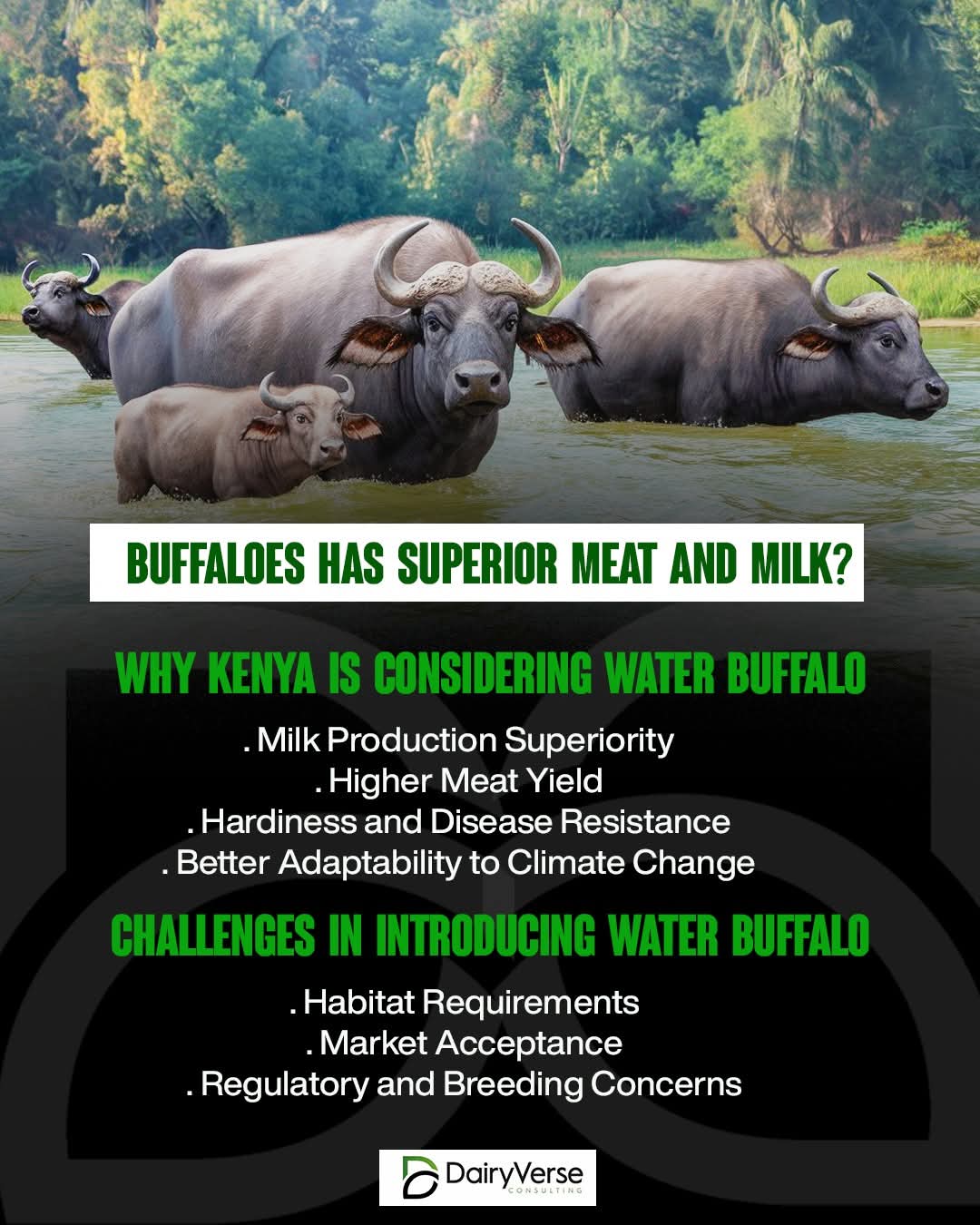


Why Kenya is Considering Water Buffalo

Kenya’s agricultural and livestock sectors are on the verge of a transformative shift with the potential introduction of South Asian water buffalo. Known for their superior meat and milk production, these buffalo species have been a cornerstone of the dairy and meat industries in countries like India, Pakistan, and Bangladesh. The question remains: Can they thrive in Kenya, and will they offer the expected economic and nutritional benefits?

Understanding South Asian Water Buffaloes
South Asian water buffaloes (Bubalus bubalis) are distinct from African buffaloes (Syncerus caffer). Unlike their African counterparts, which are mostly wild and untamed, South Asian water buffaloes have been domesticated for centuries, playing a significant role in dairy farming and meat production. These animals thrive in wetland areas, often submerging themselves in water to regulate body temperature and prevent heat stress.

The two major types of domesticated water buffalo are:
River Buffaloes – Primarily used for dairy production, yielding high-fat-content milk.

Swamp Buffaloes – More suited for labor and meat production, found predominantly in Southeast Asia and China.

The Appeal: Why Kenya is Considering Water Buffalo
1. Milk Production Superiority
Water buffalo milk is rich in butterfat (7-8%) compared to cow’s milk (3-4%), making it ideal for producing dairy products like cheese, yogurt, and ghee. This higher fat content results in creamier, nutrient-dense dairy products. With Kenya’s rising demand for milk and dairy derivatives, these buffaloes could provide an alternative to traditional cattle dairy farming.

2. Higher Meat Yield
Water buffalo meat is leaner than beef, with lower cholesterol and higher protein content. It is widely consumed in many Asian countries and could become a viable alternative to beef in Kenya, providing a more affordable yet nutritious protein source.

3. Hardiness and Disease Resistance
One of the key challenges facing cattle farming in Kenya is the prevalence of diseases like East Coast Fever and Foot-and-Mouth Disease. Water buffaloes have a higher resistance to these diseases, making them more sustainable for farmers who struggle with veterinary costs.

4. Better Adaptability to Climate Change
Given the unpredictability of climate conditions, water buffaloes’ ability to thrive in wetland ecosystems could be beneficial in Kenya. They are more resistant to droughts compared to traditional cattle and can utilize marshy lands unsuitable for other livestock.

Challenges in Introducing Water Buffalo to Kenya
1. Habitat Requirements
Water buffaloes thrive in environments with access to water bodies like rivers, dams, or swamps. Given Kenya’s semi-arid landscape in many regions, only select areas might be suitable for large-scale water buffalo farming.

2. Market Acceptance
Kenyan consumers are accustomed to cow’s milk and beef. While water buffalo milk is superior in nutrition, it has a distinct taste and composition that may require consumer education and marketing efforts.

3. Regulatory and Breeding Concerns
The introduction of non-native species requires strict biosecurity measures to prevent the spread of foreign diseases. Additionally, breeding programs would need to be established to ensure genetic diversity and adaptability to Kenya’s environment.

Global Success Stories
Countries like India and Pakistan have successfully integrated water buffalo into their agricultural systems, contributing to the world’s largest production of buffalo milk. Similarly, the Philippines has developed a hybrid buffalo breed known as the ‘Murrah Buffalo,’ which significantly boosts dairy output. If well implemented, Kenya could replicate such success in its livestock sector.

The introduction of South Asian water buffalo to Kenya presents promising opportunities for dairy and meat industries. Their superior milk and meat production, resilience to disease, and adaptability to climate change make them a compelling choice for livestock farming. However, success will depend on suitable rearing conditions, consumer acceptance, and regulatory compliance.

Would you be open to trying buffalo milk or meat as part of your diet? Share your thoughts!


Bella’s Improvement Story: From 1 Cup to 5 Litres of Milk and Now 7 Months Incalf and Now Colourful!

We begun this project at a time when the The animal was in poor body condition, suffered from silent heat and low yields. 
This cow was bony, with brown coat and struggled to rise up and walk. This unfortunate case case as a result of post-calving stress that affects cows that calved down recently. This case is normally characterized by loss of appetite making the animal consume less feeds. This results in a reduction in energy and other important nutrients. The overall effect is reduction in milk yield, silent heat, loss of body condition and it might lead to death of the animal. Additionally, the immunity of the animals lowers giving opportunistic diseases a chance to attack then animal causing more harm.

Watch full video:

Bella’s Transformation Story


Say No To Milk Fever, Ketosis and Low Milk Yield with Dairyverse High-yielder Protocol (DHYP Protocol)

Milk fever, ketosis and low milk yield  in recent calvers is preventable!

Adopt Dairyverse High-yielder Protocol (DHP Protocol);
1. Dry-off your cow exactly 8 weeks before calving. Give her dry cow mineral licks, 2 kg of dairymeal and plenty of fodder. Silage should be limited. Keep off DCP or any high calcium supplements.

2. 18 days before calving, increase quantity of dairymeal to 5 Kgs per day and introduce Tranzpro® at the rate of 2 tablespoons every morning. This will provide your cow with the necessary trace elements, proteins and energy guaranteeing over 20 litres in milk yield and zero cases of Milk fever and ketosis.

3. Proper transition cow management. Introduce maziwa mineral lick immediately after your cow calves down. Increase silage and dairymeal quantities based on milk yield.  Furthermore,  continue using Tranzpro® for 36 more days. This will help your cow hit peak production of over 30 litres and help her come on heat 45 to 60 days after calving.

Do you have a dry cow?
Have you adopted Dairyverse High-yielder Protocol (DHP Protocol)?


Causes of Adult Cow Mortalities, Key Areas to Focus On and Practical Solutions

The health and productivity of dairy cows are essential for a thriving operation. By addressing the key causes of adult cow mortalities, farmers can mitigate losses and improve overall herd performance. Below are four critical areas to focus on:


1. Nutritional/Metabolic Disorders

Cows with poor nutrition or metabolic imbalances are prone to conditions like ketosis, milk fever, and displaced abomasum. These issues lead to decreased productivity and higher mortality rates.

  • Solution: Incorporate Booster+®, a high-protein and energy-rich supplement that improves metabolic processes, boosts milk yield, and enhances body condition. It is particularly effective in helping previously ill cows recover and countering delayed heat onset in milking cows.

2. Infectious Diseases

Infections like mastitis and pneumonia remain a leading cause of cow fatalities. These diseases can spread rapidly within herds, especially under poor hygiene or stressful conditions.

  • Solution: Focus on early diagnosis and preventive care to reduce the impact of infections. Nutritional support, such as Tranzpro®, can improve recovery for sick cows while enhancing appetite and supporting peak milk production.

3. Notifiable Diseases

Diseases such as Foot-and-Mouth Disease (FMD) and Bovine Tuberculosis require immediate action due to their contagious and regulatory implications. Herd management and vaccinations are crucial in preventing outbreaks.

  • Solution: Proactive monitoring and supplementation can support cows’ overall resilience. Tranzpro® is particularly effective in minimizing risks during transitions, such as calving, and accelerating recovery.

4. Physical Injuries

Handling errors, accidents, or rough environments often result in physical injuries, which, if left untreated, can lead to infections or premature culling.

  • Solution: Prevention is key. Ensuring a safe environment and proper handling can minimize injuries, while targeted nutritional solutions can aid recovery for affected cows.

Enhance Herd Productivity with Targeted Solutions

Products like Booster+® and Tranzpro® are designed to address key challenges faced by dairy cows:

  • Booster+®: Enhances metabolism, increases milk yield, supports recovery, and improves body condition.
  • Tranzpro®: Promotes udder health, prevents complications like retained afterbirth, enhances appetite, and accelerates peak milk production.

By focusing on these critical areas and incorporating tailored solutions where necessary, you can ensure the health and productivity of your herd.


Silent Heat in Heifers: Understanding and Managing the Challenge

Silent heat, also known as subestrus, is a condition in which a heifer or cow undergoes normal ovarian cycles and ovulates but fails to display the noticeable signs of estrus (heat) that are typically associated with breeding readiness. This condition can make heat detection challenging for herd managers and lead to delays in breeding and potential losses in reproductive efficiency.


What Are the Signs of a Silent Heifer Who Needs to Be Served?

While silent heat lacks overt signs of estrus, there are subtle physical and behavioral cues that can help identify a heifer in need of service. These include:

Physical Signs

  1. Swollen Vulva: Mild swelling or moistness in the vulva may be present, though less pronounced than in regular heat.
  2. Mucus Discharge: A small amount of clear or slightly cloudy mucus may be visible on the vulva, tail, or hind legs.
  3. Tailhead Changes: Signs of rubbing or a slightly raised tailhead can indicate activity related to silent estrus.
  4. Reddened Vulva: A slight reddening inside the vulva may suggest hormonal changes associated with estrus.

Behavioral Signs

  1. Restlessness: Heifers in silent heat may appear uneasy, pacing, or moving more than usual.
  2. Subtle Social Behavior: Increased interaction with herd mates, such as sniffing, licking, or following others.
  3. Occasional Standing: Although the heifer may not exhibit strong standing behavior, she might tolerate brief nudging or sniffing by other cows.

Technological and Observation Methods

  1. Heat Detection Aids:

    • Tail paint, chalk, or pressure-sensitive patches can show signs of mounting activity, even if minimal.

  2. Activity Monitoring:

    • Devices like pedometers or activity collars can identify increased movement associated with estrus.

  3. Frequent Observation:

    • Observe for subtle estrus signs early in the morning or late evening, when cows are typically more active.


What If the Heifer Struggles to Exhibit Heat?

For heifers that are consistently difficult to detect in heat or face challenges with fertility, a specialized reproductive health products like Fertility+® can be a game-changer.

Fertility+®: Enhancing Reproductive Health

Fertility+® is designed to address common reproductive challenges in heifers, including silent heat, delayed heat, and other fertility issues.

  1. Product Details:

    • Fertility+® is available in a 900-gram pack.
    • The recommended daily dosage is 50 grams per heifer.

  2. Benefits:

    • Helps improve fertility and conception rates in heifers.
    • Addresses conditions like delayed and silent heat, dystocia (difficult labor), and retained afterbirth.
    • Supports overall reproductive health and efficiency.


Silent heat can be a hidden but manageable challenge in herd management. By combining careful observation, heat detection aids, and specialized products like Fertility+®, farmers can enhance breeding success and ensure optimal reproductive performance in their heifers.


Do Horns Affect Milk Production in Cows?

The presence or absence of horns does not directly affect milk production in cows. Milk yield is primarily influenced by factors such as genetics, nutrition, health, and management practices. However, horns can indirectly impact productivity in the following ways:

Indirect Effects of Horns
Injury Risk: Horned cows may injure themselves or others in the herd, leading to stress and reduced milk yield.
Stress in the Herd: Aggressive behavior linked to horns can create tension, lowering productivity.
Management Challenges: Handling horned cows can be more difficult, increasing the risk of accidents for both cows and handlers.

Dehorning as a Solution
Many farmers opt for dehorning or breeding polled (naturally hornless) cows to reduce risks and create a stress-free environment. This promotes better health, safety, and milk production.

While horns don’t directly affect milk production, managing horned cows can indirectly influence milk yield due to stress and injuries. Ensuring a safe and calm environment is key to maximizing productivity.

For any questions related to dairy farming, feel free to reach out to our team on Call/WhatsApp:- 0743 699 774.
#Dairyfarmingtips #HealthyCalves #CalfCare #HealthyHerds #dairyinvestors #restoredairycow #ask_dairyverse_experts #colourfulandcenty #highmilkyieldseries #HappyCows #dairyverse #calves #fyp #farming #restoreplus #boosterplus #fertilityplus #ndamaplus #tranzpro


Choosing a Location for Your Dairy Farm

Starting or expanding a dairy farm requires careful planning, and selecting the right location is one of the most critical decisions you’ll make. The success of your dairy farming business heavily depends on this choice, as it affects operational efficiency, cow comfort, and profitability. Here’s what you need to consider:


1. Accessibility to Markets and Suppliers

Your farm should ideally be close to markets where you sell milk and other dairy products. Proximity reduces transportation costs and ensures fresher delivery to your customers. Similarly, nearness to suppliers of feed, veterinary services, and equipment can save time and reduce logistics costs.


2. Availability of Quality Water

Water is essential for both your cows and the farm’s operations. Ensure that your chosen location has a reliable and clean water source. High-quality water is crucial for the cows’ health, milk production, and maintaining sanitary conditions during milking processes.


3. Climate Conditions

Cows thrive in specific climate conditions. Extreme temperatures or high humidity can stress the animals, reduce milk production, and increase health problems. Choose a location with a moderate climate or have a plan for climate control measures, such as shelters with cooling or heating systems.


4. Land and Soil Quality

Ample land is necessary for housing the herd, feed storage, and potentially growing your feed. Additionally, the soil quality should support pasture growth if you plan on grazing your cows. Proper drainage is critical to prevent water stagnation that can lead to disease outbreaks.


5. Zoning and Regulations

Research local zoning laws and government regulations for dairy farms in the area. Some zones might restrict animal farming or impose strict guidelines. Familiarize yourself with environmental laws, waste management requirements, and any local restrictions on noise or odors.


6. Proximity to Skilled Labor

Operating a dairy farm requires skilled workers for milking, feeding, and managing cow health. Choose a location where you can access reliable labor or invest in training for new workers in the area.


7. Power Supply and Infrastructure

Ensure that the location has stable access to electricity or other energy sources. Milking equipment, cooling systems, and lighting for the barn all require reliable power. Additionally, access to roads and other essential infrastructure is important for smooth operations.


8. Security and Community

Consider the safety of the area. Farms can be targets for theft or vandalism. Additionally, a supportive local community can be beneficial for your business, fostering collaborations, and promoting your products.


Final Thoughts

Choosing the right location for your dairy farm involves analyzing various factors that impact both cow welfare and operational success. Take time to study potential sites, and whenever possible, consult with agricultural experts or local farmers to understand the specific challenges and advantages of the area. A strategic location is the foundation of a thriving dairy farm!


Selecting the Best Dairy Cow Breeds

When choosing the best dairy cow breed, it’s important to focus on factors like milk production, adaptability to your climate, feed efficiency, and the purpose of your dairy farm. Here’s a comprehensive guide to selecting the right breed for your needs.


Factors to Consider in Choosing a Dairy Cow Breed

  1. Milk Production Needs

    • Some breeds are known for high milk yield, while others excel in quality, such as butterfat and protein content. Choose a breed based on the specific product you aim to produce (e.g., fluid milk, cheese, or yogurt).

  2. Adaptability to Climate

    • Consider your local weather conditions. Some breeds thrive in tropical climates, while others are better suited for cooler regions.

  3. Feed Efficiency

    • Efficient feed-to-milk conversion reduces costs and increases productivity, especially important for small-scale operations.

  4. Calving Ease and Fertility

    • Breeds with good calving ease and higher fertility rates ensure consistent herd growth and less stress on the animals.

  5. Longevity and Disease Resistance

    • Healthier breeds with longer productive lifespans reduce replacement costs and ensure consistent milk production.


Top Dairy Cow Breeds

1. Holstein Friesian

  • Milk Yield: Highest among dairy breeds (up to 9,000 liters/year on average).
  • Milk Quality: Moderate butterfat (3.5%) and protein levels.
  • Adaptability: Best suited for intensive dairy farming systems.
  • Notable Traits: High productivity but may require more feed and management.

2. Jersey

  • Milk Yield: Lower yield (4,500–6,000 liters/year) but high-quality milk.
  • Milk Quality: High butterfat (4.5–5%) and protein content, ideal for cheese and butter.
  • Adaptability: Thrives in both tropical and temperate climates.
  • Notable Traits: Small in size, efficient feed converters, and known for a gentle temperament.

3. Guernsey

  • Milk Yield: Moderate (4,500–6,000 liters/year).
  • Milk Quality: Golden-colored milk with high beta-carotene, butterfat, and protein.
  • Adaptability: Performs well in warmer climates.
  • Notable Traits: Friendly disposition and lower feed requirements compared to larger breeds.

4. Ayrshire

  • Milk Yield: Moderate to high (5,500–8,000 liters/year).
  • Milk Quality: Balanced butterfat and protein levels (4% and 3.5%, respectively).
  • Adaptability: Hardy breed that adapts well to various climates and grazing systems.
  • Notable Traits: Longevity and strong udders, ideal for pastured systems.

5. Brown Swiss

  • Milk Yield: High (6,000–9,000 liters/year).
  • Milk Quality: Rich in protein, ideal for cheese production.
  • Adaptability: Thrives in cool climates but can adapt to warmer areas.
  • Notable Traits: Strong hooves and disease resistance, making them durable for mixed terrain.

6. Sahiwal

  • Milk Yield: Moderate (2,500–3,000 liters/year).
  • Milk Quality: High butterfat content, suitable for traditional dairy products.
  • Adaptability: Extremely hardy and ideal for tropical climates.
  • Notable Traits: Disease resistance and ability to produce on low-quality forage.

7. Gir

  • Milk Yield: Moderate (up to 3,000 liters/year).
  • Milk Quality: High butterfat, making it ideal for ghee and butter.
  • Adaptability: Thrives in hot and humid climates.
  • Notable Traits: Strong disease resistance and high fertility rates.

Breed Selection Based on Dairy Farm Goals

  • High Milk Production: Holstein Friesian, Brown Swiss
  • High Butterfat Content: Jersey, Guernsey, Sahiwal
  • Adaptability to Tropical Climates: Sahiwal, Gir, Jersey
  • Hardy and Low-Maintenance Breeds: Ayrshire, Brown Swiss
  • Premium Cheese and Butter Production: Jersey, Guernsey, Brown Swiss

Conclusion

Selecting the best dairy cow breed is a critical decision for your farm’s success. Evaluate your production goals, climate, and budget before choosing. Whether you prioritize milk yield, quality, or adaptability, understanding the unique traits of each breed will ensure a profitable and sustainable dairy farming operation.