Understanding Vaginal Prolapse in Cattle: Causes, Treatment, and Prevention

What Is Vaginal Prolapse?

Vaginal prolapse is a condition in which part of a cow’s vaginal tissue protrudes outside the vulva, usually appearing as a swollen, reddish-pink mass. This often occurs during the last trimester of pregnancy, especially as calving approaches. Although it may look alarming, with timely treatment and proper care, many cows can recover and carry their pregnancy to term.


⚠️ Is It Harmful?

Yes, it can be harmful if left untreated:

  • The exposed tissue is vulnerable to injury, drying, and infection.
  • It can cause discomfort, difficulty urinating, and complications during calving.
  • In severe or repeated cases, it may lead to miscarriage or threaten the life of the cow.

❓ What Causes Vaginal Prolapse?

Several factors contribute to the condition:

  • High estrogen levels in late pregnancy (relaxes pelvic ligaments and soft tissues)
  • Excess body condition (overweight cows are more prone)
  • Multiple pregnancies (looser tissues from past deliveries)
  • Poor-quality feed leading to bloating or constipation (causes straining)
  • Genetic predisposition
  • Environmental factors like lying on sloped ground or prolonged recumbency

🧪 How Common Is It?

  • It’s relatively common in heavily pregnant cows and heifers.
  • Frequency varies by breed, genetics, nutrition, and management.
  • Some herds may hardly see it, while others may experience multiple cases in a season — especially if genetic susceptibility is present.

🛠️ How Is It Treated?

  1. Veterinary intervention is critical. The vet will:

    • Clean the exposed tissue with antiseptic
    • Gently reposition it
    • Stitch the vulva using methods like the Bühner suture to prevent recurrence

  2. Care after treatment:

    • Keep the area clean and dry
    • Provide soft, digestible feed to prevent straining
    • Monitor the cow daily


🛡️ How to Prevent It

While you can’t always prevent prolapse, the risk can be reduced:

  • Avoid overfeeding in late pregnancy
  • Feed high-fiber diets to prevent constipation and bloating
  • Provide flat, comfortable resting areas
  • Cull cows with repeated prolapse cases — as it may be hereditary
  • Watch for early signs and call the vet immediately

✅ Summary

Vaginal prolapse in cattle is a serious but manageable condition. Early detection, proper treatment, and good management practices can ensure the cow recovers and gives birth safely. However, repeated prolapse is a red flag, and such animals are often removed from the breeding program to protect the herd’s future health.


Would you like this as a downloadable PDF or formatted post for Facebook farming groups?

Ask ChatGPT

You said:

can you generaTE SUCH IMAGE

ChatGPT said:

Image created

Generated image
Generated image
Generated image

Share

You said:

NO AN IMAGE OF A COW WITH Vaginal Prolapse

ChatGPT said:

Image created

Generated image
Generated image
Generated image

Share

You said:

GIVE ME THE PROMPT PLEASE

ChatGPT said:

Here’s the prompt you can use to generate a similar image of a cow with vaginal prolapse:


Prompt:

“A realistic photo of a cow with vaginal prolapse, showing the back view of a brown and white Holstein cow in a rural farm setting. The cow is standing on dirt ground near a wooden barn or shed, with a large red swollen mass protruding from its vulva. The background includes natural lighting, green trees, and a rustic environment. The image should be medically accurate, detailed, and suitable for educational or veterinary awareness use.”


Let me know if you’d like a version with less graphic detail or for a different angle/viewpoint.

You said:
Uploaded image

NEED A CAPTION FOR THIS

ChatGPT said:

Sure! Here’s a caption you can use:


🐾 Ever wondered how long your farm animals can live?
From cows to chickens, every animal has its own lifespan — and good care can make a big difference.
Swipe to learn and care better! 🐄🐐🐖🐎🐇🐑🦆🐓🐶🐱
#FarmLife #AnimalCare #VetFacts #AnimalLovers #FarmersEducation #AnimalWelfare


Would you like a Swahili version or a shorter one for WhatsApp status too?

You said:

SWIPE WHAT

ChatGPT said:

Great catch! Since it’s a single image (not a carousel), “swipe” doesn’t apply here. Let me revise the caption to match this format perfectly:


🐾 How Long Do Farm Animals Live?
From cows and goats to chickens and cats — every farm animal has a lifespan you should know.
Better care = longer, healthier life. 🐄🐐🐖🐎🐇🐑🦆🐓🐶🐱
#FarmLife #AnimalCare #VetFacts #AnimalWelfare #KnowYourAnimals #FarmingTips


Would you like a version that’s more casual, local (Kenyan tone), or even in Swahili?

You said:

MAKE THIS ARTICLE SHORTER FOR INSTAGRAM POST

ChatGPT said:

Sure! Here’s a shortened version of the vaginal prolapse article, perfect for an Instagram post:


🐄 VAGINAL PROLAPSE IN COWS — WHAT YOU NEED TO KNOW

This condition happens when part of a cow’s vaginal tissue pushes out, mostly during late pregnancy.

🔸 Is it serious?
Yes. If untreated, it can get infected, cause discomfort, or lead to miscarriage.

🔸 What causes it?
• Late pregnancy hormones
• Overfeeding (too much fat)
• Straining from constipation
• Genetics

🔸 Treatment:
A vet will clean, reposition, and stitch it up to prevent it from coming out again.

🔸 Prevention tips:
✔ Avoid overfeeding
✔ Give high-fiber feed
✔ Keep lying areas flat
✔ Cull cows that prolapse often

🧠 Early action = safe delivery. Always call a vet immediately when you notice signs.

#VetTips #CowCare #LivestockFarming #DairyFarming #AnimalHealth #ProlapseAwareness #FarmingInKenya


Let me know if you want a Swahili version or a carousel caption style.



What Causes Scours in Calves?

Help! My Calf Has Scours, What Should I Do?

Scours, commonly known as calf diarrhea, is one of the most distressing conditions a young calf can face. While it might seem like a minor issue, scours can lead to dehydration, weight loss, and even death if not addressed quickly. For dairy farmers, especially those raising calves from day one, understanding and managing scours is essential to protecting both animal health and economic productivity.


What Causes Scours in Calves?

Scours is usually triggered by:

  • Infections – bacteria (E. coli, Salmonella), viruses (Rotavirus, Coronavirus), or parasites (Cryptosporidium)
  • Poor colostrum intake – calves need high-quality colostrum within the first few hours of life
  • Unclean environments – dirty pens, feeding equipment, or bedding
  • Sudden changes in diet, stress, or cold weather

Signs to Watch Out For:

  • Loose or watery stool (yellow, white, or grey)
  • Weakness and fatigue
  • Dry mouth or sunken eyes (signs of dehydration)
  • Loss of appetite
  • Weight loss

How to Respond Immediately:

  1. Rehydrate – Use oral electrolytes to restore fluid and mineral balance.
  2. Separate the calf – Avoid infecting others; scours is often contagious.
  3. Clean the environment – Disinfect feeding bottles, pens, and hands.
  4. Call a vet – They’ll help diagnose the cause and determine if medication is needed.

Prevention Is Better Than Cure

Prevention begins with good hygiene, proper nutrition, timely vaccinations, and regular observation. Ensuring calves get enough high-quality colostrum and live in a clean, warm environment drastically reduces risk.


🟢 Where NdamaPlus® Comes In

While treatment is vital during scours, post-recovery nutrition and growth support are just as important. That’s where NdamaPlus® by DairyVerse shines.

NdamaPlus® is ideal for calves aged 1 to 15 months, formulated to:

  • Promote faster and healthier weight gain
  • Improve digestion and reduce bloat
  • Enhance coat condition for a visibly healthier animal
  • Completely eliminate pot-bellies within 3 months
  • Strengthen immunity and reduce post-scours recovery time

It’s not just about treating illness, it’s about building stronger calves from the inside out.


6 Things to Consider Before Serving a Heifer

Serving a heifer too early or under the wrong conditions can cost you more in the long run — from poor conception rates to calving complications and stunted milk production.

Here are 6 key things to check before deciding she’s ready:


1. Age and Weight

Heifers should be at least 15–18 months old and have reached 60–70% of their mature body weight.
Too young or too light = poor pregnancy outcomes.


2. Body Condition Score (BCS)

She should have a moderate BCS of 2.5–3.5 (on a 5-point scale).
Too fat = calving problems. Too thin = poor fertility.


3. Reproductive Readiness

She must have shown at least one or two normal heat cycles.
Don’t serve a heifer that hasn’t cycled naturally.


4. Health Status

Ensure she’s dewormed, vaccinated, and in good health.
No signs of disease, lameness, or stress.


5. Genetic Planning & Bull Match

Choose a bull with calving ease genetics to avoid hard births.
Avoid serving her with large or aggressive bulls.


6. Feeding Before and After Service

A heifer needs proper nutritional support before and after service.
Low energy or mineral deficiency at this stage can lead to early embryo loss or weak pregnancy. Support her with balanced feed and mineral licks.


✅ Final Word:

Serving a heifer is a long-term decision. When done right, it leads to better fertility, easier calving, and stronger lifetime production.


Benefits of Early Pregnancy Detection in Dairy cows, sheep & Goat.

In dairy farming, every day counts, and every feeding, treatment, or management decision has a cost.
Yet many farmers unknowingly spend months feeding and caring for cows or goats that are not even pregnant.

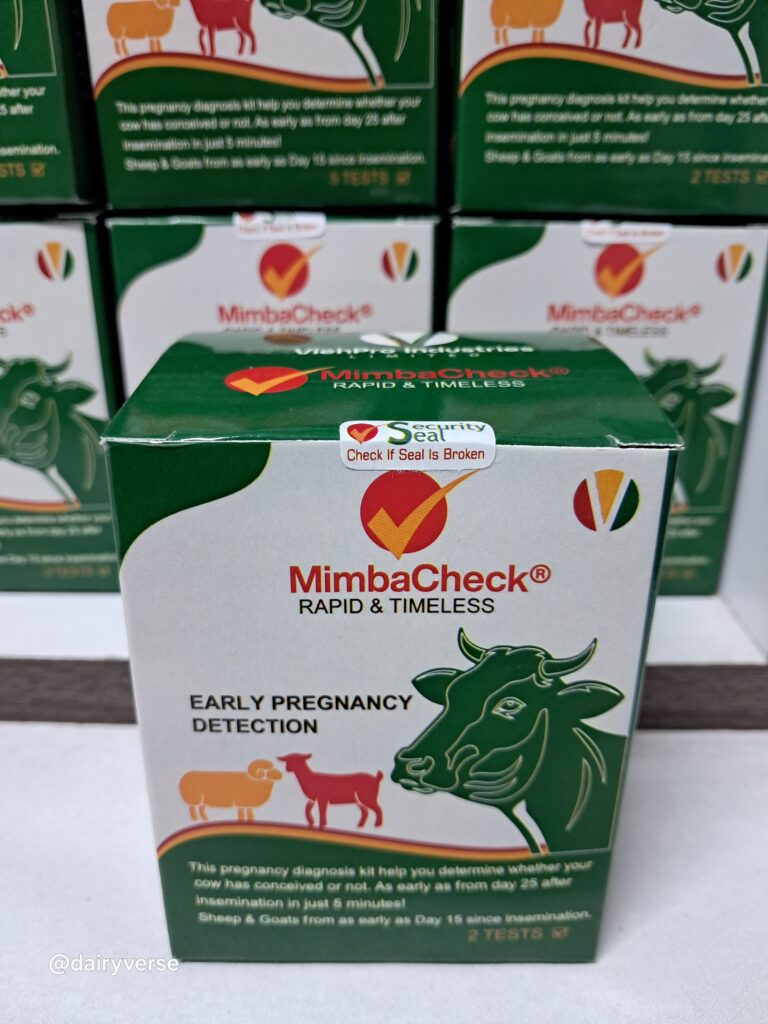
That’s where MimbaCheck® steps in, a rapid, safe, and cost-effective pregnancy test designed for early detection in cows, goats, and sheep.


🧠 The Hidden Cost of Not Knowing

Did you know it can cost up to Ksh 83,200 ($640) to maintain a cow that turns out to be not in-calf?

That’s:

  • Months of wasted feed
  • Missed breeding opportunities
  • Delayed milk cycles
  • Hidden financial losses

Early pregnancy detection isn’t just smart, it’s essential.


✅ What is MimbaCheck®?

MimbaCheck® is a rapid and reliable pregnancy detection kit that gives results in just 5 minutes, starting as early as:

  • Day 25 after insemination in cows
  • Day 15 after insemination in goats and sheep

No need to wait for months or rely on guesswork. You can act early, with clarity.


🌟 Benefits of Using MimbaCheck®

✔️ Early Pregnancy Detection
→ Know the status of your animal before investing more

✔️ Improved Reproductive Efficiency
→ Quickly re-serve animals that didn’t conceive
→ Reduces long calving intervals

✔️ Saves Time and Money
→ Cuts unnecessary feeding and vet costs on empty animals
→ Helps plan your breeding calendar better

✔️ Safe and Easy to Use
→ No invasive procedures
→ Can be done right on the farm


🐄 Why Every Dairy Farmer Needs It

  • For small-scale farmers: You can’t afford wasted feed or long breeding gaps
  • For large farms: Better herd management, breeding records, and calving intervals
  • For serious breeders: Faster decision-making, healthier herd cycles, and increased profitability

With MimbaCheck®, you move from guesswork to precision.


🟢 Final Word: Don’t Wait Months to Know

Every feeding, every dose, and every day you spend on an open cow is a direct cost to your business.

Act early. Save more. Breed smarter.
Choose MimbaCheck®, Rapid. Timeless. Trusted.


Deworming Calves: Why Timing Matters for a Healthy Start

When it comes to raising healthy calves, one often overlooked but crucial step is early deworming. Internal parasites like worms can silently rob your young calf of nutrition, energy, and growth potential.

🕒 When Should You Deworm a Calf?

Experts recommend the first deworming at 3 to 4 weeks of age. By this time, the calf’s immune system is still developing, and if it’s in contact with contaminated bedding or grazing pastures, parasites can quickly become a problem.

🔄 What’s the Deworming Schedule?

  • First dose: At 3–4 weeks of age
  • Follow-up doses: Every 6–8 weeks, or as advised by your vet
  • Weaning stage: Deworm again during or just after weaning
  • After grazing: Deworm before turning out to pasture and after grazing seasons

💊 What Dewormers Should You Use?

Common deworming medications include:

  • Albendazole
  • Fenbendazole
  • Ivermectin

Always follow your vet’s advice for correct dosage, especially based on the calf’s weight and age.

⚠️ Why It’s Important:

  • Boosts weight gain and growth rate
  • Prevents diarrhea and stunted development
  • Strengthens the calf’s immune system
  • Prepares the calf for a productive life ahead

✅ Final Tip:

Even if your calf looks healthy, worms might still be inside, affecting performance. Preventive deworming is far more effective than treating after visible damage is done.


Metabolic Disorders in Livestock: What They Are and How They Affect Your Animals

Metabolic disorders are some of the most silent yet damaging issues in livestock. They don’t always start with fever or visible wounds. Instead, they begin inside the animal’s body, affecting how nutrients are absorbed, processed, and used for production, growth, and reproduction.


🧬 What Are Metabolic Disorders?

Metabolic disorders in livestock occur when an animal’s body fails to maintain normal chemical balance, especially around:

  • Energy
  • Minerals
  • Protein or fat metabolism

This imbalance leads to major health issues—even in well-fed animals.


🛑 Common Types of Metabolic Disorders

  1. Milk Fever (Hypocalcemia)
    🟠 Low calcium levels after calving
    🟠 Causes weakness, inability to stand, risk of death
  2. Ketosis
    🟠 Happens when a cow burns body fat too fast after calving
    🟠 Leads to energy drain, low milk yield, dullness
  3. Grass Tetany (Hypomagnesemia)
    🟠 Low magnesium, usually in lush pastures
    🟠 Causes muscle tremors, collapse, or sudden death
  4. Acidosis
    🟠 Caused by too much grain or low-fiber diets
    🟠 Leads to rumen imbalance, diarrhea, and reduced performance
  5. Bloat
    🟠 Accumulation of gas in the rumen
    🟠 Can cause death in hours if not relieved

⚠️ Why They Matter to Farmers

Even when you’re feeding well, these disorders can reduce productivity and silently drain profits:

  • Lower milk yield
  • Delayed conception
  • Increased treatment costs
  • Sudden deaths
  • Weak calves or stillbirths

They are common in high-performing animals — the very cows, goats, or sheep that you value most.


✅ How to Prevent and Manage Metabolic Disorders

  • Use balanced mineral supplements (not just salt)
  • Feed quality roughage with correct energy-to-fiber ratios
  • Avoid sudden diet changes
  • Use products like RestoreX® or MbuziPro to support mineral balance, energy levels, and metabolism
  • Prepare cows properly during the dry period and before calving (steaming up)
  • Watch for early signs: dullness, slow eating, abnormal posture, reduced milk

Final Thought:

Metabolic disorders don’t knock—they sneak in.
And by the time you notice, you’re already losing money.

Healthy feeding, proper supplementation, and early care are your best defense


Why Some Bulls Fail to Impregnate: The Hidden Truth About Low Sperm Count

It’s a common but silent problem on many farms: a bull that looks healthy but fails to serve or produce strong calves. The reason? Often, it’s not what you see, it’s what you don’t see.

Low sperm count and weak semen quality.

This condition leads to missed heats, low conception rates, and weak offspring, all silently draining your profits.


🐂 What Causes Low Sperm Count in Bulls?

  1. Heat Stress or Fever
    High temperatures damage sperm-producing cells. Bulls affected by extreme heat or recent illness can take weeks to recover fertility.
  2. Reproductive Infections
    Diseases like orchitis or trichomoniasis can silently lower fertility, even when the bull appears active.
  3. Body Pain or Lameness
    A bull with sore hooves or muscle pain is unlikely to mount, which reduces natural breeding.
  4. Overuse Without Recovery
    Bulls that serve too many cows in a short time may have reduced semen quality from exhaustion.
  5. Old Age or Immaturity
    Very young bulls may not produce viable semen yet, and older bulls naturally decline over time.

✅ The Solution: RestoreX® – A Full Livestock Wellbeing System

At DairyVerse Consulting, we believe every livestock problem deserves a specific, targeted solution. That’s why we created RestoreX® — a complete wellbeing system with powerful Themedies™ (themed remedies) for every livestock challenge.

And for bulls and steers, that remedy is NyamaPlus.


🥩 Featured Themedy™: NyamaPlus for Bulls & Meat Production

NyamaPlus is a high-protein, energy-rich nutritional solution made to restore and enhance:

  • Fertility
  • Body strength
  • Meat quality
  • Hoof integrity

It is especially effective for bulls recovering from sickness, weight loss, or poor service performance.


💪 Benefits of NyamaPlus

✔️ Promotes rapid weight gain
✔️ Improves semen quality & libido
✔️ Eliminates white muscle disease
✔️ Strengthens hooves to reduce lameness
✔️ Improves coat, skin, and body condition
✔️ Supports faster recovery from illness or stress


🌿 Natural Remedies That Help Support Bull Fertility

Alongside NyamaPlus, consider the following natural practices to boost bull health:

🔸 Plenty of clean water & shade – Reduces heat stress that can damage sperm
🔸 Proper rest between mating sessions – Prevents exhaustion and low semen volume
🔸 Hoof hygiene with natural antiseptics – Use warm water, salt, or mild herbal washes (like turmeric or neem) to prevent lameness
🔸 Use of garlic and aloe vera – Garlic improves blood flow and immunity; aloe supports internal healing
🔸 Consistent grooming and handling – Reduces stress and improves overall well-being

These practices, when combined with RestoreX®’s precision solutions, create a healthier, more fertile bull that performs naturally and powerfully.


📦 Ready to Restore?

Whether you’re raising bulls for meat or breeding, don’t leave performance to chance. Let RestoreX® and NyamaPlus bring out the best in your animals.


Common Challenges Calves Face After Birth.

A calf is born. It stands, wobbly but hopeful. The farmer smiles — a new life, a sign of growth. But behind that moment of joy, a silent struggle often begins. In many farms across Africa, calves face a series of challenges that quietly determine whether they’ll grow into productive cows or become part of the losses no one likes to talk about.


1. Weak Calves at Birth

Some calves are born already weak — they don’t suckle properly, can’t stand well, or take too long to respond. In most cases, it’s not bad luck. It’s linked to:

  • Poor cow nutrition during pregnancy
  • Mineral and vitamin deficiencies in the dam
  • Stress during calving
  • Long labor or dystocia

Weak calves often struggle right from day one — and many never catch up.


2. Failure to Get Enough Colostrum

The first milk (colostrum) is not just food — it’s full of antibodies that protect the calf from disease.

🟥 If a calf doesn’t get enough colostrum within the first 2 hours, its immune system starts life weak.
🟥 Poor suckling, dirty feeding bottles, or low-quality colostrum from sick or malnourished cows make it worse.

Result? A calf that becomes sickly, slow to grow, and vulnerable to every infection.


3. Scours (Diarrhea)

One of the biggest killers of calves under 3 months.

Causes include:

  • Dirty pens, buckets, or teats
  • Overfeeding or feeding cold milk
  • Bacterial and viral infections
  • Stress from sudden feed or temperature changes

Scours dehydrates the calf fast, and without urgent care, many don’t survive.


4. Pneumonia

Coughing calves, nasal discharge, breathing difficulties — often signs of pneumonia, especially in poorly ventilated or cold, damp pens.

🟠 It usually follows a period of stress: weaning, transport, cold nights, or feed changes.
🟠 Calves that were weak at birth or missed good colostrum are most vulnerable.


5. Stunted Growth and Pot Bellies

Even if a calf survives early disease, poor-quality feeding or lack of proper minerals can lead to:

  • A bloated stomach
  • Thin body frame
  • Delayed weaning or maturity
  • Poor rumen development

These calves look older than they are — but small, with little potential for future productivity.


How Dairyverse Supports Calf Growth

At Dairyverse, we know that strong cows start with strong calves. That’s why our solutions support not just the adult cow—but the foundation of your future herd.

RestoreX® helps address:

  • Mineral and vitamin gaps in pregnant cows
  • Immune support through better nutrition
  • Growth support with proper calf development in mind

We don’t wait until the calf is sick — we focus on preparing the cow and calf before the struggle begins.


Final Word: Don’t Lose the Future at the Start

Every strong herd you see started with calves that were protected, fed well, and managed right. You don’t need a big budget, you need good timing, basic hygiene, and proper support during the critical windows.

Because calves don’t complain, they just reflect the care they were given.


How to Identify and Fix Poor Steaming Up in Pregnant Dairy Cows

You’ve invested in the best feed. The cow looks healthy. Calving is just around the corner. But then you notice something odd—her udder remains small. No sign of milk filling. No “steaming up.” And then doubt kicks in: Is something wrong?

You’re not alone. Many farmers face this quiet frustration: cows that eat well but fail to prepare properly for lactation. And it often catches them off guard.


What Is “Steaming Up”?

Steaming up refers to the natural process where, in the final weeks before calving, the cow’s udder enlarges as it begins milk production. It’s a key sign that the body is preparing for birth and lactation.

When this doesn’t happen, or happens too late, it can signal a deeper issue.


Why Do Some Cows Fail to Steam Up?

Feeding more doesn’t always mean better udder development. The problem usually lies beneath the surface:

🟠 Low-quality protein or energy balance
→ A cow might be full, but still lacking the nutrients needed for mammary tissue development.

🟠 Mineral deficiencies
→ Especially calcium, phosphorus, selenium, and vitamin E, which are crucial for hormonal balance and udder health.

🟠 Poor hormonal signaling
→ The final stages of pregnancy rely heavily on the body’s endocrine system. If it’s out of sync due to nutritional gaps, steaming up is affected.

🟠 Late-pregnancy stress or infection
→ Hidden infections or internal stress can delay or reduce udder preparation.


Why It Matters More Than You Think

A cow that fails to steam up often starts off with low milk production—and the curve stays low. You don’t just lose milk volume; you lose income, confidence, and time trying to correct what should’ve been prevented.

In heifers, this also affects first impressions of genetic potential, leading to early culling or misjudgment.

And once poor lactation starts, it’s hard to recover during that lactation cycle. Prevention is always better.


Supporting the Cow Before Calving

Proper steaming up begins months before calving, not days. It depends on:

✔️ Balanced mineral and vitamin intake
✔️ High-quality protein in late pregnancy
✔️ Managing stress and parasite loads
✔️ Consistent monitoring of body condition—not just weight


How Dairyverse Can Support You

We believe calving success starts long before the calf arrives. That’s why solutions like RestoreX® were designed to support not just reproduction, but the full cycle—including udder readiness and post-calving recovery.

It helps fill in critical nutritional gaps that are easy to miss in typical feeding systems, especially during the dry period.


Final Word: Don’t Wait for the Calf to Realize the Problem

If your cows are calving with flat udders or slow milk starts, it’s not just luck. It’s a signal. And the earlier we listen, the better we can act.

Good feeding isn’t just about quantity—it’s about the right kind of support at the right time.


What a Cow’s Coat and Body Condition Reveal About Her Health

As livestock farmers, we often focus on what we can measure, milk litres, feed amounts, conception rates. But sometimes, the most accurate health indicators are right in front of us, quietly telling a deeper story. A rough, dull coat. A cow that looks thinner despite feeding. Discolored patches around the neck or back. These signs may seem small, but they’re often the first warnings of bigger problems brewing inside.

Coat discoloration and poor body condition are not just cosmetic issues. They’re reflections of your cow’s internal health, especially her nutritional and metabolic balance.


What the Coat is Trying to Say

A cow’s coat should be smooth, glossy, and full. When it starts losing shine, becoming patchy, or developing reddish-brown discoloration, it’s usually due to:

  • Copper or zinc deficiency
  • Protein-energy imbalance
  • Poor fat absorption or liver stress
  • Parasitic stress or low immunity

These signs are your cow’s way of signaling that her system is under pressure, even before more serious issues like reduced fertility or low milk yield show up.


Understanding Body Condition Beyond Fatness

A cow that “looks thin” doesn’t always mean she’s hungry. Often, she may be eating enough volume but not absorbing what her body truly needs.

Poor body condition can result from:

  • Inefficient feed conversion (due to lacking key minerals)
  • Undetected internal parasites
  • Inadequate protein levels for maintenance
  • Chronic mineral deficiency affecting metabolism
  • High demand (e.g. early lactation) without proper support

In these states, the cow begins to draw nutrients from her own body to survive—losing muscle tone, shrinking in frame, and eventually dropping performance.


Why It Matters for Your Farm’s Bottom Line

Ignoring coat and body condition signals can have a long-term cost:

  • Delayed heat or conception
  • Low milk peaks despite good feeding
  • Higher vet bills over time
  • Weak calves or poor mothering ability
  • Premature culling due to poor productivity

The tragedy? Many farmers unknowingly pour more feed into the cow, hoping for a turnaround, without realizing the root issue lies in mineral formulation, not just quantity.


Where Dairyverse Fits In

At Dairyverse, we’ve seen these patterns across farms in different regions. Our response wasn’t just to create a product, but to study the deeper causes of nutrient stress in African livestock.

This led to the creation of RestoreX®, formulated to:

  • Fill critical mineral and vitamin gaps
  • Boost metabolic efficiency
  • Improve coat health, body scoring, and feed utilization
  • Support long-term reproductive and immune function

Cows on RestoreX® are showing visible improvements, not just in performance, but in overall appearance, posture, and energy levels. It’s not magic. It’s science, tuned to African realities.


Conclusion: Start Reading the Signs

Before the next milk drop or fertility delay catches you by surprise, take a moment to look, really look,at your cows. Their coats. Their ribs. Their posture.

They’re not just standing in your field. They’re talking.

The real question is: Are we listening?