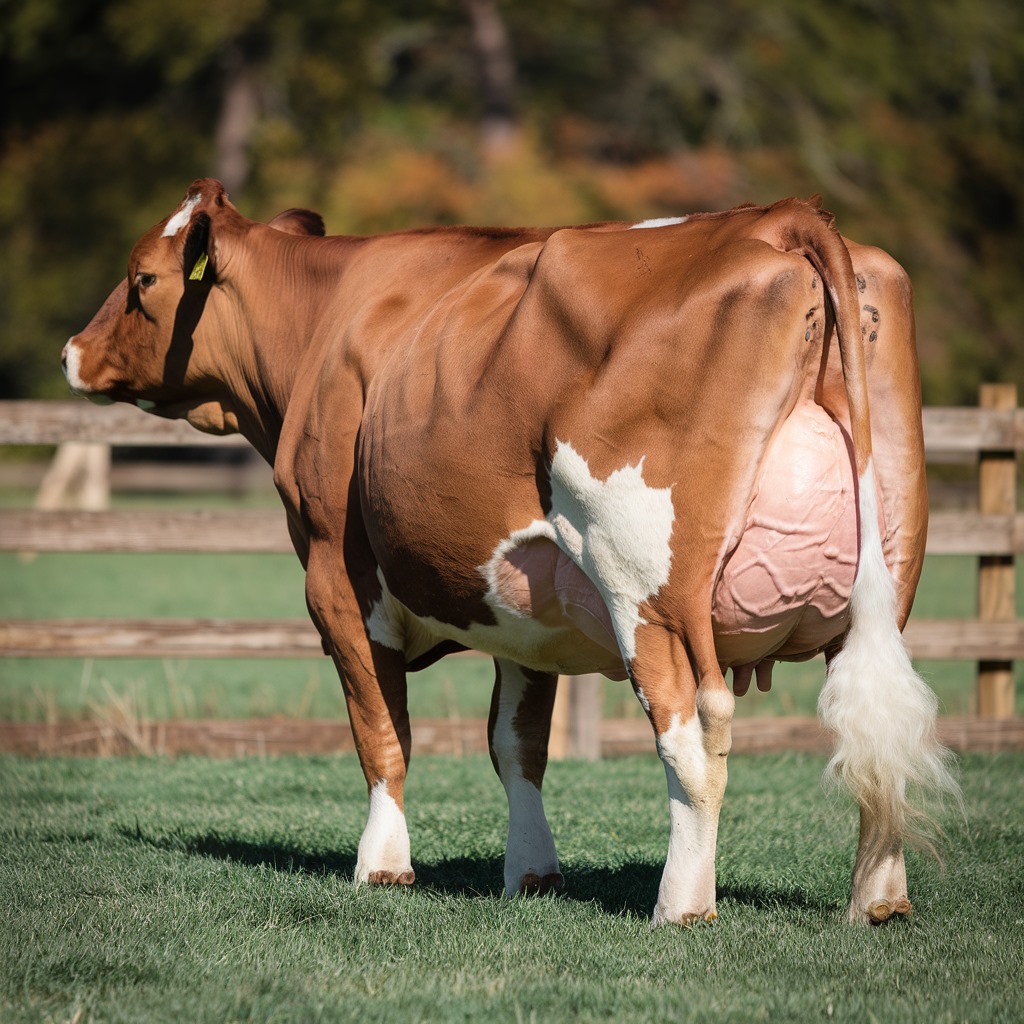
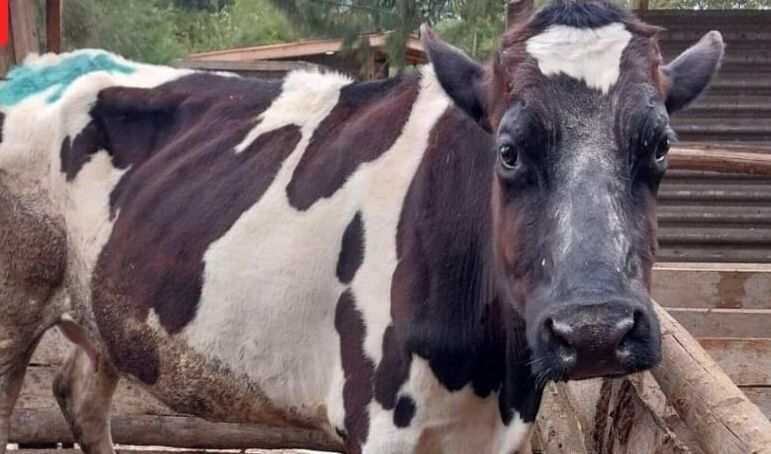
A heifer is a young female cow that has not been bred (inseminated). They become economically beneficial upon being inseminated and successfully conceived. This typically cause an appreciation in value because of the expectation of high milk production upon calving down.
This hope is limited at times due to failure of the heifers to show heat signs at the expected period of time that is at exactly 15 months of age. Any delays cause unimaginable losses to the farm. Let’s shed light into the reasons that make heifers show heat signs. 1. Attainment of ⅔rd of mature bodyweight (bwt) that is normally between 300 and 350 Kilograms. A heifer will only show heat signs upon attaining the required bodyweight that is 67% of mature bodyweight which can be easily likened to that of her dam for estimation purposes. There is an advantage to this which is the fact that it points to maturation of the better part of the heifer’s body, ensuring that she stands a chance to produce more milk after calving down.
2. Fulfillment of her bodily energy requirements. Energy is primarily derived from fodder & feeds consumed. In the hierarchy of energy usage, heat is the first component to be eliminated from the priority list when an animal experiences shortage of energy. This happens as a result of low feed intake. I have avoid to mention “dry matter” intake because majority of the people confused that term to mean hay or dry grass. It is important to note that even fresh napier grass also contains dry matter. It is therefore important to give your cow enough feeds in order to unlock her body’s capacity to show heat signs.
The term “Dry matter” does not mean hay or dry grass,
3. Attainment of the minimum trace elements threshold necessary to support reproductive performance. Trace elements or minor elements are the mineral components needed by a cow in small quantities. The trace elements that influence fertility of a cow include Cobalt, Selenium, Copper and Manganese. They should be availed to the animal in right quantities in order to facilitate estrus.
What should you do if she fails to show any signs? Give your heifer enough fodder, concentrates and trace elements rich complex like Fertility+® for 18 to 36 days. Pronounced heat signs will be observed and conception will be guaranteed!
Learn more on how to prevent ddelayed onset of heat and silent heat, Click here.
Winning Formula In Eliminating Slow Growth Rate And Pot-bellies in Calves
When calves stop taking milk from their mothers at the age of 3 months, the following challenges are normally observed; – Slow growth rate – Emaciation – Pot-belly development These challenges are as a result of change in feeds from the highly nutritious milk to the locally available forages that are deficient in the most essential nutrients. This is the winning formula for overcoming the above challenges; ✅️ Introduce Ndamaplus® when the calf hits 3 months of age. ✅️ Continue using Ndamaplus® till she hits 6 months of age. ✅️ Skip 3 months, 6th, 7th and 8th month. ✅️ Reintroduce Ndamaplus® to the calf during the 9th to 12th month of age. ✅️ At the age of 14 months and 1 week, introduce Fertility+® to her for 18 days. 🎊 Congratulations! At exactly 15 months of age, your heifer will have attained a minimum of 300 Kilograms and she will come on heat and conceive!
Learn more on calf rearing and how you can get out products on our blog.
Lameness BEFORE calving and AFTER calving
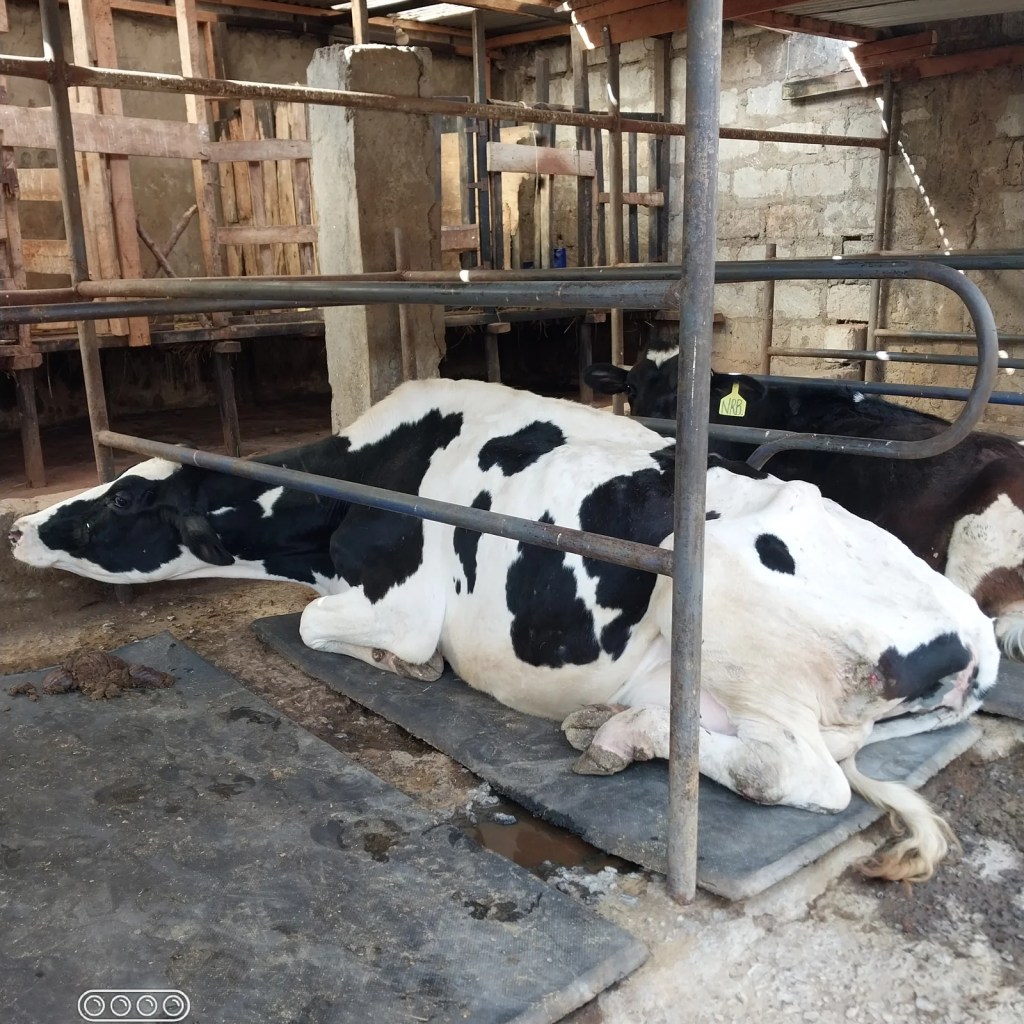
Lameness is inability to stand. There are two common conditions associated with this sign;- Alert Downer Cow Syndrome and Milk Fever.
What’s the difference? Alert downer cow syndrome
Majorly affects incalf heifers and cows. Animal unable to stand a few weeks to giving birth.
The animal is bright, eats well and may try to rise up.
It is as a result of low energy in the body. The animal does not respond to treatment with Calcium solution.
If left untreated for more than 14days, the animal may experience excessive trauma that may lead to death.
》PREVENTION:-Ensure that your cow is in good body condition. Simply, usione mbavu zaidi ya tatu. This will be possible through providing high energy diet for example Maizegerm 2kg/day during the dry period. Not Dairymeal.
Milk fever
It affects cows after giving birth.
It is as a result of low calcium in the blood.
When you milk the cow, calcium levels decreases and may expose the cow to this disease.
The lame cow will be listless(dull) and won’t show interest to eat, it folds the neck to the body and muscles may tremble.
The animal will often respond to Calcium treatment/therapy within 30 minutes. It is however prone to decrease if the cow is milked normally. Intermittent milking is recommended ie. milking once a day until the animal stabilizes. 》PREVENTION:- Prepare your cow well for milking. This begins at the 7th month of pregnancy. Give her Dry mineral lick (one that has 5% Calcium) and Maizegerm 2kg/day. Avoid DCP (Dicalcium Phosphate). Introduce 2kgs of Dairymeal in the last 2 weeks to Calving. Maziwa mineral lick (one that has at least 20% Calcium) should be introduced in the last week prior to giving birth.
Excess Calcium during the last trimester will destabilize it’s metabolism/use in the body of the pregnant animal making it fail to respond to Calcium provided in the diet after calving. It will also lead to overgrowth of the calf leading to difficulties in giving birth (dystocia). To prevent milk fever, do proper dry cow manageent and steaming up.
Why Does Milk Curdle? Understanding the Causes and Solutions for Dairy Farmers
Milk curdling, also known as “kuganda” in some regions, is a common issue that affects milk quality and can lead to significant losses for dairy farmers. Curdled milk is often unusable for drinking or processing, which impacts both farmers and consumers. Here, we’ll explore the primary causes of milk curdling, how these factors affect milk quality, and the steps farmers can take to prevent it.
1. Mastitis: Udder Infections that Compromise Milk Quality
Mastitis is an infection of the cow’s udder, which can significantly impact milk quality. This condition increases the somatic cell count (SCC) in milk, mainly consisting of white blood cells, which can cause milk proteins to break down prematurely. As a result, milk from cows with mastitis is more likely to curdle, develop an off-flavor, and have a shorter shelf life.
How to Prevent and Manage Mastitis:
Good Hygiene Practices: Clean the udder thoroughly before milking to reduce bacterial contamination.
Regular Health Checks: Monitor cows for signs of mastitis, such as swelling, redness, or changes in milk appearance.
Prompt Treatment: Treat infections quickly to avoid long-term damage to the udder and minimize the impact on milk quality.
2. Low Protein Levels in Cow Diets
A balanced diet is crucial for maintaining high-quality milk. If a cow’s diet is low in protein, the milk it produces may lack stability, making it prone to curdling. Protein is essential for the structural integrity of milk, and when it’s deficient, milk becomes less resistant to coagulation.
How to Ensure Adequate Protein Intake:
Balanced Feed: Provide a diet rich in protein through high-quality forage, grains, and supplements.
Monitor Feed Quality: Ensure that the feed is fresh and free from contaminants that might lower its nutritional value.
Consult a Nutritionist: Work with a dairy nutritionist to formulate a diet that meets the protein requirements of your herd.
3. Advanced Pregnancy and Hormonal Changes
As a cow enters the later stages of pregnancy, hormonal changes naturally occur to prepare the body for calving. These hormonal shifts can affect milk composition, altering the balance of fats and proteins, which can make the milk more likely to curdle. Milk produced in advanced pregnancy often has a different texture and stability.
Managing Milk from Pregnant Cows:
Monitor Production Stages: Be aware of the pregnancy stages of your cows and understand how this might impact milk quality.
Selective Use of Milk: Milk from cows in late pregnancy can be used for other purposes or mixed with milk from other cows to minimize curdling risks.
4. Inadequate Cooling and Poor Storage Practices
One of the most common causes of milk curdling is improper cooling and storage. Bacteria multiply rapidly in warm milk, leading to fermentation, which produces lactic acid. This acid buildup causes the milk to curdle. Immediate cooling after milking is essential to maintain milk freshness.
Best Practices for Milk Cooling and Storage:
Immediate Cooling: Milk should be cooled to below 4°C (39°F) as soon as possible after milking.
Use Proper Storage Containers: Store milk in sanitized, airtight containers to prevent contamination and minimize exposure to air, which promotes spoilage.
Monitor Cooling Equipment: Regularly check that cooling systems are functioning properly and maintaining the necessary temperatures.
5. Chemical Residues
Sometimes, residues from antibiotics, cleaning agents, or sanitizers used in the milking process make their way into the milk. These residues can disrupt milk’s natural balance, leading to curdling or affecting its taste and overall quality.
How to Avoid Chemical Residue Contamination:
Follow Medication Withdrawal Times: After treating cows with antibiotics or other medications, observe the recommended withdrawal period before milking.
Thoroughly Rinse Equipment: After cleaning and sanitizing, make sure all milking equipment is rinsed well to remove any traces of chemicals.
Use Approved Cleaning Agents: Stick to cleaning products that are safe and approved for use in dairy operations.
Conclusion
Understanding the causes of milk curdling and how to prevent it is essential for dairy farmers who want to produce high-quality, fresh milk. By managing udder health, providing balanced nutrition, handling milk carefully, and following good storage practices, farmers can greatly reduce the risk of milk curdling. Remember, maintaining milk quality is not just about improving profitability but also about delivering a safe, high-quality product to consumers.
Understand what makes milk appear watery; Click here.
How to Naturally Treat Diarrhea in Dairy Cows
Diarrhea in dairy cows is a common yet concerning issue. It can lead to dehydration, reduced milk production, and a drop in overall health, affecting both the cow and the profitability of the dairy farm. While medications and treatments are available, natural remedies are often favored as a safer, sustainable, and more holistic approach. Here, we’ll explore the causes, symptoms, and natural treatments for diarrhea specifically in dairy cows.
Common Causes of Diarrhea in Dairy Cows
Dairy cows may experience diarrhea due to several factors:
Dietary Imbalances: High grain diets, sudden feed changes, or poor-quality silage can disrupt digestion.
Bacterial and Viral Infections: Pathogens like E. coli, Salmonella, and rotavirus are common causes of diarrhea.
Parasites: Worms and other internal parasites can upset the digestive tract.
Stress: Transport, calving, extreme weather changes, and overcrowding can all stress cows and lead to digestive upset.
Metabolic Disorders: Dairy cows, especially high-producing ones, are susceptible to metabolic issues like ketosis, which can lead to diarrhea.
Spoiled Feed or Contaminated Water: Moldy or spoiled feed and unclean water sources can introduce harmful bacteria.
Recognizing the Symptoms
Signs of diarrhea in dairy cows can include:
Loose, Watery Stools: A change in stool consistency, with liquid or runny manure, is a clear indicator.
Dehydration: Symptoms like sunken eyes, dry nose, and reduced skin elasticity.
Lethargy: Affected cows may show signs of fatigue, reduced movement, and low energy.
Drop in Milk Production: Diarrhea can affect the cow’s milk yield due to nutrient loss and dehydration.
Loss of Appetite: Sick cows may eat less, further impacting their health and milk production.
Natural Treatments for Diarrhea in Dairy Cows
Electrolyte Solutions for Rehydration Rehydration is crucial. Electrolytes help replace fluids, salts, and minerals lost through diarrhea. You can make a natural electrolyte solution with:
1 gallon of warm water
1 tablespoon of salt
1 tablespoon of baking soda
½ cup of molasses or honey
Offer this solution 2-3 times a day to rehydrate the cow and restore electrolyte balance.
Apple Cider Vinegar Apple cider vinegar (ACV) supports digestive health by balancing pH levels in the gut. Add 1-2 cups of ACV to the cow’s drinking water daily. This natural remedy helps reduce harmful bacteria and can improve digestion.
Activated Charcoal Activated charcoal is useful for absorbing toxins in the digestive system, especially if the diarrhea is due to spoiled feed. A small dose of powdered activated charcoal can be mixed with water and administered carefully (about 100 grams mixed with water) based on the cow’s size. Consult a vet if needed for precise dosing.
Probiotics Probiotics help restore beneficial bacteria in the gut, which is essential for digestion. You can add commercial livestock probiotics or use natural sources such as yogurt or kefir. Giving probiotics for several days will help stabilize the cow’s gut health and promote recovery.
Aloe Vera Gel Aloe vera is known for its soothing properties. You can add a few ounces of pure aloe vera gel to the cow’s water or mix it with feed. Aloe vera supports the digestive tract and can reduce inflammation, helping the cow recover faster.
Garlic and Ginger Both garlic and ginger have natural antibacterial and anti-inflammatory properties. Mince a few cloves of garlic and about an inch of ginger, mix with feed, or blend with water and administer. Use this sparingly, as large amounts can be harmful, but in small quantities, it can help fight infections causing diarrhea.
Slippery Elm Bark or Marshmallow Root These herbs soothe the lining of the stomach and intestines, making them great for reducing inflammation. Use the powdered form and mix with water or feed (about 20 grams for an adult cow) once or twice daily.
Cinnamon and Honey Mixture Cinnamon has antibacterial properties, while honey is soothing and provides energy. Mix 1 tablespoon of cinnamon powder with ¼ cup of honey and feed to the cow once daily. This mixture can help reduce intestinal irritation and support the immune system.
Preventing Diarrhea in Dairy Cows
Preventive measures are key to minimizing diarrhea outbreaks. Here are some effective practices:
Stable Diet: Avoid sudden changes in feed and maintain a balanced diet with adequate fiber to support digestion.
High-Quality Feed and Clean Water: Ensure feed is fresh, mold-free, and stored properly. Always provide clean, fresh water.
Regular Parasite Control: Deworming programs are essential for dairy cows to prevent parasite-induced diarrhea.
Good Hygiene Practices: Keep barns, water troughs, and feed areas clean to reduce exposure to pathogens.
Reduce Stress: Minimize handling stress and provide a comfortable, stable environment, especially during calving or transport.
When to Seek Veterinary Assistance
While natural remedies are helpful, it’s important to monitor the cow’s condition closely. If diarrhea persists for more than 2-3 days, worsens, or is accompanied by blood in the stool, fever, or significant milk production loss, consult a veterinarian immediately. Persistent diarrhea can lead to dehydration and health complications that require medical intervention.
Conclusion
Natural treatments are an effective way to manage diarrhea in dairy cows, especially when caught early. Remedies like apple cider vinegar, probiotics, aloe vera, and electrolyte solutions help cows recover naturally while promoting gut health and rehydration. Combining these treatments with good preventive measures can support your herd’s well-being and help maintain productivity. As always, keeping a close eye on each cow’s condition and responding quickly to health issues is essential for successful dairy farming.
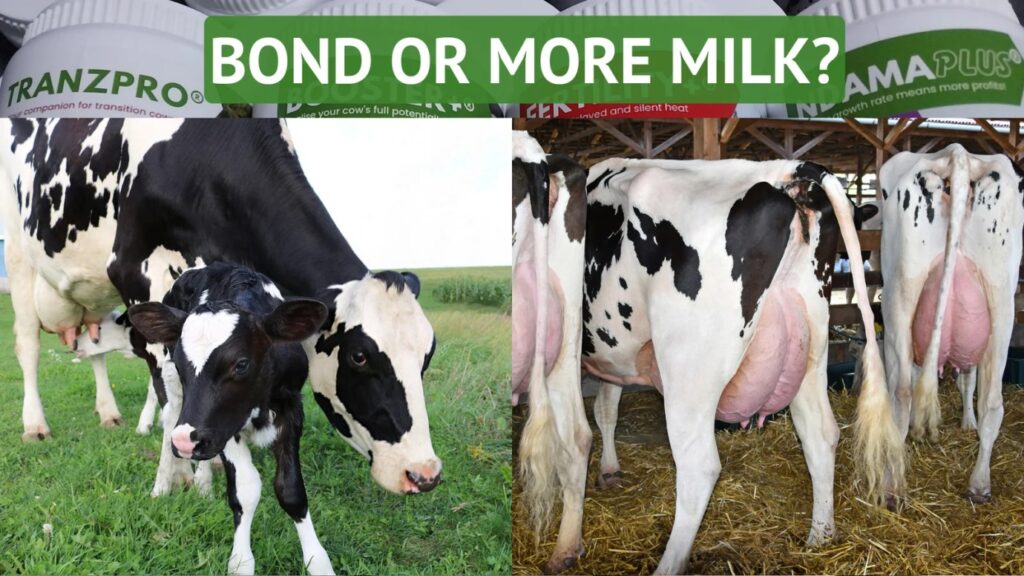
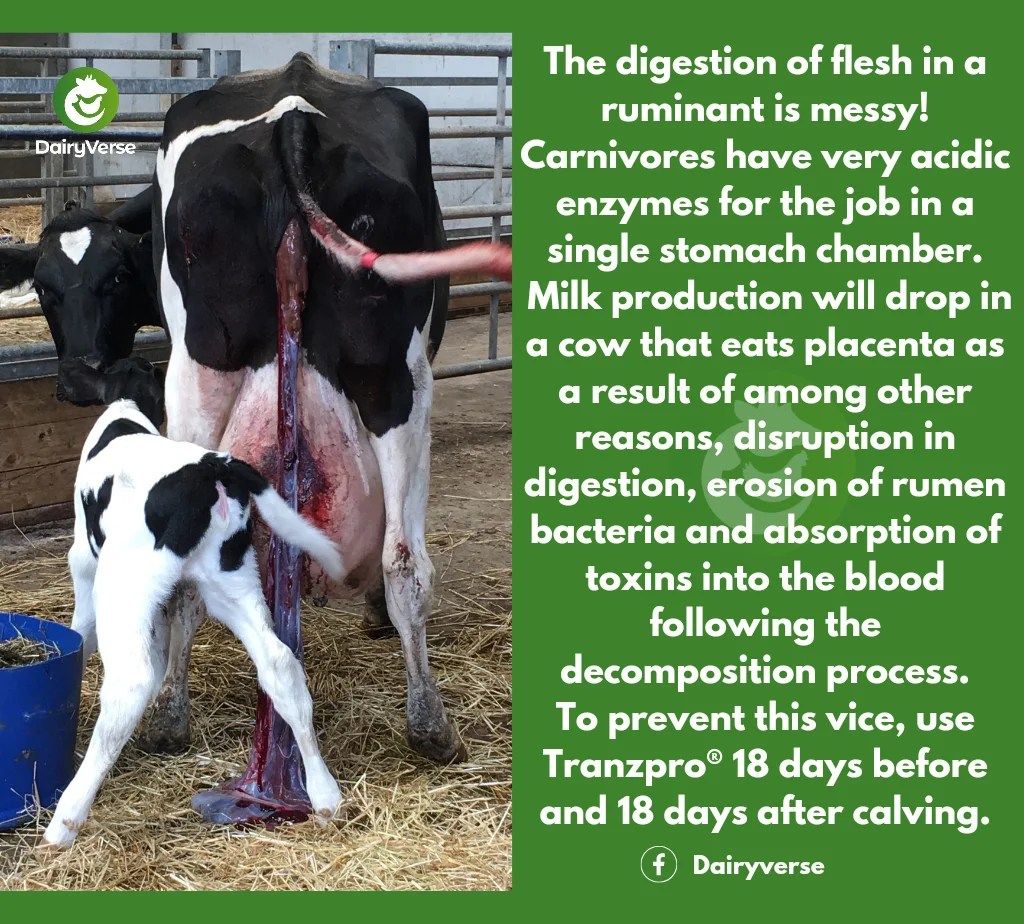
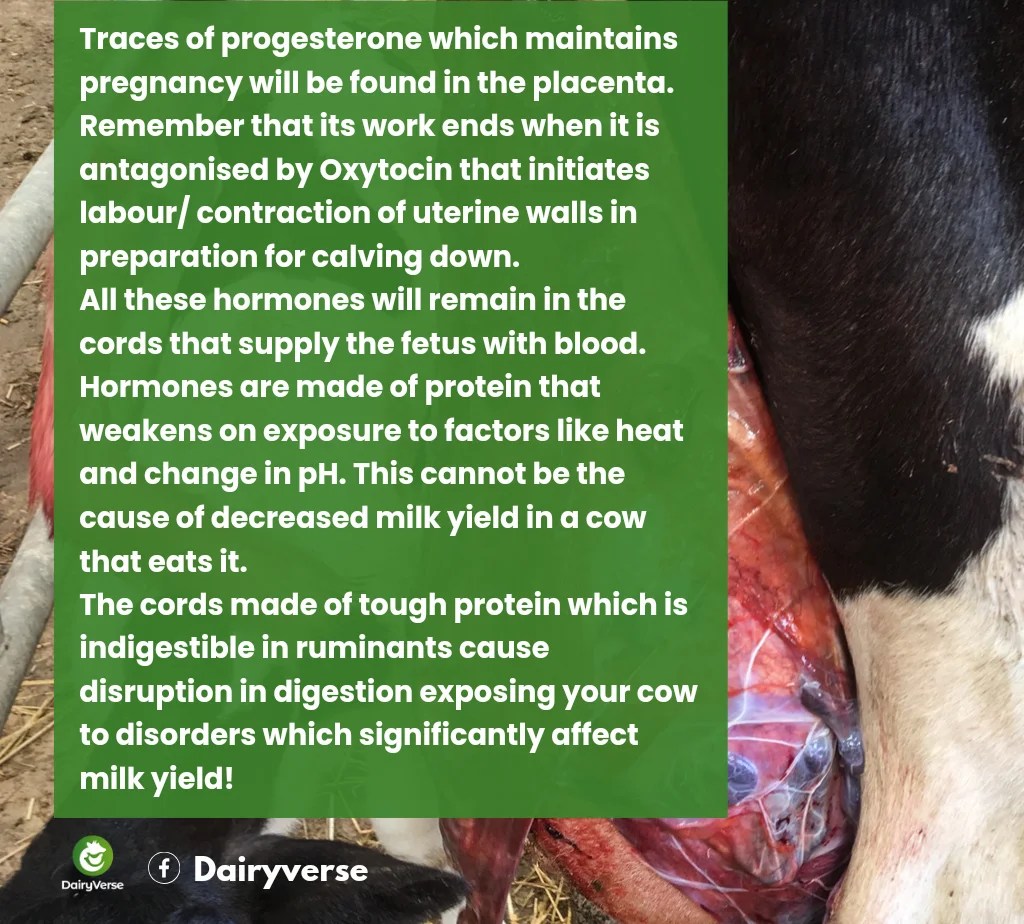
Never allow your cow to eat placenta
Do you keep a dairy cow so that they can just rear their calves or for commercial milk production?
In advanced dairy production systems, we do not allow a newborn calf to even suckle her mother a single moment. We do bucket feeding and therefore creating the bond between the cow and the calf by allowing them to eat placenta is a lame argument! You can’t shy away from the fact that there will be digestive disturbances when a cow feeds on flesh. It will erode essential microflora from the rumen and risk allowing toxins cross into the blood leading to adverse health effects.
Furthermore, during early lactation we need the cow to be free from any metabolic challenges – (related to feeding). If we aren’t careful, diseases like ketosis and milk fever can set in. Coupled with the physiology/normal phenomenon where animals that recently calved down decline in appetite, what do you think will be the effect to milk yield?
Does placenta have hormones that can boost milk yield? Yes it does but they will be of no use in this context. Here are the reasons;
Why do cows crave for the placenta? The placenta is rich in nutrients fats, oils, protein and trace/micro elements that are normally deficient in a cow’s body especially after calving yet she needs more of them. This attracts the cow to consume it.
Can we prevent it from occurring? Yes, it is possible to prevent this VICE! It is a vice since it compromises the well being of the animal. You can be able to prevent then from falling victim by preparing your cow better for the milking/lactation phase. Providing them with supplements that help in proper steaming up not only deals with the vice but also puts her in a position to reach peak production faster.
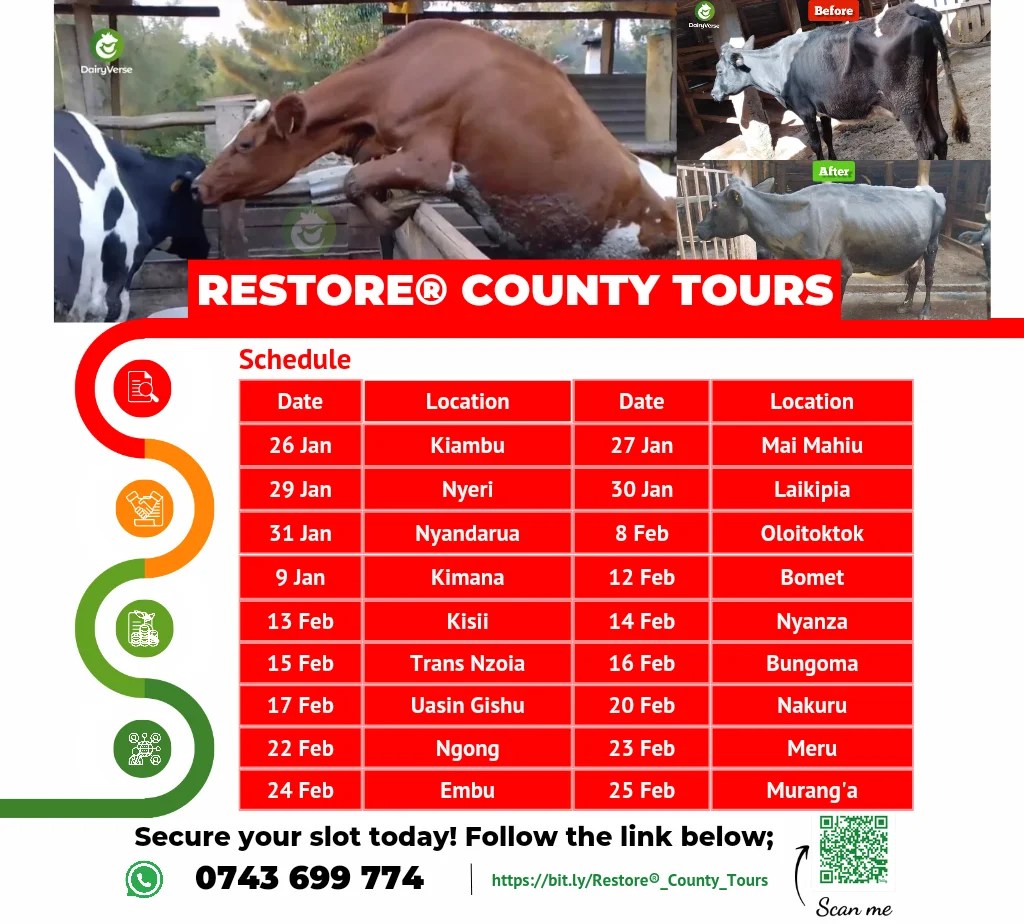
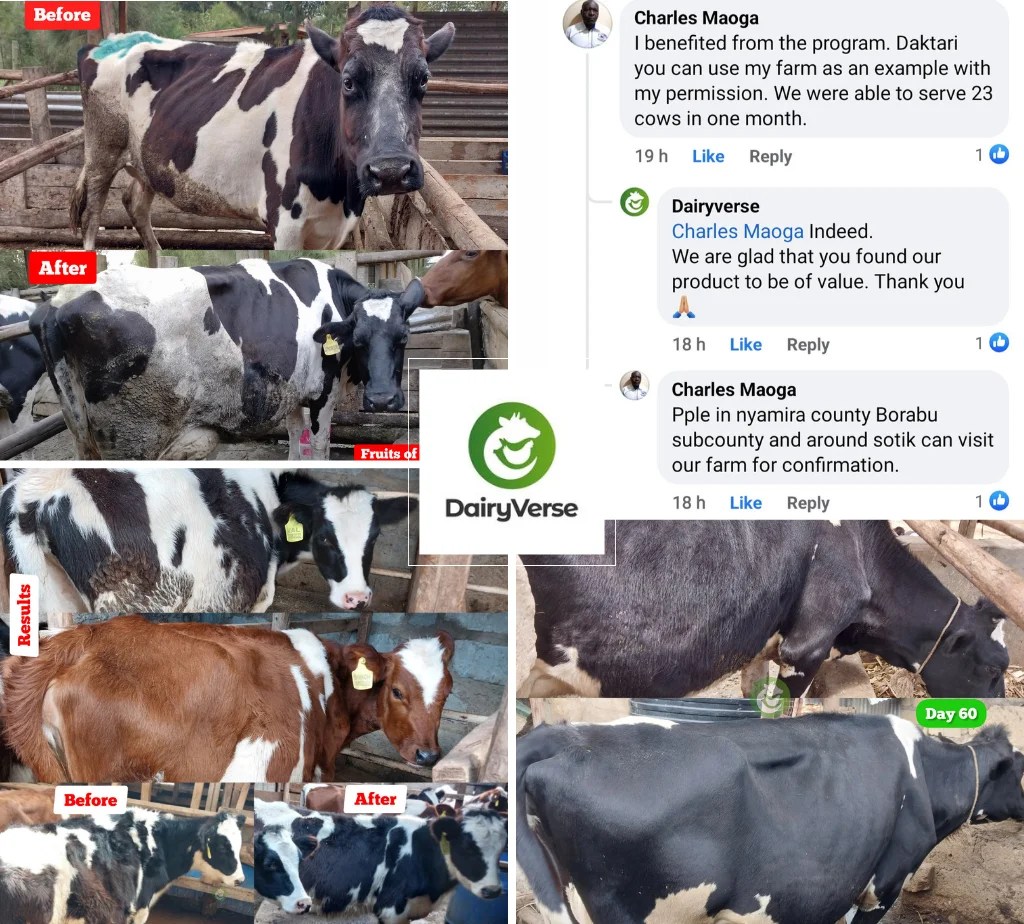
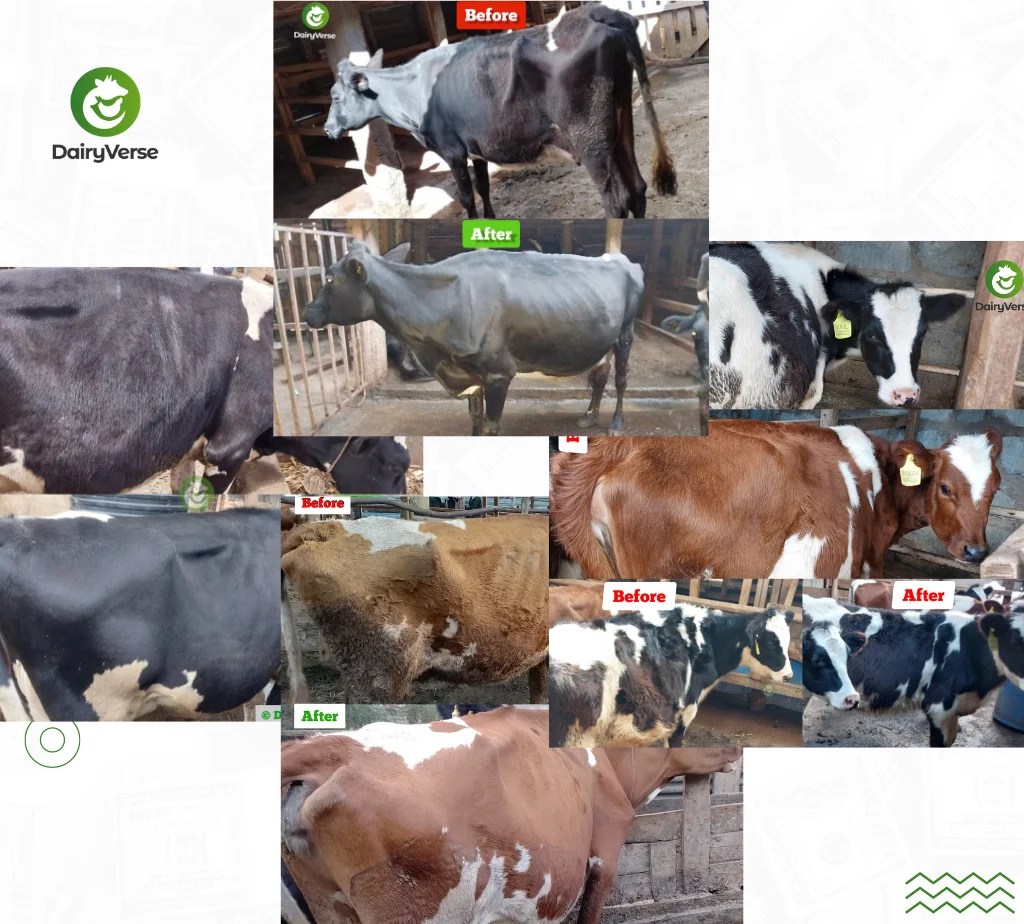
Restore® is a 3-month program to revive health, improve body condition, eliminate silent and delayed onset of heat and increase milk yield in dairy cattle. Dairyverse Experts will visit your farm on Day 1, Day 30 and Day 60 for interventions leading to achievement of the aforementioned goals. We offer this service in all parts of Kenya. The following are sample success stories;
Could you like us to visit your your farm? We visit individual farms. If you could like us to visit yours in 2025, kindly follow this link to express your interest; 👉 https://bit.ly/Restore®_County_Tours
Understanding Abortion in Dairy Cows: Causes and Timing
Did you know that abortions in dairy cows can be caused by a variety of factors? Here are some key points:
Causes:
1. Infectious Diseases: Bacterial infections like trichomoniasis, leptospirosis, and viral infections such as Bovine Viral Diarrhea can lead to abortions.
2. Nutritional Deficiencies: Lack of essential vitamins (A and E), selenium, and iron can cause abortions.
3. Heat Stress: High environmental temperatures can lead to fetal hypotension and hypoxia.
4. Toxins: Ingestion of toxic substances like nitrates (A good example Potato fruits), aflatoxins, and certain plants (e.g., Ponderosa pine needles) can result in abortions.
5. Genetic Abnormalities: Some genetic factors can cause early embryonic death or abortion.
Timing:
– Abortions can occur between 42 days and 260 days of pregnancy.
– Losses before 42 days are usually considered early embryonic deaths (EEDs), while those after 260 days are termed stillbirths.
Here’s a classification of the causes of abortions in dairy cows based on their timing:
Early Abortions (First Trimester 1 to 3 months):
Infectious Diseases: Such as leptospirosis, trichomoniasis.
Nutritional Deficiencies: Especially vitamins A, E, and minerals like selenium.
Toxins: Exposure to toxic plants or substances early in pregnancy.
Mid-Term Abortions (Second Trimester 3 to 6 months):
Bovine Viral Diarrhea (BVD): Often leads to abortions mid-pregnancy.
Brucellosis (Occurs 5 to 7 months)
Environmental Stress: Heat stress or severe weather conditions.
Management Practices.
Late Abortions (Third Trimester 6 to 9 months):
Infectious Diseases: Brucellosis often causes late-term abortions.
Physical Trauma: Injuries or mishandling.
Toxins: Certain plant toxins ingested late in pregnancy (e.g., Ponderosa pine needles).
Mismanagement during this critical growing period take preventive measures and ensure the health of their herd.
Prevention and Treatment
To correct nutritional deficiencies like protein and trace elements supplements, provide your cow with our strategic supplements for example Booster+. To learn more, please click here.
Artificial insemination with proper hygiene standards is a key method of preventing contraction of infectious diseases like brucellosis and trichomoniasis. Avoid handmating or use of bulls for insemination.
In the unfortunate case where infection has occured and there is repeat breeding or conception failure or abortion, ensure that the cow is treated promptly. The most common techniques include uterine irrigation. Contact your veterinarian for diagnosis, treatment and advice on the way forward.
Why Dairyverse?
At Dairyverse, we believe that a farm’s success is built on the health and productivity of its cows. That’s why we’re dedicated to providing farmers with high-quality, scientifically backed products designed to boost fertility, improve milk yields, and ensure overall well-being.
But why should you choose Dairyverse? Let’s take a closer look at what sets us apart:
1. Expert Consultation
Farming is challenging, and you don’t have to face it alone. With Dairyverse, you get access to expert advice on everything related to dairy cow health and productivity. Our team of specialists is ready to guide you through the best practices for your herd, ensuring long-term success.
2. High-Quality Products
When it comes to taking care of your cows, quality matters. That’s why Dairyverse offers a range of trusted products, including Fertility+, Ndamaplus, Booster+, and Tranzpro. These products have been developed to support every aspect of dairy cow health, from reproductive success to improved milk production. Using the right products means healthier cows, and healthier cows lead to a thriving farm.
3. Proven Results
At Dairyverse, our results speak for themselves. Farmers using our products have reported:Increased fertility, ensuring that more cows are successfully impregnated.Improved milk yields, with cows producing more milk, maximizing your farm’s profitability.Enhanced overall well-being of their herds, resulting in fewer health issues and more robust cows.
4. Nationwide Free Delivery
No matter where you are, Dairyverse has you covered. We offer free delivery to every corner of the country, ensuring that our premium products reach your farm without any extra costs. This commitment to convenience and affordability is just one way we help you focus on what matters most: your cows.
5. Competitive Pricing
Running a farm is an expensive endeavor, but we believe that high-quality supplements shouldn’t break the bank. That’s why we offer competitive prices that ensure you get the best value for your money. We understand your challenges and are here to support you with affordable, premium products.
6. Customer Satisfaction
At Dairyverse, our mission is to help farmers succeed, and we tailor our services to meet the unique needs of each farm. Our customers come first, and we’re proud of the lasting relationships we’ve built based on trust, reliability, and satisfaction.
7. Comprehensive Education
Knowledge is power. Dairyverse doesn’t just offer products; we provide regular webinars and Facebook live sessions to educate farmers on best practices in dairy farming. Our goal is to empower you with the tools and knowledge you need to make informed decisions that will benefit your farm for years to come.
8. Innovative Solutions
From udder health to reproductive success, Dairyverse products are on the cutting edge of dairy cow health management. With solutions like Tranzpro, designed to improve udder health and prevent post-calving issues, and Booster+, aimed at enhancing metabolism and milk production, we’re always pushing the boundaries of what’s possible.
A Better Future Starts Today
When you choose Dairyverse, you’re not just choosing a product; you’re choosing a partner in your farm’s future. Our solutions are designed to ensure healthier cows, better productivity, and a thriving business. We know that a farm’s success depends on the quality of care you provide, and we’re here to support you every step of the way.
So, why Dairyverse?
Because choosing us means choosing a better future for your farm, one where your cows are healthier, your yields are higher, and your path to success is clearer. Ready to make the leap? Contact us today and let’s build the future of your farm together.
The Best Way to Prepare Your Cow For High Milk Yield!
The most frightening thought to a dairy investor is low milk yield in their dairy cattle. However much it is heartbreaking, it’s happening at a wide scale. The latest research by Perin L and Enahoro D (2023), Foresight study on dairy farming systems in Central Kenya and north of Senegal shows that the major breeds in Kenya are Freisian and Aryshire and the average milk yield is 7.8 Litres per cow per day. The major challenge remains high production cost as a result of high feed costs. Despite all that, we need your cow to produce more than 20 Litres of milk daily.
It is important to understand the normal events in a cows life that are associated with milk production. For heifers and cows, it all starts with coming on heat. The age and bodyweight during conception determines the level of production after calving. You must ensure that your heifer attains two thirds of mature bodyweight for example 350 Kilograms if her mother weighed 500 Kilograms at calving. For milking cows, her body condition is relative to her ability to come on heat and conceive. Ensure that she has an excellent body condition score.
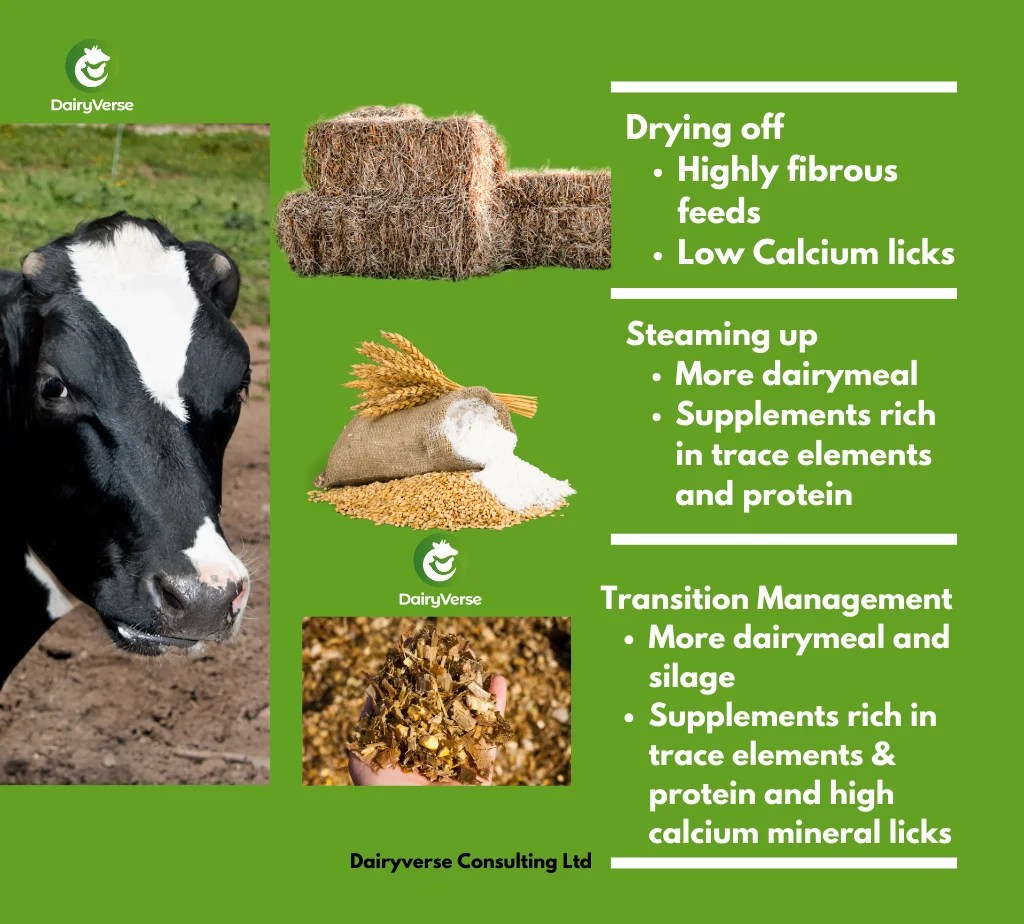
After conception, the most important milestones are drying off, steaming up and transition cow management. Failure to take care of these events will rob you of an opportunity to get more yields from your herd. Drying off should be done 8 weeks before calving together with steaming up that should start 18 days before calving. Transition cow management refers to taking care of the cow or heifer that is moving from incalf state to lactation state- milking phase.
Drying off gives your cow or heifer time to prepare herself for the lactation period. It is a resting period as opposed to the thought that it literally means to stop milking the cow. Drying off is marked by a change in diet in cows and heifers. In cows that were previously producing milk, you stop milking her and do dry cow therapy, a treatment to prevent occurrence of mastitis in the incalf cow. Drying off as previously indicated must be done at least 8 weeks before calving – at 7 months incalf. The change in diet is inclusion of highly fibrous feeds like hay and straw, reduction of the amount of silage used by 40%, reduction of dairymeal quantity to atmost 3 Kilograms daily and change of mineral lick from high Calcium minerals used by the cow or heifer previously that normally contain 18 – 20% Calcium to low mineral lick that has 5% Calcium – normally referred to as dry mineral lick. High Calcium mineral licks must strictly be avoided during the dry phase.
Steaming up is done during the dry period. The most ideal period to do it is 18 days before calving. It involves provision of high protein feeds to the dry cow in order to prepare her for high milk yield. Steaming up should not be done 2 months before calving! – Note the distinction. During the last 18 days of pregnancy, important activities take place in animals body which include transfer of valuable trace elements to the unborn calf to set her up for high performance after calving and multiplication of the cells of udder which is only possible during the last trimester of pregnancy. Better milk production performance during the subsequent lactation phase is determined by how well the udder will develop! To achieve high quality steaming for high milk yield, increase the amount of dairymeal provided to at least 5 Kilograms daily, continue feeding her on highly fibrous fodder, using dry mineral lick and introduce Tranzpro® 2 tablespoons daily.
Transition cow management refers to the care given to the cows and heifers that just started being milked following the incalf / pregnancy state. The change is far reaching and proper care must be given to the animals for sustained high production. It informs attainment of peak milk production that should occur by the 90th day after caving. After calving, the cows body responds by reduced feed intake yet they need more nutrients to support milk production, survive and be able to come on heat as early as from the 45th day into lactation. Success in transition cow management is determined by how well drying off and steaming up was done. Produces of proper drying off and steaming up are zero cases of retained placenta/after-birth, zero cases of mik fever and zero ketosis as a result of maintainance of a good body condition. This success might fail to be felt if the transition is poorly managed which leads to low milk yield. To achieve great results, adjust the nutrition of the cow that just calved down as follows. Reduce the highly fibrous fodder, increase the amount of silage upto 20 Kilograms daily – If using fresh fodder, upto 70 Kilograms daily, the quantity of dairymeal should be increased based on the level of milk yield, reintroduce high Calcium mineral lick and Tranzpro® for 36 more days. These changes must be made immediately after calving.
In conclusion, the key to high milk yield lies in maintenance of good body condition that is achieved through proper management of drying off, steaming up and care during the transition phase. These open limitless doors in milk production leading to success in dairy investments!
Dairy Farming As An Investment
Investment definition is an asset acquired or invested in order to build wealth and save money from the hard earned income or appreciation. Investment meaning is primarily to obtain an additional source of income or gain profit from the investment over a specific period of time. (According to Maxlife Insurance).
What do you take your farming venture for? – An investment or a gamble?
A gamble is a risky action taken with the hope of success. The expectations can be unrealistic a gambler’s mind. Let me bring the concept home. When you take your hard-earned income to buy a good dairy cow, you expect to get milk to sell daily and earn some profit and the cow to retain and increase her value. This is similar to majority of investment asset classes like shares where you expect dividends(milk) – some portion of profits and capital gains as the value of the share increases say from 30 to 45 Kenyan shillings. This typically takes place within a specified period of time. In majority of asset classes globally, the returns fall anywhere between 6 and 15% annually in conventional markets take a case of Safaricom shares or returns from your favourite Money Market Fund. But do you know that the returns of a dairy farm range from 25% to 35%.Return is a profit from an investment.
How do you get a profit?
According to Investopedia, Profit is calculated as total revenue less total expenses. For accounting purposes, companies report gross profit, operating profit, and net profit (the “bottom line”). Majority of dairy farmers rarely look at their ventures in this angle. This presents disappointment as they expect extraordinary profits as is the case in gambling. They fail to plan better in terms of operating expenses like feeding costs, veterinary costs and labour. As a result of poor planning and forecast, failure rate of these ventures increases.
Mindset shift that we require;
We must start looking at dairy farming holistically as an investment. We have to invest with a purpose and be realistic in our approach. Let us appreciate that money grows slowly as it has been depicted by data from various sources and we shouldn’t expect astronomical returns within a short period of time.We must be well prepared before starting dairy investments and mobilise enough capital to cater for the cashflow needs to enable us realise a dividend or capital gain. Picture this, feeding costs can go as high as 60% of the total monthly income. Majority of farmers in Githunguri put it as 50% for the cow and 50% for the owner in well managed operations.
What makes majority of dairy farms to fail?
Our research and experience working in various farms across the country indicate that majority of the farms fail as a result of cashflow shortfalls simply put, shortage in vash to offset short-term financial obligations. Sometimes the owner might have underestimated the cost of the operation leading to the shortfall. A rule in investments: High return ventures potentially hold high levels of risk. In a dairy farm, its not different. One missed step leads to cascadence other dangerous events. Take an instance of lack of concentrates or mineral licks for a week, this immediately cuts your dividends (milk) almost instantenously touches the capital gains or the value of your herd through emaciation, silent heat, slow growth rate in calves and losses due to milk fever among other vices. You will realise that you might fail to vaccinate your herd in good time due to lack of enough cash, an event that will lead to unfolding of other significant losses.
What are the practical tips to enhance chances of success in dairy investments?
At a producer’s level, it is important to understand that dairy farming is an investment and not a gamble. Do not expect astronomical returns.Dairy investments provide higher returns than most asset classes. Furthermore, the world population is growing as well as increase in living standards pushing consumption of dairy products higher day in day out, we have more mouths to feeds and thus the business opportunity. Adopt the right mindset understanding that you are out and about increasing the value of your seed capital through capital gains (herd expansion and value appreciation) and benefiting from dividends (milk proceeds).Money grows slowly. We are not advocating for limitation mindset:- We actually want you to experience abundance through the 7th wonder of the world, the power of compounding by giving your investment time to turn around. Compounding will be realized through getting a calf every year, calves and heifers growing faster, increase in in milk volumes, appreciation of the value of your farm by upgrading your genetics and increased turnovers from sales of bulls and breeding heifers. Get your capital structure in order. Being overly indebted a major cause of limitation in scalability and expansion of your venture.
You need more patient capital to succeed in any investment. The reasons being to help you keep up with cashflow cycles. The cash flow cycle measures how long it takes for a firm to recover cash that it invests in ongoing operations. Take an example an intention to keep 3 dairy cows each that costs Ksh. 150,000/= (most probably incalf heifers), assuming that you have land and have planted fodder, the other costs will be construction of the cow shed at a cost of Ksh. 200,000/=, you will need to set aside labour expenses for about 6 months, Ksh. 72,000/= and concentrates for a similar period (24 bags of dairymeal and 80 Kg mineral licks) a total of Ksh. 100,000/=. This is using a Kenyan concept that supports the argument (Waanze kujilisha) for the herd/business to take care of its own expenses from milk proceeds. You will have mobilized Ksh. 182,250/= by the 6th month having sold 4,050 Litres of milk from the herd assuming that the waiting periods for the heifers to calf down were varied. Don’t forget that for the next 6 months you will need to raise the calves, feed the milking herd, breed them, vaccinate and have them checked by your veterinarian. This simply means an additional Ksh. 178,000/= will be consumed to keep the farm up and running. To summarise, you will need a total of 1 Million Kenyan Shillings to run a herd of 3 heads of cattle for a year assuming that your fixed and variable costs will only be concentrates, mineral licks, cowshed construction, purchase of the incalf heifers, veterinary costs, raising calves, and zero fodder purchases.
So whats the return?
The maximum net revenues you can generate in the first year will be Ksh. 364,500/=. But another problem will present itself when it comes to management of the lactation cycles because past 305 days into lactation, production significantly drops and the animal should have been served by day 60 into lactation in order to have them dry for 2 months and then resume lactation. This makes our returns on the investment fall between 25 and 35% per year, the monthly net revenues are approximately Ksh. 30,000/=. This means that you can’t afford credit that requires you to pay an installment that is more than Ksh. 20,000/= per month and take home Ksh. 10,000/=. This caps your reliance on debt to maximum of 25% of your total investment. Since majority of financial institutions will give a loan repayable in a year.
IT IS OF UTMOST IMPORTANCE TO TREAT YOUR VENTURE AS AN INVESTMENT, NOT A GET-RICH-QUICK SCHEME. You will need to give your investment a minimum of 2½ years with proper capital structure and efficient management to recoup your investment by maximising your revenue streams from milk sales, sales of incalf heifers, young bulls, sale of surplus fodder and the expansion the herd.
Now that I’m already in the mix, how will I save myself?
Start by increasing your income or revenues. This is achievable through working on your cows at an individual level to ensure that they gain perceived value to unlock value incase you wish to sell some and increase milk yield that will increase milk sales revenue. Use of our strategic supplement, Booster+® will help you unlock this value in 54 days. Additionally, for the incalf cows and heifers, increasing their capacity to produce more milk and hold more value, steaming them up using Tranzpro® will help you unlock unimaginable value – more milk and better market value! This is done 18 days before and 36 days after calving. To unlock the value in compounding, start with turbocharging growth of your young heifers and bulls using Ndamaplus® for 90 days! Additionally, silent heat and delayed onset of heat is another factor holding hostage the compounding potential of herd, unlock it using Fertility+® in just 18 to 36 days!
Furthermore, work on enhancing your cashflow cycles having appreciated that you are now running an invest and not a gambling match. The cash flow cycle measures how long it takes for a firm to recover cash that it invests in ongoing operations. Keep your debt to asset ratio as low as possible. You need more patient capital. Have a plan on your exponential growth and generate a long-term strategy for your dairy business. Do not hold majority of your capital in assets that won’t generate a return like a cow shed, go for a simpler structure and invest more in highly liquid assets like a dairy cow. Produce sufficient fodder even before you being dairy cows onboard.
There are more advanced investment concepts in dairy farming like Dairy Futures in more advanced markets. Dairy futures are standardized contracts that obligate the buyer to purchase, and the seller to deliver, a specific quantity of a dairy product at a predetermined price on a future date. These contracts are traded on commodity exchanges, providing a mechanism for price discovery and risk management. Dairy futures help stabilize prices by allowing market participants to lock in prices ahead of time, protecting themselves against price fluctuations. These contracts, which are traded on exchanges such as the Chicago Mercantile Exchange (CME), European Energy Exchange (EEX) and Singapore Exchange (SGX), cover a wide range of dairy products and related commodities like whole milk, dry whey, cheese among others. We look forward to our African markets developing to these levels. Luckily, Kenyan coffee exchange has kicked off and dairy exchange and commodity listing should be in the offing.