How To Test For Mastitis Using CMT Method (California Mastitis Test)

Mastitis is a common yet costly issue for dairy farmers, characterized by the inflammation of the udder, often caused by bacterial infections. Detecting mastitis early is crucial to maintain milk quality, protect animal health, and prevent economic losses. One of the most effective and simple methods for detecting subclinical mastitis is the California Mastitis Test (CMT).
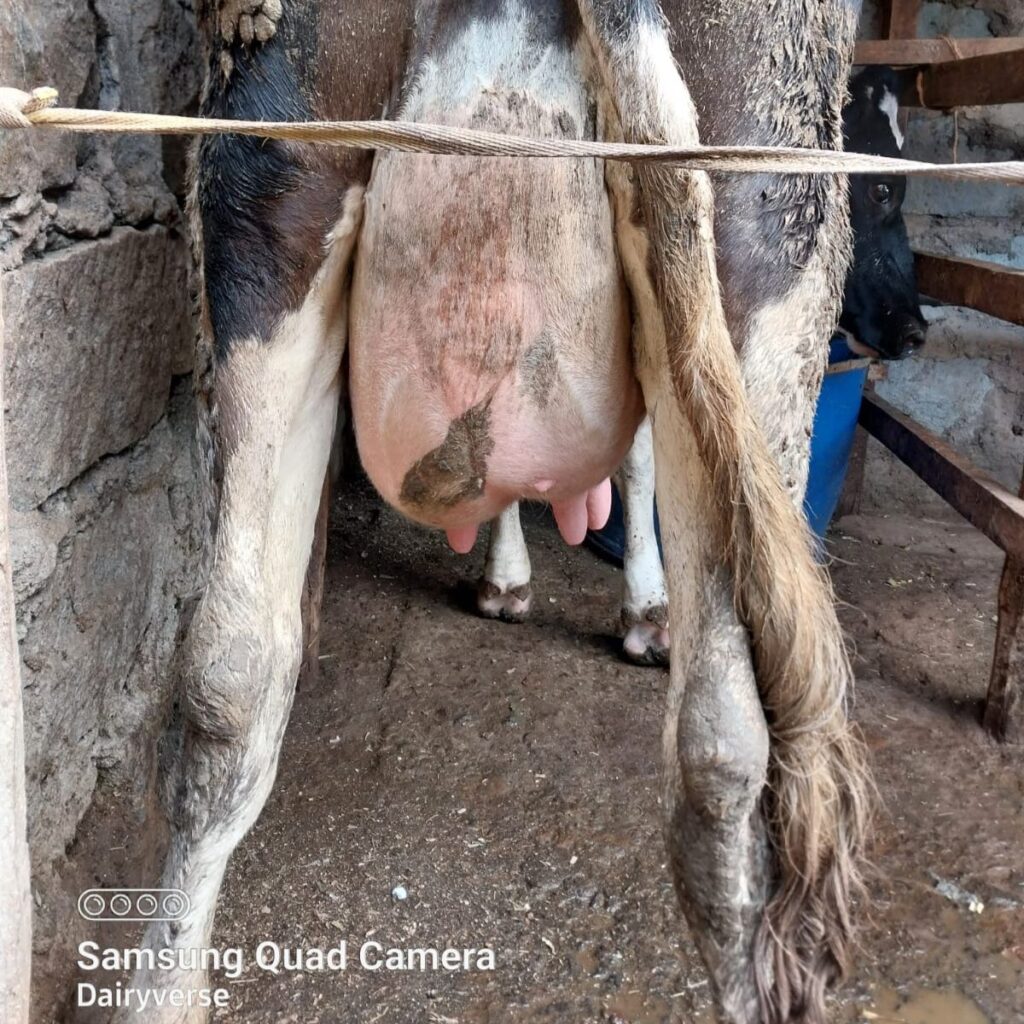
File: Mastitis case

What is the California Mastitis Test?
The CMT is a cow-side test that identifies the presence of somatic cells in milk, which increase in response to infection in the udder. The test is widely used because it is quick, affordable, and easy to perform without specialized equipment.

Why Test for Mastitis?
Early Detection: Identifies subclinical mastitis (no visible symptoms), which can progress to clinical mastitis if untreated.
Milk Quality Control: Prevents contaminated milk from entering the food supply.
Cost Reduction: Reduces treatment costs and prevents losses from discarded milk or decreased production.
Improved Herd Health: Enables targeted treatment and management of affected cows.

How to Perform the CMT
The test requires a CMT paddle (a four-well plastic paddle), CMT reagent, and milk samples from each quarter of the udder.
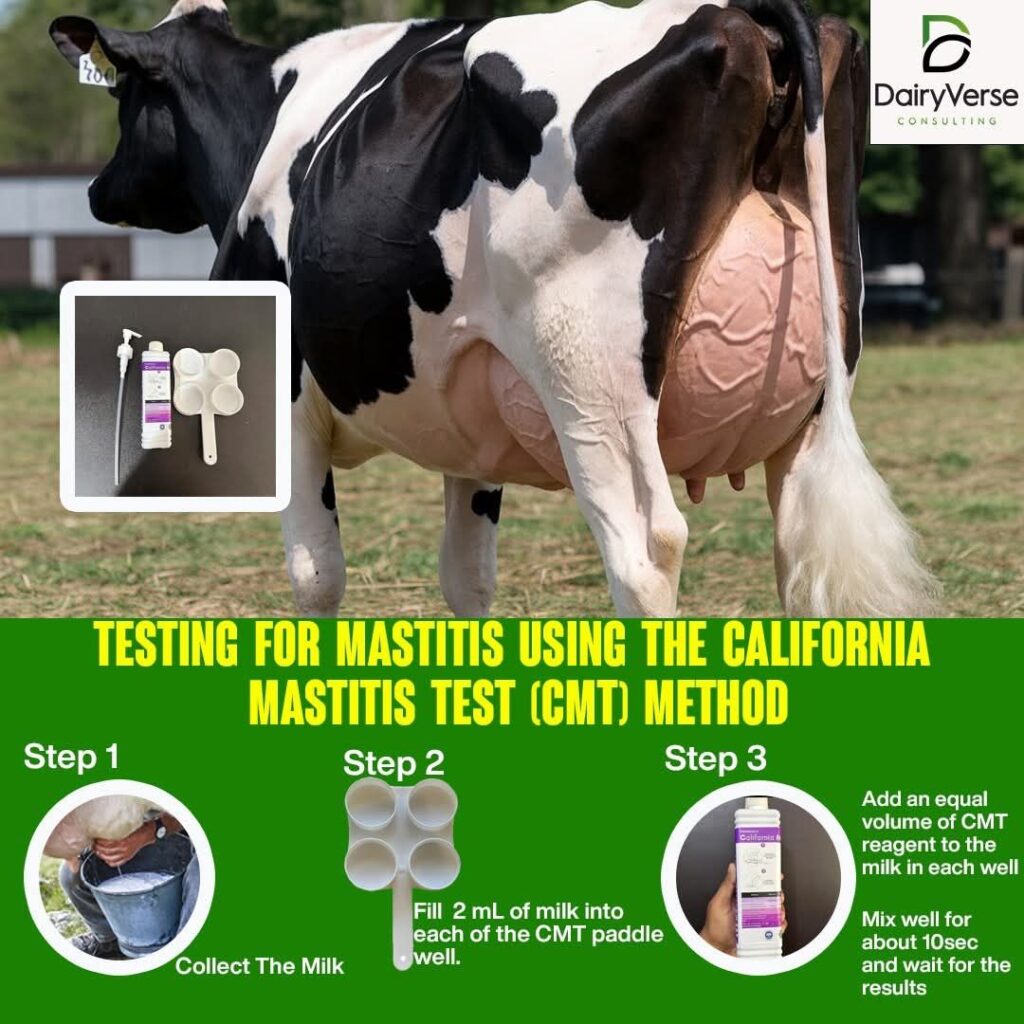
Collect the Milk Samples
Clean the teats thoroughly with a sanitizing solution and dry with a clean towel.
Discard the first few streams of milk to remove contaminants from the teat canal.
Express about 2 mL of milk from each quarter into the corresponding well of the CMT paddle.

Add the CMT Reagent
Add an equal volume of CMT reagent to the milk in each well.
Swirl the paddle gently in a circular motion for about 10 seconds to mix the milk and reagent.

Observe the Reaction
Look for changes in the consistency of the mixture.
The presence of somatic cells will cause the milk to form a gel-like substance.

Interpreting the Results
The CMT reaction is graded based on the degree of gel formation:
Negative (-): No reaction; milk remains liquid.
Trace (T): Slight thickening; subclinical mastitis may be present.
Weak Positive (+): Gel formation; infection likely.
Strong Positive (++/+++): Thick gel or clumps; indicates high somatic cell count and likely infection.

Tips for Accurate Testing
Use a clean paddle and fresh reagent for every test.
Test milk at body temperature for consistent results.
Follow up positive tests with laboratory cultures for pathogen identification and treatment planning.

Post-Test Actions
For Positive Results: Consult a veterinarian for treatment recommendations, including antibiotics or alternative therapies. Isolate infected cows to prevent spreading the infection.
For Negative Results: Maintain good milking hygiene and udder health practices to prevent future infections.

The California Mastitis Test is an invaluable tool for dairy farmers to detect mastitis early and maintain herd health. Regular testing, combined with proper hygiene and management, can significantly reduce mastitis cases, improving milk quality and boosting farm profitability. By integrating the CMT method into your herd management routine, you ensure healthier cows and a more productive dairy operation.

Remember: Healthy udders produce healthy milk, so invest in testing for the best outcomes!


Understanding the Cause of Watery Milk in Dairy Cows

Milk quality is a crucial indicator of a cow’s health, and issues like watery milk or low-fat content can signal underlying problems. In this article, we’ll explore a specific case where a cow produces watery milk with little to no butterfat. While treatment temporarily improves the situation, the problem reoccurs after about 20 days. Let’s dive into what might be happening and how to address it.


The Problem

The affected cow is exhibiting the following symptoms:

  1. Producing low-fat, watery milk with no taste or richness.
  2. When the milk is left to ferment (to create ‘maziwa lala’ or soured milk), it turns almost entirely to water, with minimal traces of milk solids.
  3. Treatment with dewormers and injections like Trypamed temporarily improves the milk quality, but the issue returns after a few days or weeks.

These symptoms suggest a combination of nutritional, health, and management challenges.


Possible Causes

  1. Poor Nutrition

    • A cow’s diet plays a major role in milk production. A diet lacking in energy, protein, or essential nutrients results in poor milk quality. If the cow isn’t getting sufficient concentrates, roughage, or minerals, the milk may appear thin and watery.
    • Solution: Ensure the cow is fed a balanced diet, including quality roughage (like hay or silage) and supplements if needed.

  2. Mastitis (Udder Infection)

    • Mastitis is a common issue that affects milk composition. Even when it isn’t obvious (subclinical mastitis), it can cause the milk to lose its fat content, making it watery.
    • Solution: Conduct a California Mastitis Test (CMT) or consult a veterinarian for a diagnosis. Maintaining udder hygiene before and after milking can prevent this condition.

  3. Parasitic Infestation

    • Internal parasites, such as worms, can weaken a cow’s immune system, reduce feed efficiency, and impact milk production. Deworming temporarily helps, but if the cow is reinfected, the problem can quickly return.
    • Solution: Administer a proper deworming schedule using effective medications. Ensure the environment is clean to reduce reinfection risks.

  4. Trypanosomiasis (Nagana)

    • Trypanosomiasis, also known as nagana, is a disease caused by tsetse flies. Symptoms include low milk production, weight loss, and lethargy. The temporary improvement after Trypamed treatment suggests that the disease could be recurring due to reinfection or incomplete treatment.
    • Solution: Control tsetse flies in the area using traps or sprays. Ensure the cow receives the full treatment course as prescribed by a veterinarian.

  5. Stress and Poor Management

    • Stressful conditions, such as overcrowding, lack of rest, or poor housing, can also reduce milk quality. If the cow is not comfortable, her body won’t prioritize producing quality milk.
    • Solution: Provide a clean, comfortable, and stress-free environment for the cow.

How to Fix the Problem

To address these recurring issues, consider the following steps:

  1. Consult a Veterinarian

    • A veterinarian can conduct tests for mastitis, trypanosomiasis, and other infections to identify the root cause.

  2. Improve Nutrition

    • Proper nutrition is crucial for improving milk quality and overall cow health. A balanced diet should include quality roughage, concentrates, and essential minerals.
    • Use Booster+®: This supplement significantly improves metabolic processes in dairy cows, promoting overall health and productivity.

      • High Protein and Energy Content: Booster+® is rich in protein and energy, which are essential for milk yield and the cow’s overall well-being.
      • Benefits:

        1. Increased Milk Yield: Booster+® supports cows in achieving higher milk production, particularly those that have been lagging in yield.
        2. Recovery Support: It helps previously ill cows recover swiftly and return to optimal production levels.
        3. Heat Onset Enhancement: Booster+® reduces delays in heat onset for milking cows.
        4. Body Condition Improvement: It improves body condition, combats stunted growth, and ensures the cow maintains a healthy weight.

  3. Maintain Hygiene

    • Clean the cow’s udder before and after milking. Keep the living area dry and clean to reduce the risk of infections and parasites.

  4. Follow a Proper Deworming Schedule

    • Use effective dewormers at regular intervals. Monitor the cow’s fecal matter for signs of reinfection.

  5. Control Tsetse Flies

    • If trypanosomiasis is confirmed, implement measures to reduce tsetse flies, such as insecticides, traps, or clearing bushes where the flies breed.

  6. Monitor Milk Quality

    • Regularly check the cow’s milk for signs of improvement or recurring issues. Track how long the improvements last after treatment to help your vet identify patterns.


Conclusion

Watery milk in dairy cows can stem from a range of issues, including poor nutrition, infections like mastitis, parasites, and trypanosomiasis. While temporary treatments provide short-term relief, addressing the root cause is essential for long-term improvement.

By incorporating a high-quality supplement like Booster+®, improving the cow’s diet, ensuring proper hygiene, and seeking veterinary support, you can restore milk quality and productivity. Healthy cows mean better milk production—and a happier farmer!

If you’re facing similar challenges, don’t hesitate to consult a veterinarian for personalized advice. Remember, prevention is always better than cure!


How Rain Affects Dairy Nutrition

Rainy seasons can significantly impact dairy nutrition, exposing your herd to various challenges that can reduce productivity and overall health. Understanding these effects and taking preventive measures can help you maintain your herd’s well-being and productivity.

Challenges of Rain on Dairy Nutrition

Leaching of Trace Elements

Heavy rains wash away essential minerals from the soil, leading to deficiencies in trace elements such as zinc, copper, and selenium.

These deficiencies often result in issues like:
– Silent heat in cows.
– Rough, discolored coats.
– Lowered immunity and reproductive challenges.

Reduced Rumen Efficiency
Rain affects the quality of pasture by reducing its fiber content and upsetting the balance of beneficial bacteria and fungi in the rumen. This can lead to:

– Poor digestion and diarrhea.
Reduced protein intake due to improper digestion of low-fiber grass.

Increased Spread of Internal Parasites
Wet conditions create ideal breeding grounds for parasites, increasing the risk of worm infestations that can harm both calves and adult cows.

How to Protect Your Herd During the Rainy Season

Support Digestive Health with Booster+®
Booster+® helps maintain your milking cows’ digestive ability by replenishing essential trace elements, proteins, and energy lost due to poor pasture quality. This ensures:
– Consistent milk production.
– Healthy body condition.
– Improved coat appearance.

Ensure Timely Heat Cycles with Fertility+®
Fertility+® addresses reproductive health issues caused by mineral deficiencies, ensuring cows come on heat on time, thereby supporting efficient breeding programs.

Prepare for High Yield with Tranzpro®
For in-calf cows, Tranzpro® is a powerful supplement to boost energy levels, maintain appetite, and prepare cows for high milk yield post-calving. Administer it 18 days before calving and continue for 36 days post-calving for optimal results.

Boost Calf Growth with Ndamaplus®
Ndamaplus® is essential for supporting healthy calf growth during this challenging season. It prevents pot-bellies, encourages fast growth, and ensures strong immunity to keep your young herd thriving.

By implementing these measures, you can protect your herd from the adverse effects of rain and ensure high productivity throughout the season. Dairy farming success begins with proactive care—invest in your cows’ nutrition and health today!

For any questions related to dairy farming, feel free to reach out to our team on Call/WhatsApp:- 0743 699 774.
#Dairyfarmingtips #HealthyCalves #CalfCare #HealthyHerds #dairyinvestors #restoredairycow #ask_dairyverse_experts #colourfulandcenty #highmilkyieldseries #HappyCows #dairyverse #calves #fyp #farming #restoreplus #boosterplus #fertilityplus #ndamaplus #tranzpro


The Story of Kared and Milk Fever

This story was shared by a friend, and it highlights how a lack of knowledge led to the loss of a beloved cow, Kared. Kared was an Ayrshire cow with excellent milk production. Her milk was always sold because we never drank it ourselves, as it was lighter than Holstein milk. But one year, after calving, Kared’s health started to decline.

Kared’s Health Declines

Normally, Kared would come into heat every year after calving, and her milk production remained strong. She had calved multiple times, and each time, her calves were as strong as she was. But this time was different. Kared struggled to stand after giving birth. Her milk production dropped, and her appetite decreased. She looked weaker each day.

The Struggle to Save Kared

We called the vet, and Kared was treated with multiple injections over three days. It was a lot of work just to get her to stand, so the calf could feed. Sadly, despite our efforts, Kared didn’t improve. She was no longer able to stand on her own. I remember seeing a group of men preparing to transport her. Since Kared couldn’t walk, they had to lift her into the car. She was sold for just 20,000, far below her worth.

Realizing the Cause of Kared’s Condition

Years later, I came across an article from Dairyverse about milk fever and its symptoms. That’s when I realized Kared’s condition might have been caused by milk fever, which could have been prevented with proper care.

How to Prevent Milk Fever

Milk fever is a common condition in cows, especially around calving. To prevent milk fever, it’s important to manage the cow’s calcium levels before and after calving. Here’s how to do it:

  • Feed a low-calcium diet during the dry period to stimulate the cow’s natural calcium-regulating mechanisms.
  • Use anionic salts to help maintain proper calcium balance.
  • Ensure the cow receives adequate magnesium, which aids calcium absorption.
  • After calving, provide oral calcium supplements to high-risk cows to prevent sudden drops in calcium levels.

If milk fever occurs, it should be treated immediately with intravenous calcium under veterinary supervision.

Dairyverse: Educating Farmers

Thanks to informative articles from Dairyverse, I now understand how to prevent conditions like milk fever. Dairyverse has been a game-changer for farmers, offering valuable education on how to care for cows and prevent diseases. If we had known about milk fever back then, we could have saved Kared.


How to Know If a Cow Is Pregnant: A Guide for the First Two Months

Determining if a cow is pregnant, especially during the first two months, can be challenging but is essential for effective herd management. Early detection helps farmers provide proper care, adjust feeding schedules, and ensure the health of both the cow and the developing calf. Here are some practical ways to identify pregnancy in your cows during the early stages.

1. Behavioral Changes

One of the earliest signs of pregnancy is the absence of heat cycles. A pregnant cow will not show signs of estrus, such as restlessness, mounting other cows, or standing to be mounted. If a cow hasn’t returned to heat 18-24 days after breeding, it could indicate pregnancy.

2. Changes in Appetite and Behavior

Pregnant cows may show subtle changes in behavior, such as reduced appetite or being less active than usual. While not definitive, these changes can be a clue, especially if combined with other signs.

3. Observation of Physical Changes

  • Udder Development: In some cases, slight udder development or changes in the size and shape of the abdomen can be noticed. However, these signs are more apparent later in pregnancy.
  • Vulva Changes: The vulva might appear slightly swollen or relaxed.

4. Milk Progesterone Testing

Milk or blood progesterone tests are a reliable way to determine pregnancy as early as 21 days post-breeding. These tests measure progesterone levels, which are elevated during pregnancy.

5. Rectal Palpation

Performed by a trained professional, rectal palpation is one of the most common methods for early pregnancy detection. By feeling the reproductive tract, a veterinarian can often detect changes associated with pregnancy around 30-40 days post-breeding.

6. Ultrasound Scanning

Ultrasound is the most accurate method for early pregnancy detection, allowing veterinarians to detect pregnancy as early as 28 days post-breeding. It also provides valuable information about the health of the fetus and the reproductive system.

Tips for Early Detection

  • Track Breeding Dates: Keeping accurate records of breeding dates helps estimate when to check for pregnancy.
  • Monitor Carefully: Pay close attention to the cow’s behavior and physical condition.
  • Work with a Vet: Partnering with a veterinarian ensures accurate and timely pregnancy diagnoses.

By using these methods and staying observant, you can effectively identify pregnancy in your cows during the tricky first two months. Early detection not only supports better cow health but also enhances farm productivity.


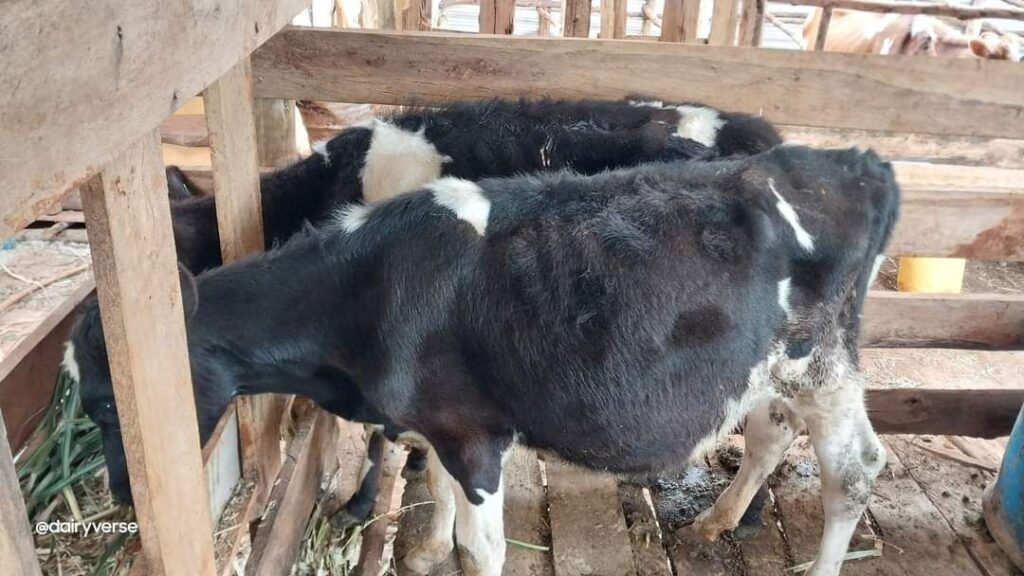
Why do calves develop pot-bellies?

A big stomach (or enlarged abdomen) in calves can be due to various factors, some of which are normal and others that may indicate health issues. Here are some common reasons and their potential effects:

  1. Rumen Development

Reason: When young calves start to consume solid feed (forage and grains) in addition to milk, their rumen (the largest stomach compartment in adult cattle) begins to develop. This often results in a noticeable bulge on the left side of the abdomen as the rumen grows.

Effect: This is a healthy and normal process in dairy calves, necessary for them to transition from a milk-based diet to solid feed. As the rumen matures, calves become more efficient at digesting fibrous plant material, which is crucial for dairy productivity later on.

  1. Bloat

Reason: Bloat occurs when there is an excessive buildup of gas in the rumen. It can be caused by improper feeding, sudden diet changes, or consuming excessive amounts of lush, green forage. Bloat may also result from certain high-protein feeds, which increase gas production during digestion.

Effect: Bloat can be dangerous. It can lead to respiratory issues due to pressure on the lungs and can potentially be fatal if not addressed quickly. Symptoms include a visibly distended abdomen, especially on the left side, discomfort, and restlessness. Immediate veterinary attention is often required to relieve the gas.

  1. Poor-quality Feed or Indigestible Material

Reason: Feeding calves poor-quality forage or indigestible materials can cause an accumulation in the rumen, which may lead to an enlarged abdomen and a condition called “hay belly.”

Effect: This can impair the calf’s nutrient absorption, slow growth, and weaken immune function, as the rumen fills with undigested material rather than high-quality nutrients needed for development. Over time, this may lead to stunted growth and lower milk production in the future.

  1. Parasitic Infection

Reason: Worms and other parasites can infect the digestive tract, causing bloating and a distended abdomen. This is common in calves if they graze on contaminated pastures or are exposed to unsanitary conditions.

Effect: Parasitic infections can lead to malnutrition, poor growth, diarrhea, and a weakened immune system. Regular deworming and sanitation are essential for preventing parasite-related abdominal enlargement.

  1. Fluid Retention (Ascites)

Reason: In rare cases, a big stomach can be due to fluid retention, which may be a symptom of liver or heart problems. This causes an abnormal buildup of fluid in the abdominal cavity.

Effect: Ascites can lead to difficulty breathing, poor growth, and general ill health. This condition requires veterinary diagnosis and treatment, as it can signify underlying health issues.

  1. Overfeeding of Milk or Milk Replacer

Reason: Feeding excessive milk or milk replacer can cause the calf’s stomach to distend. Young calves may drink more than they need, especially if milk is provided in large quantities or at irregular intervals.

Effect: Overfeeding can lead to digestive upset, diarrhea, and increased risk of bloat or other digestive disorders. A consistent feeding schedule with appropriate amounts can help avoid this issue.

For any questions related to dairy farming, feel free to reach out to our team on Call/WhatsApp:- 0743 699 774.


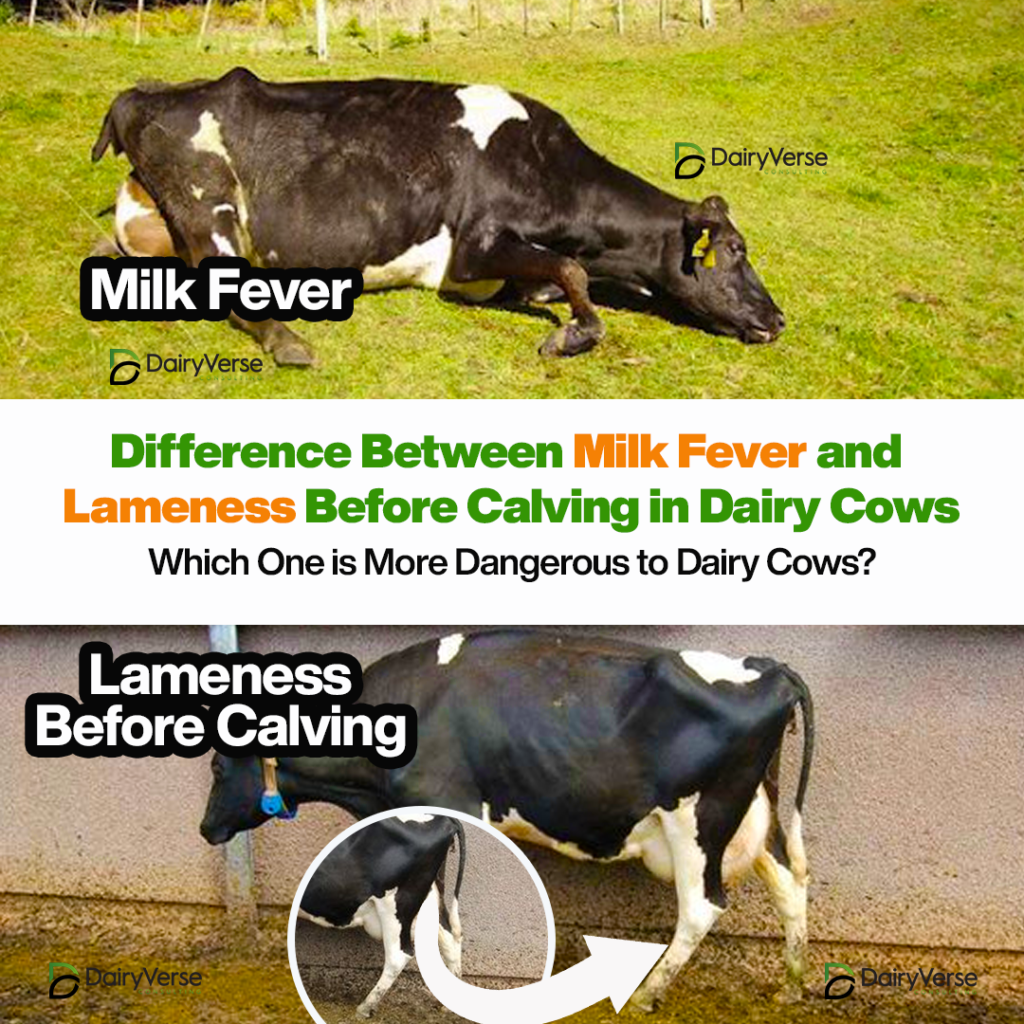
Understanding Milk Fever and Lameness Before Calving in Dairy Cows

Milk fever and lameness are two significant health issues in dairy cows, especially around the time of calving. Though they may seem similar due to some overlapping symptoms, they have distinct causes and require different treatments. This article will explain these conditions, highlighting their differences, causes, symptoms, and potential solutions.


1. Milk Fever in Dairy Cows

What is Milk Fever?
Milk fever, also known as hypocalcemia, is a metabolic disorder that commonly occurs in high-producing dairy cows around the time of calving. It is caused by a sudden drop in blood calcium levels, which is needed for muscle function and other physiological processes. When calcium is rapidly drained for milk production, it can lead to a deficiency, affecting the cow’s overall health.

Symptoms of Milk Fever

  • The cow is often weak and uninterested in eating.
  • It may fold its neck to its body and lie down, unable to rise.
  • Muscle tremors and twitching can also occur due to calcium deficiency.
  • The cow’s body temperature may drop, and in severe cases, it could lead to coma or death if not treated promptly.

Causes of Milk Fever
The primary cause of milk fever is a sudden decrease in blood calcium levels, often triggered by the demands of lactation after calving. Factors that can increase the risk include:

  • High levels of potassium in the diet before calving.
  • Insufficient calcium intake during the dry period.
  • Older cows or cows with a history of milk fever are more susceptible.

Treatment and Prevention

  • Calcium Supplementation: Administer intravenous calcium immediately to raise blood calcium levels, followed by oral calcium supplements to stabilize the condition.
  • Diet Management: Feeding a low-calcium diet in the dry period encourages the cow’s body to adjust to the increased calcium demand post-calving. Also, reducing dietary potassium levels can help.
  • Mineral Balancing: Ensure a balanced diet with appropriate levels of magnesium and phosphorus to support calcium absorption.

2. Lameness Before Calving

What is Lameness Before Calving?
Lameness before calving, often linked with “Alert Downer Cow Syndrome,” occurs when a cow is unable to stand or walk comfortably, despite having a good appetite and alert demeanor. This condition is usually due to physical injury, muscular strain, or nerve damage caused by the weight and pressure of a growing fetus in late pregnancy.

Symptoms of Lameness Before Calving

  • The cow appears alert and responsive, with a strong appetite.
  • It shows interest in getting up but struggles due to pain or weakness in the legs.
  • It may attempt to stand but is unable to bear weight on one or more limbs.

Causes of Lameness Before Calving
This type of lameness is often due to:

  • Pressure on the sciatic nerve or other nerves in the hind legs, caused by the weight of the calf.
  • Muscular or ligament strain, especially in high-producing dairy breeds that carry heavy calves.
  • Injuries sustained from slipping or improper footing in the barn.

Treatment and Prevention

  • Pain Management: Anti-inflammatory medications can reduce pain and swelling, helping the cow attempt to stand.
  • Supportive Care: Regularly turn the cow to prevent muscle atrophy and bed her on soft, dry bedding to minimize discomfort.
  • Exercise and Comfort: Ensure cows have a non-slip, well-bedded area to lie down and move around comfortably. Regular hoof trimming and maintaining proper flooring can help reduce risks.
  • Proper Calving Management: Monitor cows closely during late pregnancy and calving, providing assistance if needed to avoid strain.

Differences Between Milk Fever and Lameness Before Calving

Feature Milk Fever Lameness Before Calving
Primary Cause Calcium deficiency post-calving Nerve damage, muscular strain, or injury
Symptoms Weakness, muscle tremors, lack of appetite Alert, good appetite, but difficulty standing
Onset Usually around or shortly after calving Primarily in late pregnancy, before calving
Immediate Action Calcium supplementation Pain relief and supportive care
Long-Term Solution Dietary management during the dry period Proper care during pregnancy and calving

Conclusion

Milk fever and lameness before calving are challenging conditions for dairy cows, requiring attentive management to ensure the well-being of the animal. Understanding their differences, causes, and treatments can help farmers act promptly and effectively, ensuring a healthy calving period and post-calving recovery. By implementing dietary adjustments, pain management, and proper calving care, farmers can minimize the risks associated with these conditions, improving overall herd health and productivity.


Understanding the Dutch Dairy Miracle: Why the Netherlands Outperforms Kenya and Nigeria in Milk Production

When you look at the global dairy industry, the Netherlands stands out as a small yet powerful giant. Despite having a cattle population of just 3.8 million in 2022, the Netherlands produced an astonishing 14.5 billion liters of  milk. In contrast, Kenya, with a cattle population of 23.5 million, and Nigeria, with 20.9 million cattle, managed to produce only 4.5 billion and 0.53 billion liters of milk, respectively. This discrepancy begs the question: Why does the Netherlands, with far fewer cows, outperform these larger African nations in milk production?

Key Factors Behind the Netherlands’ High Milk Production

  1. Advanced Dairy Farming Technology:

    • The Netherlands is a global leader in dairy farming technology. From automated milking machines to sophisticated herd management systems, Dutch farmers have embraced innovation at every level. These technologies optimize the health, nutrition, and productivity of each cow, leading to higher milk yields.

  2. Selective Breeding and Genetics:

    • Dutch dairy farmers have invested heavily in selective breeding programs aimed at improving the genetic makeup of their cattle. The result is a breed of cows that are not only healthier but also more productive. These cows produce more milk per day compared to the average cow in Kenya or Nigeria, where breeding programs may not be as advanced or widespread.

  3. Efficient Feed and Nutrition Management:

    • The quality and consistency of feed are critical factors in milk production. In the Netherlands, cows are fed a highly nutritious diet that is carefully formulated to meet their specific needs. This diet often includes high-quality forages, grains, and supplements that enhance milk production. In contrast, many Kenyan and Nigerian farmers rely on less consistent and lower-quality feeds, which can limit milk output.

  4. Comprehensive Farmer Education and Support:

    • The Dutch government and private sector have invested in extensive farmer education programs. Dutch farmers have access to continuous training and support, which helps them stay updated with the latest farming techniques and technologies. In Kenya and Nigeria, however, access to such training and resources is often limited, leading to less efficient farming practices.

  5. Excellent Veterinary Services and Herd Health Management:

    • In the Netherlands, veterinary services are readily available, and there is a strong focus on herd health management. This ensures that cows remain healthy and productive throughout their lives. Diseases and health issues are promptly addressed, reducing the chances of milk production declines. In contrast, many Kenyan and Nigerian farmers struggle with access to veterinary care, which can lead to lower productivity.

Strategies to Increase Milk Production in Kenya

To improve Kenya’s milk production, several strategies can be implemented, drawing from the Dutch example:

  1. Investment in Dairy Farming Technology:

    • Solution: The Kenyan government, in collaboration with the private sector, should invest in modern dairy farming technologies. This includes subsidizing the cost of automated milking machines, cooling systems, and herd management software to make them accessible to small-scale farmers.

  2. Enhancing Breeding Programs:

    • Solution: Kenya should develop and expand selective breeding programs. By collaborating with international breeding experts and establishing local breeding centers, Kenyan farmers can access high-quality breeds that are more productive and resilient.

  3. Improving Feed Quality and Availability:

    • Solution: The Kenyan government and agricultural organizations should focus on improving the quality and availability of livestock feed. This could involve promoting the cultivation of high-quality forage crops and providing subsidies for feed supplements. Additionally, educating farmers on proper nutrition and feed management is essential.

  4. Expanding Farmer Education and Training:

    • Solution: Establishing more agricultural extension services and training centers across the country will help farmers stay informed about best practices in dairy farming. This can include workshops, online courses, and farmer field schools focusing on modern farming techniques, animal health, and efficient farm management.

  5. Strengthening Veterinary Services:

    • Solution: Improving access to veterinary services is crucial. The government should invest in training more veterinarians and deploying them to rural areas. Mobile veterinary clinics and telemedicine services can also help reach farmers in remote locations, ensuring that herd health issues are addressed promptly.

  6. Creating Cooperative Models:

    • Solution: Encouraging the formation of dairy cooperatives can help small-scale farmers pool resources, access better markets, and invest in shared infrastructure such as cooling plants and processing facilities. Cooperatives can also serve as platforms for collective bargaining, reducing the cost of inputs and increasing profitability.

  7. Encouraging Public-Private Partnerships:

    • Solution: Public-private partnerships can play a significant role in enhancing the dairy sge, technology, and capital necessary to modernize the dairy industry.

Conclusion

While the Netherlands may have a smaller cattle population, its success in  milk production is a result of a combination of advanced technology, selective breeding, efficient feed management, and comprehensive farmer support. By adopting similar strategies and tailoring them to the local context, Kenya can significantly boost its milk production, ensuring food security, improving livelihoods, and reducing dependency on imports. The journey may require substantial investment and policy shifts, but the potential benefits make it a worthwhile endeavor for the future of Kenya’s dairy industry


How to manage a Dry Cow

A cow or heifer during the last 8 weeks of pregnancy is referred to as a Dry Cow. Feeding your incalf animal at this stage is critical. It should be taken seriously because failure to that has devastating effects, she may fail to stand up before or after calving and  milk yield may be affected negatively after calving.
Nutrition plan should change at 7 months incalf. You should swicth from use of heifer mineral lick or milk producing animal mineral lick that has high calcium to Dry mineral lick. Ensure that you provide the incalf animal with enough fodder and concentrates. We recommend use of high energy concentrates like maizegerm upto 4 Kg per day. This will ensure that she has the correct body condition score.

Did you know that your incalf animal should not show more than 3 ribs?
We recommend reduction of the amount of silage provided to the cow by 50%. This will serve to prevent twisting of the abomasum. You should substitute it with higher quality feeds (Bhoma rhode hay or Fresh Super Napier grass) in order to prevent starvation
You should stop milking your cow at least 8 weeks to calving. Mastitis prevention should be done. The type of mastitis that affects dry cows is called summer mastitis. There are intramamary infusion preparations that are commercially available for this purpose.
Introduction of dry mineral lick. This type of mineral contains low amounts of Calcium. It helps your cow mobilize Calcium to enhance health and prevent risk of milk fever.

Udder development is key for higher yields.

Proper steaming up and transitional cow management will help you hit a profitable milk-yield peak faster, counter reduced appetite and problems like milk fever and ketosis at a go!

Steaming up should begin three weeks prior to calving. This helps prepare your cow for higher milk production after parturition. This is done through provision of high quality feeds like dairymeal upto 5 Kg/day, Tranzpro® 18 days before calving and 36 days after calving and slightly higher quantity of dairymeal during the last 2 weeks (Upto 5 Kg per day). During the last week of pregnancy, do not introduce mineral lick suitable for lactating cows because it might disrupt calcium balance in blood leading to milk fever. Keep observing for eminent signs of calving so that proper is given to the dam and the calf at parturition.

After calving down, milk the cow and give your calf colostrum before 6 hours are over. Additionally, feed your cow with mineral lick meant for milking cows that typically has high levels of Calcium. Reintroduce high quality fodder as well and the right quantities of dairymeal. To learn more on how to make Total Mixed Ration, click here.


Feeding a dairy calf from birth to 12 months of age

Feeding is fundamental in establishment of a strong foundation for a profitable dairy herd. We have to start with the basics. A dairy calf should be fed well right from birth to maturity. This will prepare her to produce more  milk and gather more value. You will get more milk and no cases of delayed or silent heat.

The first 3 Days of life;
A calf should be fed on clean and high quality colostrum alone. The colostrum should be warm, provide her with colostrum directly from the dam. In commercial dairy farms, we don’t allow the calf to suckle.
Provide her with a total of 6 litres of colostrum a day. Water should be introduced to her early enough in order to train to differentiate it from milk. This will be important to prevent health conditions like blood in urine.
Learn more on how to feed her:-

2 Weeks of age;
You should introduce starter pellets upto 50 grams per day. Soft solid feeds such as sweet potato vines should also be introduced. This will help in development of the rumen part of the stomach.

1 Month of age;
She should be fed on 3-4 litres of cow milk per day together with about 120 grams of starter pellets. Feeding frequency should be twice a day.
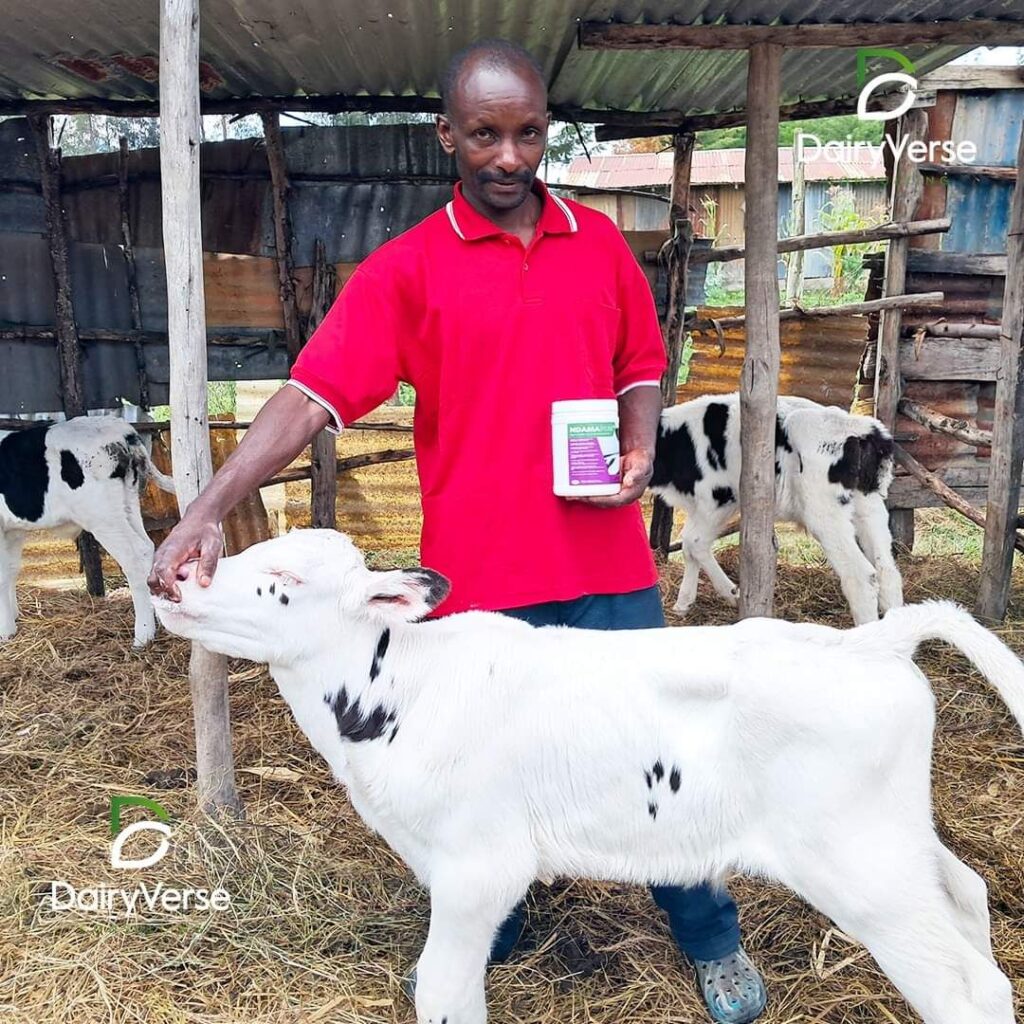
At one month of age, you should deworm your calf and introduce Ndamaplus at the rate of 12.5 grams mixed with the soaked pellets.

2 Months of age;
Continue providing your calf with 2-3 litres of cow milk and starter pellets. Ensure that you deworm her and continue using the right mineral lick.

3 Months of age;
Prepare your calf for weaning. Provide her with 1-2 litres of milk and finisher pellets. Deworm her and continue using mineral lick and introduce mineral block. Remember to continue using Ndamaplus®️ in order to prevent stress that comes after weaning. It helps your cow to grow faster.

4 Months of age;
Provide her with calf weaner meal. She is is wean off. Provide her with adequate amounts of hay and silage. Deworming should be done as well. This ensures that she is well ushered into the next phase of life.

5 – 12 Months of age
In most cases, this phase becomes the hardest to most dairy farmers. Their growth slows down, health becomes poor, some calves fail to stand up and they may die. You may have experienced these challenge before. Do not be afraid, we will show you how to go about this phase properly and incase you have young stock that are already suffering you can contact our team of experts for help.
Introduce dairymeal to your dairy calf at the rate of 1kg per day. Provide her with high quality feeds for example high quality corn silage and bhoma rhodes. Majority of us fail to provide enough quantity of fodder to our fast growing calves at this age that contributes to poor growth rate. Our standard at Dairyverse Consulting is ad libitum provision of fodder;- self limit. Allow them to have enough of the fodder because their bodies have a high demand for energy that is primarily gotten from these feed sources.
To help in proper formation of bones and body structure provide her with mineral licks rich in calcium. Past 6 months of age, ensure that you deworm your calf after every 2 months. This eliminates competition for nutrients and helps the calf to grow faster.
Ensure that your managers and farmhands observe your calf closely in order to have her in good health. Provide comfortable housing as well.

Proper application of the aforementioned best practices will bring you admirable results;- Timely onset of heat and high  milk yield after calving.