Best Way to Prepare a Cow’s Udder for Calving and High Milk Production
Preparing the Udder for Calving
A cow’s udder plays a vital role in milk production, it’s where all the hard work of turning nutrients into milk happens. As calving time approaches, the udder starts to develop rapidly, preparing to store milk for the newborn calf. For farmers, ensuring that the udder develops well and remains healthy before and after calving is key to getting high milk yields and keeping the cow comfortable.
One of the best ways to support udder development is through Tranzpro®. ✅ Tranzpro® is given 18 days before calving and continued for 36 days after. It helps the cow’s body prepare for milk production by promoting good udder health and strong tissue development. A well-developed udder means better milk let-down, more capacity for milk storage, and an easier start to lactation.
Beyond that, Tranzpro® also helps:
Keep the udder healthy and reduce swelling or infection risks
Prevent retained afterbirth
Improve appetite after calving
Speed up recovery in weak or sick cows
Boost milk production, especially in first-time heifers
In short, when you prepare the udder early, you prepare the cow for success after calving, and Tranzpro® is your partner in that journey.
End Delayed and Silent Heat with Fertility+®
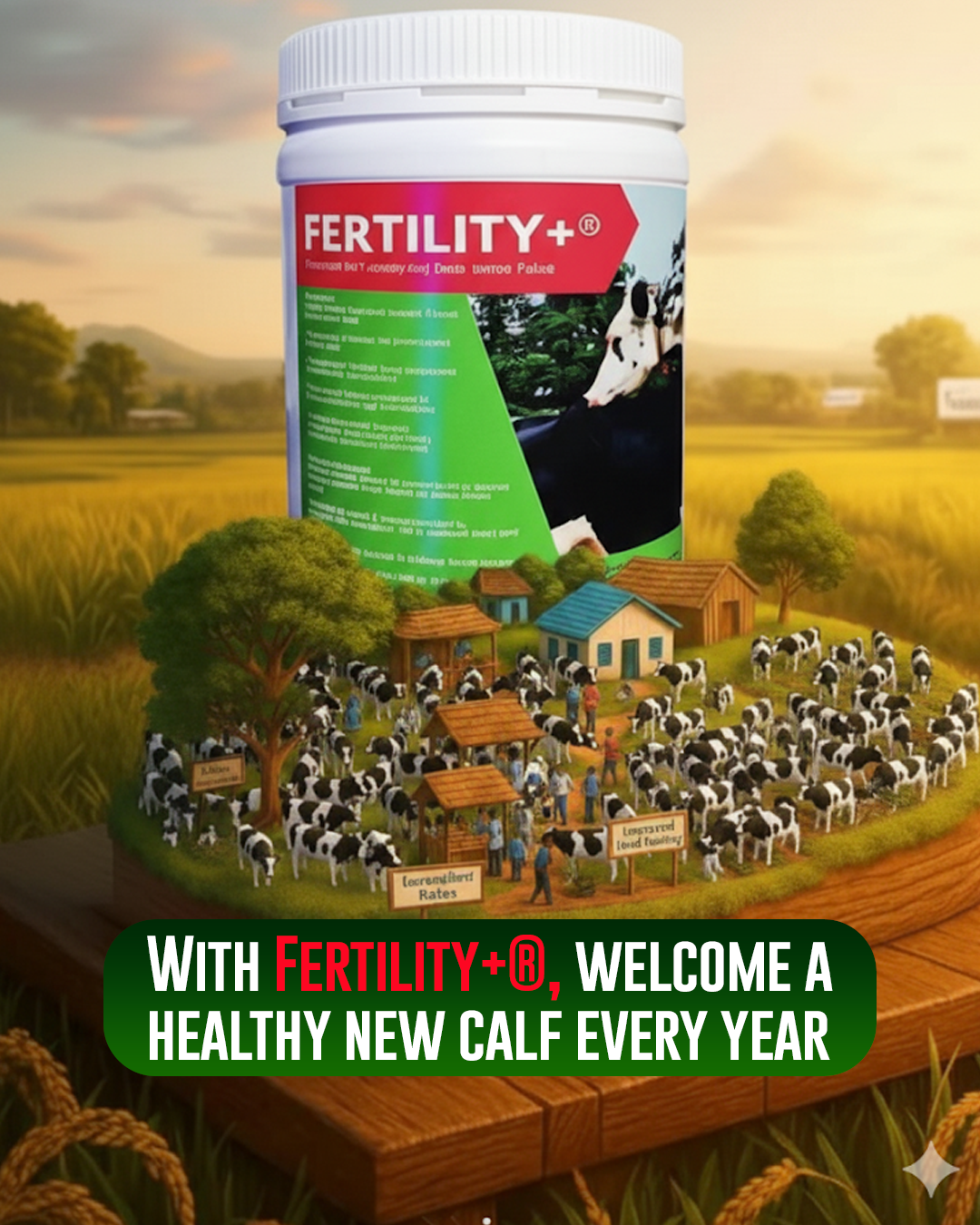
When your cow delays coming on heat or shows no heat signs at all, it becomes hard to plan breeding — and that means lost time, milk, and income. Fertility+® is specially formulated to help solve these problems.
It restores normal heat cycles, helps cows show clear heat signs, and promotes smoother, stress-free calving. With consistent daily use (50g per cow), Fertility+® boosts fertility, improves conception rates, and keeps your herd healthy and productive.
✅ Comes in a 900-gram pack 🐄 For delayed and silent heat, and difficult calving
What Happens When a Dairy Cow Lacks Nutrients and Minerals
A dairy cow’s body is like a factory, and milk is its final product. For that factory to run efficiently, it needs a balanced supply of nutrients and minerals every single day. When these essentials are missing, the cow’s system begins to break down from the inside out.
Nutrient deficiency affects every part of a cow’s life, from milk production and fertility to immunity and calf growth. Over time, it leads to poor performance, health challenges, and lower profits for the farmer.
1. Declining Milk Production and Energy
When a cow lacks vital nutrients, her metabolism slows down, and energy levels drop. This results in reduced milk yield, watery milk, or inconsistent quality. Over time, she may lose body condition, become weaker, and struggle to reach her production peak.
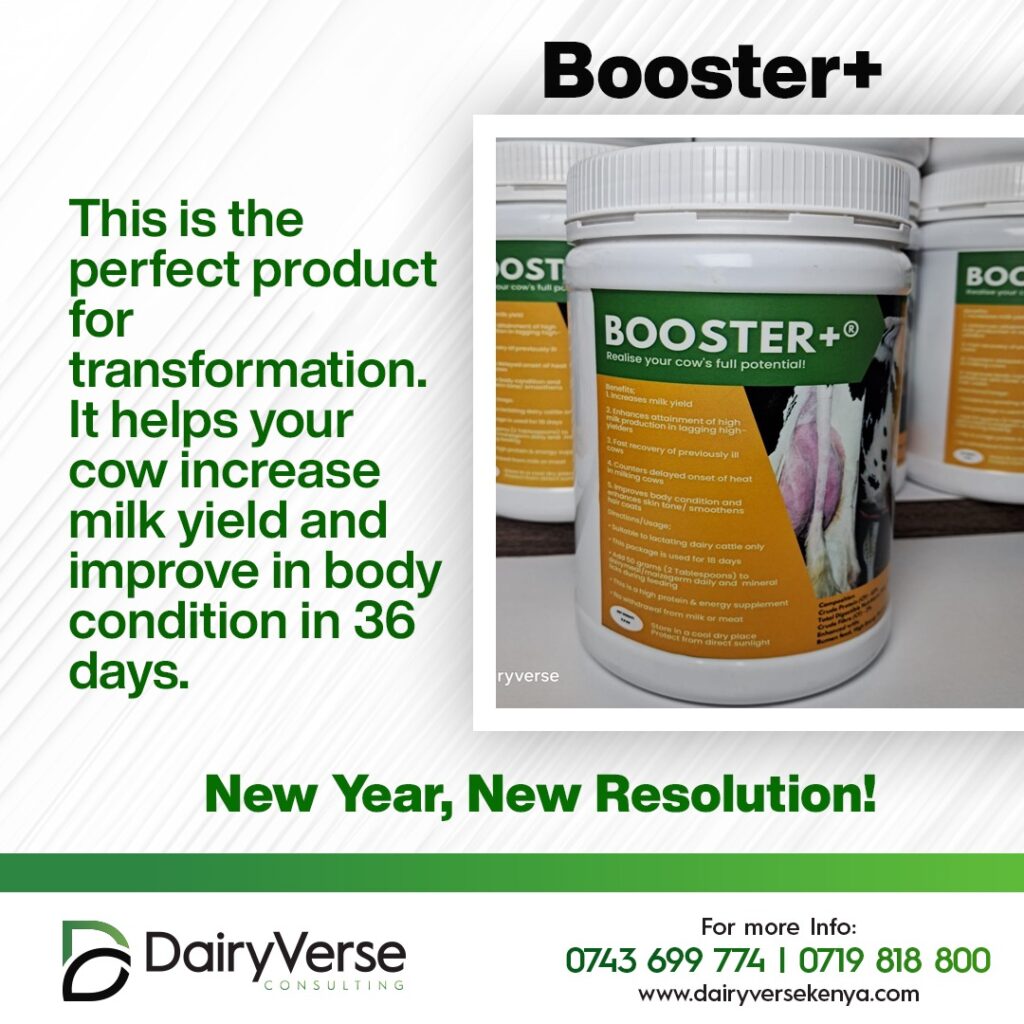
How Dairyverse helps: ✅ Booster+® enhances metabolism and energy use, allowing cows to convert feed efficiently into milk. It promotes faster recovery in cows that were previously sick, improves body condition, and increases overall milk yield — especially in cows that have been underperforming.
2. Reproductive Challenges and Delayed Heat
Nutrient and mineral imbalances often cause delayed heat cycles, silent heats, and low conception rates. These reproductive problems extend the calving interval and reduce long-term herd productivity.
How Dairyverse helps: ✅ Fertility+® supports reproductive health by improving fertility, preventing silent and delayed heat, and reducing cases of difficult calving and retained placenta. It ensures better conception rates and healthier pregnancies in heifers and milking cows.
3. Weak Immunity and Slow Recovery
Deficiencies in minerals like selenium, zinc, and vitamins A, D, and E weaken a cow’s immune system. This exposes her to infections such as mastitis, retained afterbirth, and metabolic disorders.
How Dairyverse helps: ✅ Tranzpro® strengthens the immune system and promotes udder health, helping cows resist infections. It boosts appetite after calving, speeds up recovery for sick or stressed cows, and supports faster transition into peak milk production.
4. Poor Growth and Stunted Calves
Young calves depend entirely on nutrition for growth and immunity. If the mother or calf lacks essential minerals and proteins, growth slows down, and immunity weakens. This can lead to stunted development and poor future performance.
How Dairyverse helps: ✅ Ndamaplus® promotes steady weight gain, prevents stunted growth, reduces post-weaning stress, and builds strong immunity in calves. It also helps heifers reach maturity faster and come on heat at the right time, setting the foundation for a productive dairy future.
5. The Chain Reaction of Deficiency
Once nutrient imbalance starts, it triggers a chain reaction:
Milk yield drops
Fertility declines
Recovery slows
Calves grow weaker
Diseases increase
Eventually, the cow’s overall lifespan and productivity reduce, meaning higher costs and lower returns for the farmer.
Balanced Feeding: The Foundation of All Success
Even the best supplements can only perform their magic when the cow’s feeding is good. Proper roughage, water, and balanced rations create the foundation upon which Dairyverse products deliver their full benefits.
When feeding and supplementation work hand in hand, the result is visible: 💧 Higher milk yields 💪 Stronger immunity ❤️ Better fertility 🐄 Healthier cows and calves
Final Thought
Nutrients and minerals are not luxuries — they are life. A deficiency today becomes a costly problem tomorrow. Investing in the right balance of nutrition and Dairyverse products is the smartest way to protect your herd and boost productivity.
Dairyverse Kenya — Powering Dairy Farmers with Smart Nutrition Solutions.
What a Lactating Cow Really Needs to Keep Milk Flowing
A lactating cow is a cow that has recently calved and is producing milk to feed her calf—or for dairy production. During this period, her body requires high amounts of nutrients and energy to sustain milk production, recover from calving, and prepare for the next reproductive cycle.
To achieve high and consistent milk yield, it’s important to focus on what truly matters in her daily diet and management.
1. Balanced Energy and Protein Intake
A lactating cow uses a large portion of her energy for milk production. Feed her a diet rich in carbohydrates (for energy) and protein (for milk solids). Feeds such as maize silage, hay, and quality dairy meal should form the foundation of her daily ration.
2. Clean and Constant Water Supply
Milk is about 87% water, meaning dehydration can cause a sudden drop in milk yield. Provide clean, fresh water at all times, ideally allowing her to drink after every feeding session.
3. Mineral and Vitamin Supplements
Deficiencies in calcium, phosphorus, or trace minerals can affect both milk quality and the cow’s health. Always ensure she gets enough minerals and vitamins through mineral blocks or formulated mineral mixes to maintain her body functions and prevent metabolic diseases.
4. Proper Rest and Comfortable Environment
Resting promotes better rumination and milk letdown. Keep the shed dry, well-bedded, and well-ventilated to reduce stress and infections.
5. Use of Booster+® for Peak Performance
For even better results, give your cow Booster+® for 18 days. It helps: ✅ Improve metabolism (how the body uses food and energy) ✅ Add more protein and energy to her diet ✅ Increase milk production ✅ Help cows come on heat at the right time ✅ Improve body condition and recovery after calving
With Booster+®, your lactating cow stays strong, productive, and in excellent body condition—ensuring a consistent milk flow and healthy reproductive cycle.
The Ultimate Heat Detection Playbook: Boost Your Dairy Farm’s Success Today”
best roducts for your cows
Mastering Heat Detection: A Simple Guide for Dairy Farmers
Mastering Heat Detection: A Simple Guide for Dairy Farmers on Spotting Cow Heat and Saving Your Herd with Fertility Plus
Hello, farmers. I am your lecturer today, talking straight like we are in a classroom on the farm. No big words, just clear talk. Listen well: if your cows don’t get pregnant on time, no milk comes, no calves grow, and your whole farm can fall apart. Debts pile up, money stops, and you lose everything you worked for. This is serious danger. In this lesson, I teach you how to see heat signs in cows, fight hidden problems like silent heat, and use Dairyverse’s Fertility Plus to fix things fast. Pay attention and act quick. Your farm needs this to survive.
Why Missing Heat is So Dangerous
A cow’s body cycle happens every span of 21 days or so. Heat time is short, only 12 to 18 hours. That’s when you must breed her. Miss it many times, and cows stay dry too long, no new babies, milk drops low. This is not small mistake. It leads to big loss in tough times when feed costs high and every empty cow eats your money without giving back. Bad food, stress, sickness make it worse, hiding the cycle and putting your farm at real risk.
Step 1: How to Spot Heat Signs in Your Cows
You must watch like a hawk. Check herd two times a day, morning and evening, for 20 to 30 minutes when cows move most. Put signs in two groups: main one (sure proof) and extra ones (helpful clues). Skip the small hints, and you lose the whole cycle, pushing your farm into trouble.
The Main Sign: Standing Still to Be Mounted
This proves she is ready. Cow stands quiet when others climb on her back, tail up, back bent. Don’t see this in field or shed? You miss breeding chance, and herd suffers more, money leaks away.
Extra Signs to Watch Close
These show near heat time, need fast notice. One alone may mean coming soon, many together mean do something now. Ignore, and problems grow big:
Restlessness and Upset: Walking back and forth, ears straight up, loud mooing, or staying alone. These warn of body changes inside. Miss them, cycles vanish.
Mounting Others: She climbs on cows but won’t stand for them. Sign heat close, wait too long and chance gone.
Body Changes: Private part swollen and red, clear sticky discharge like string, messy hair on tail or mud on sides from moving. See these? Act or breeding fails bad.
More Behaviors: Pee more, sniff others a lot, eat less, milk goes down a bit. Small things, but they predict big disaster if not fixed quick.
Helpful Tools: Big herd? Use paint on tail, stick-on patches, or trackers that count steps. Hot weather or slippery ground hide signs, make danger bigger. Don’t guess, use help.
Step 2: Fighting the Hidden Danger of Silent Heat
Silent heat means cycle runs but no signs show. It’s a quiet killer, from wrong hormones, womb infection, poor feed, or slow recovery after birth. Hits without warning, leaves cows empty, eating your feed for nothing, profits gone, farm close to end. Cow no heat by 60 days after calf, or cycles messy? Your business in big danger right now. Jump in fast, or watch everything crash.
Step 3: Using Fertility Plus to Stop Crisis and Bring Back Cycles
Dairyverse Fertility Plus is strong help, uses special Restore+ to clean womb toxins, fix hormones, start heat again. Real farm tests show heat back in 18 to 36 days, cuts failed breedings, saves farms from edge. No this, problems kill all. Grab it to take back power.
How to Use It Right:
When to Start: First trouble sign, like delay after birth, young cows not ready, or silent heat sure. Wait, and damage stays forever.
Dose and Way: 900-gram pack full of good stuff. Give 50 grams each day in feed or water. Keep going till heat shows, watch close every day.
What Happens: Hormones balance quick, silent heat ends, signs strong, breeding success up maybe 50%. Add vet check and good food to make strong.
Careful Notes: Follow rules exact, keep pack cool dry place. Talk doctor for deep sickness. Fertility Plus saves, but daily care prevents worse.
Farms with this see steady cows, milk back, danger gone. Shows quick move works.
Last Word: Protect Your Farm Today
Breeding fails not just problem, it’s threat to all you have. Learn heat watch, kill silent risks, add Fertility Plus to guard herd and future. Call Dairyverse now at +254 743 699 774 or go dairyversekenya.com. Do nothing today, farm dies tomorrow. Make this priority, keep your dairy alive strong. Questions? Ask in class end.
Did you know that you can check your herd to test if your cow is in calf? Yes, simple ways like watching for no heat signs after breeding, feeling a bump in the belly later on, or calling a vet for a quick rectal check or ultrasound around 45 to 60 days after. Catch it early, and your herd stays on track!
Canola Meal: A Powerful Nutritional Booster for Your Cows
Feeding cows a balanced diet is essential for maintaining their health, productivity, and overall well-being. One feed ingredient that has gained significant attention in modern dairy and beef nutrition is canola meal. Derived from the seeds of the canola plant after oil extraction, canola meal is a protein-rich supplement that provides numerous benefits for cattle.
1. High-Quality Protein Source
Canola meal is packed with highly digestible protein, which is crucial for the growth and maintenance of cows. Proteins are the building blocks of muscles, tissues, and enzymes, and they play a key role in milk production. Feeding cows canola meal ensures that they get enough amino acids, which directly improve milk yield and quality in dairy cows and support weight gain in beef cattle.
2. Improves Digestive Health
Cows are ruminants, which means their digestive system relies heavily on microbial activity in the rumen to break down feed. Canola meal is rich in fiber and essential nutrients that promote healthy rumen function. This supports proper fermentation, nutrient absorption, and reduces the risk of digestive problems like bloating.
3. Supports Immunity and Overall Health
Canola meal contains essential vitamins and minerals, including calcium, phosphorus, and magnesium, which help strengthen the cow’s immune system. A healthy cow is less prone to diseases, infections, and stress-related conditions, which ultimately reduces veterinary costs and improves productivity.
4. Enhances Fertility and Reproductive Performance
Adequate protein and nutrient supply from canola meal can positively impact reproductive health. Well-nourished cows tend to come into heat on time and have better conception rates. This is particularly important for maintaining an efficient breeding program in both dairy and beef herds.
5. Economical and Efficient Feed Supplement
Canola meal is not only nutritious but also cost-effective. It can be included in various feeding systems, mixed with other grains, forage, or concentrates, allowing farmers to optimize their feed without significantly increasing costs. Its balanced nutrient profile ensures cows get the maximum benefit from every kilogram fed.
How to Feed Canola Meal to Cows
Incorporate gradually: Introduce canola meal slowly to allow the rumen microbes to adapt.
Mix with other feeds: Combine with silage, hay, or grains for a balanced diet.
Follow recommended amounts: Typically, canola meal can make up 10–20% of the total diet for dairy or beef cows, but consult a nutritionist for precise recommendations.
Conclusion: Canola meal is a nutrient-dense, high-protein feed that benefits cows at every stage, whether they are growing calves, lactating cows, or breeding stock. By supporting growth, milk production, immunity, and reproductive health, it ensures your herd stays healthy and productive. For any farmer aiming to boost efficiency and cow wellness, canola meal is a simple, natural, and effective solution.
How to Identify a High Yielder in Your Dairy Herd
In dairy farming, not all cows perform at the same level. Some produce significantly more milk, maintain strong fertility, and stay healthier compared to others. These cows are known as high yielders, and identifying them is crucial if you want to maximize your farm’s productivity and profits. But how do you spot a true high yielder in your herd? Here are the key signs and traits to look for:
1. Milk Production Records
The most reliable way to identify a high yielder is by consistent milk production records. A high-yielding cow should produce milk steadily throughout her lactation cycle, not just peak for a few weeks.
Check your daily or weekly yield records.
Compare each cow’s output against the herd average.
A high yielder will always be above the average.
2. Strong Fertility and Calving Regularity
High-yielding cows don’t just produce more milk, they also reproduce efficiently.
A high yielder often has a regular calving interval (12–14 months).
She comes on heat quickly after calving and conceives easily.
Each successful calving means a fresh lactation cycle, keeping her production high.
3. Good Body Condition and Feed Efficiency
A high yielder uses feed efficiently. She doesn’t waste energy but converts feed into milk effectively.
She maintains a balanced body condition score (BCS) – not too thin, not overly fat.
She shows good appetite and rarely struggles with feed intake.
Her rumen activity is active and healthy, meaning she digests and absorbs nutrients well.
4. Healthy Udder and Teats
Udder health is directly linked to milk yield.
A high yielder has a well-developed udder with strong suspensory ligaments.
Teats are evenly spaced, making milking easy and efficient.
She has low cases of mastitis or udder infections.
5. Behavior and General Health
High-yielding cows often stand out because of their vitality.
They are alert, active, and move comfortably.
They rarely fall sick because their immunity is stronger.
They adapt well to changes in feed or environment compared to low yielders.
6. Genetic Background
Sometimes, the secret to high yield is in the bloodline.
Cows from high-producing families are more likely to yield more milk.
Keeping proper breeding records helps you trace and maintain strong genetics in your herd.
✅ In summary: A high yielder is not just a cow that produces more milk today. She is a cow that combines consistent high production, good fertility, feed efficiency, udder health, and strong genetics. Identifying and keeping such cows in your herd is one of the best long-term strategies for profitable dairy farming.
Understanding Mastitis in Dairy Cows: Types, Causes, Prevention, and Veterinary Guidance
Mastitis remains one of the most common and costly diseases in dairy farming. It affects milk production, compromises animal welfare, and reduces farm profitability. This inflammation of the mammary gland, often triggered by bacterial infections, can lead to serious losses if not prevented or managed early.
In this guide, we’ll break down the types of mastitis, its causes (animal, feed, and environmental), prevention strategies, and when to involve a veterinarian.
What is Mastitis in Dairy Cows?
Mastitis is an inflammation of the udder tissue, usually caused by bacteria entering through the teat canal. It disrupts milk production and quality, resulting in:
Summer Mastitis: Carried by flies in pastures, especially in dry cows or heifers.
Gangrenous Mastitis: Rare, severe type with tissue death (udder turns cold/blue).
Causes of Mastitis
Animal Factors
Poor teat or udder shape (damaged, inverted)
Older cows with worn teat muscles
Low immunity after calving or stress
Previous infections leaving scar tissue
Genetic predisposition
Feeding & Nutrition
Deficient diets → weak immune system
Lack of vitamins A, E and trace minerals like selenium, zinc, copper
Poor transition-period feeding (dry-off & early lactation)
Overfeeding/underfeeding → metabolic stress
Environment & Management
Dirty, wet bedding → bacteria thrive
High stocking density → manure buildup
Poor milking hygiene or faulty equipment
Hot, humid conditions, poor ventilation
Fly infestations in pastures
Preventing Mastitis
Hygiene & Milking Practices
Pre- and post-milking teat disinfection
Clean, well-maintained machines
Milk infected cows last or separately
Housing & Environment
Keep bedding clean and dry
Provide good ventilation and space
Control flies and pests, especially in summer
Nutrition & Immunity
Balanced rations with high-quality forage & concentrates
Add trace element supplements for immunity support
Supplements like Restore+ (Booster+, Tranzpro) from the Dairyverse range help:
Improve antioxidant defenses
Strengthen white blood cell activity
Reduce mastitis recurrence
Support smooth recovery during calving or dry-off
👉 A cow with strong immunity resists mastitis naturally.
Monitoring and Herd Health
Regular milk testing (SCC) to detect subclinical cases
Vaccinations where applicable
Record mastitis cases to identify chronic cows
Routine udder checks by trained staff
Signs to Watch For
Call a vet if you notice:
Abnormal milk (clots, flakes, watery, bloody)
Udder swelling, hardness, or pain
Cow isolates herself, eats less, or appears dull
Severe cases: fever, rapid breathing, or cold/discolored udder
🚨 Emergency Vet Call:
High fever, depression, or toxemia
Multiple quarters affected
Milk production suddenly drops
No improvement after supportive care
Final Takeaway
Mastitis is best managed through hygiene, environment, balanced feeding, and strong immunity. By combining good practices with nutritional support like Restore+ supplements, farmers can protect their herds, reduce losses, and maintain productivity.
The Secret Behind Better Beef.
When it comes to beef production, every farmer knows that not all carcasses are the same. Take a look at two common scenarios:
One carcass is heavily covered in yellow fat. While fat can protect meat during aging, too much reduces yield and lowers the appeal for buyers who prefer lean, tender beef.
The other carcass is much leaner with whiter fat, showing a younger, faster-growing animal. While attractive to butchers and restaurants, without the right nutrition the meat can lack flavor, marbling, and finishing quality.
So, which is the best? 👉 The truth is, the best beef strikes a balance: tender, well-finished, healthy meat with the right fat cover and muscle structure. And this is exactly where NyamaPlus® makes the difference.
Why NyamaPlus® is the Game-Changer for Beef Farmers
✅ Boosts Growth and Weight Gain NyamaPlus® maximizes weight gain, giving you bigger bulls and higher profits at market.
✅ Improves Meat Quality By enhancing muscle development and preventing conditions like white muscle disease, NyamaPlus® ensures your beef stands out in tenderness and flavor.
✅ Supports Animal Health From speeding recovery in previously ill bulls to strengthening hooves and reducing lameness, NyamaPlus® keeps your herd in top condition.
✅ Better Finish, Higher Profits A well-finished bull with the right fat cover sells faster and at better prices, NyamaPlus® guarantees this balance.
CONLUSION
Farmers who depend only on feed and pasture often end up with extremes, either too much fat or too lean animals. With NyamaPlus®, you don’t have to choose. You get balanced, premium beef that satisfies buyers, boosts your reputation, and increases your profits.
Ketosis in Dairy Cows: Causes, Symptoms, and Prevention
Ketosis is one of the most common metabolic diseases in dairy farming, especially during the first few weeks after calving. It occurs when a cow’s energy demands for milk production are greater than the energy she takes in from feed. To bridge the gap, the cow mobilizes body fat, which leads to the production of ketones in the blood, urine, and milk. If not controlled, ketosis causes huge losses in milk production, fertility, and overall cow health.
Causes of Ketosis
Negative Energy Balance (NEB):
After calving, milk production rises sharply, but feed intake lags behind. This imbalance forces the cow to burn body fat for energy, producing ketones.
Over-Conditioned Cows at Calving (Fat Cows):
Cows that are too fat at calving eat less, leading to an even bigger energy gap.
Poor Feeding Practices:
Low-energy rations, poor-quality forages, or sudden feed changes.
Insufficient carbohydrates, which are needed to properly utilize body fat.
Other Stress Factors:
Difficult calving, retained placenta, mastitis, or metritis often trigger ketosis.
Signs and Symptoms of Ketosis
Rapid weight loss and poor body condition (thin, bony appearance).
Reduced appetite, especially refusal to eat concentrates.
Drop in milk production.
Dullness, weakness, or staggering (in severe cases, nervous ketosis).
A sweet, fruity odor (like nail polish remover) in breath, urine, or milk.
Prevention of Ketosis
Proper Transition Cow Management:
Avoid over-conditioning during the dry period. Cows should calve at a Body Condition Score (BCS) of 3.0–3.5 (not too fat, not too thin).
Balanced Rations:
Provide high-quality forage and sufficient concentrates in early lactation.
Include adequate fiber to maintain healthy rumen function.
Feed Additives:
Niacin, rumen-protected choline, and monensin can help lower the risk of ketosis.
Booster+® for Energy Support:
Since ketosis is one of the most common metabolic diseases in dairy farming, supplementing cows with Booster+® can play a vital role in prevention. ✅ Booster+® is given for 18 days and helps improve the cow’s metabolism (how the body uses food and energy). It also adds more protein and energy to the cow’s diet, reducing the risk of negative energy balance that often leads to ketosis. By supporting energy needs during early lactation, Booster+® keeps cows healthier, stronger, and more productive.
Early Detection:
Regularly test cows for ketones (in blood, urine, or milk), especially high-yielders after calving.
Good Calving Management:
Steam up your cows 3 weeks before calving using Tranzpro®. This prepares the cow’s body, helps her calve smoothly, and ensures the placenta falls within 2 hours.
Minimize stress during calving.
Promptly address retained placenta, milk fever, or infections.
Conclusion
Ketosis is a silent thief in dairy farming, reducing milk yield, affecting fertility, and increasing vet costs. The most effective way to manage ketosis is not treatment, but prevention through proper feeding, transition management, and good calving practices. With the right support such as Booster+® and Tranzpro®, farmers can maintain strong, productive herds and avoid the heavy losses caused by ketosis.