How to feed your dairy calf

Provide high quality milk or milk replacers during the first 3 months. Milk replacer is a specially formulated powder that contains the nutrients that a calf needs for proper growth and development. It is usually made from skim milk, whey, or a combination of the two, and may also contain additives like vitamins and minerals. It is important to choose a milk replacer that is specifically formulated for dairy calves, as it will have the right balance of nutrients for their needs. You also opt for skim milk only. Get our latest calf rearing technologies guide here.

Follow the manufacturer’s feeding recommendations: The manufacturer’s feeding recommendations will provide specific guidance on how much milk replacer to feed the calf, how often to feed it, and how to prepare the milk replacer. It is important to follow these recommendations closely, as overfeeding or underfeeding the calf can lead to health problems.

Gradually transition to solid feed: As the calf grows and becomes more mobile, it will be ready to start consuming solid feed in addition to milk replacer. This usually begins around 2-3 weeks of age. Start by introducing small amounts of a high-quality calf starter feed, and gradually increase the amount over time as the calf becomes more accustomed to eating solids.

Provide clean, fresh water: It is important to make sure the calf has access to clean, fresh water at all times. Water helps to support proper digestion and hydration, and is essential for the calf’s overall health and well-being.

A well raised calf is the backbone of a thriving dairy venture. It is important to know feeding típs in calf management. The following are the main tips in calf feeding regimen:-
✓0 – 3 Days
Feed your calf purely on colostrum immediately after birth upto to the third day. Excess colostrum can be preserved.

✓1 month
Cow milk (3-4ltrs) + starter pellets, twice a day.

✓2 months
Cow milk (2-3ltrs) + starter pellets + soft feeds (sweet potato vines). Twice a day.
Deworm and introduce mineral lick.

✓3 months
Cow milk (1-3litres) + calf finisher pellets, twice a day. Deworm and introduce mineral block. Introduce Ndamaplus®️ for faster growth rate.

✓4 months
Calf weaner meal + Hay + Silage. Deworm.
After 5 months, feed the calf on hay, silage or napier grass.
Deworm after every 3 months till the calf is fully grown.

Monitor the calf’s growth and development: Keep track of the calf’s growth and development, and make adjustments to the feeding plan as needed. Consult with a veterinarian or a livestock nutritionist if you have any concerns about the calf’s nutrition or overall health.

By following these guidelines, you can help ensure that your dairy calf gets the proper nutrition it needs for optimal growth and development. To get a copy of our Calf rearing guide (Latest Calf Rearing Technologies), Click here.



How To Identify High-Quality Dairy Feeds in Kenya

In Kenya, dairy farming plays a crucial role in livelihoods and food security. However, the success of dairy farming heavily depends on the quality of feed provided to the cows. Selecting high-quality dairy feeds is essential for maximizing  milk production and maintaining the overall health and well-being of the herd. In this blog, we’ll discuss how dairy farmers in Kenya can identify top-notch feeds to optimize their dairy operations.

1. Understand Nutritional Requirements:
– Before selecting dairy feeds, it’s important to understand the nutritional requirements of dairy cows at different stages of production, including lactation, dry period, and gestation.
– Consult with a nutritionist or extension officer to determine the ideal nutrient composition for your herd based on factors such as breed, age, weight, and milk production level.

2. Evaluate Ingredient Quality:
– Examine the ingredients listed on the feed label and ensure they meet the nutritional needs of dairy cows.
– Look for feeds that contain high-quality ingredients such as maize, wheat bran, cottonseed cake, soybean meal, and mineral supplements.
– Avoid feeds with excessive amounts of fillers, low-quality grains, or additives that may compromise digestibility or overall feed quality.

3. Check for Consistency and Freshness:
– Choose feeds from reputable manufacturers or suppliers known for producing consistent, high-quality products.
– Inspect the feed for signs of mold, dust, or foreign contaminants, which can indicate poor storage conditions or spoilage.
– Opt for freshly manufactured feeds to ensure maximum nutrient content and palatability.

4. Assess Nutrient Density:
– Compare the nutrient composition of different feeds and select options with optimal nutrient density to meet cows’ requirements without overfeeding.
– Consider feeds fortified with essential vitamins, minerals, and amino acids to support overall cow health and performance.

5. Analyze Feed Cost and Value:
– Evaluate the cost-effectiveness of various feed options by comparing the price per unit of nutrient content (e.g., cost per kilogram of protein or energy).
– Factor in additional costs such as transportation, storage, and handling fees when assessing overall feed value.
– Keep in mind that investing in high-quality feeds may yield greater returns in terms of improved milk production, reproductive efficiency, and cow longevity.

6. Seek Recommendations and Feedback:
– Tap into the knowledge and experience of fellow dairy farmers, veterinarians, and nutritionists for recommendations on reliable feed brands or suppliers.
– Attend agricultural fairs, seminars, or workshops where feed manufacturers showcase their products and provide educational resources.
– Solicit feedback from other farmers who have experience using specific feeds and inquire about their observations regarding feed performance and cow health outcomes.

Click this photo to access your gift 🎁

Conclusion:
Choosing high-quality dairy feeds is paramount for the success and profitability of dairy farming operations in Kenya. By understanding nutritional requirements, evaluating ingredient quality, checking for consistency and freshness, assessing nutrient density, analyzing feed cost and value, and seeking recommendations and feedback, dairy farmers can make informed decisions to ensure their cows receive the best possible nutrition for optimal health and productivity.


How to start a dairy farm in Kenya

The basics to successful dairy production are: Genetics -Breed, Nutrition & Economics.A pedigree animal is one that has been well bred and has the capacity to produce maximum recorded yield of the bull’s dam/mother. The common ones in Kenya range from 25 to 60 litres of  milk yield per day. The yields will be realized through proper nutrition and health.The other key aspects of your project will be;-

i) Proper plan on nutrition

a) Source of forage, type and availability.

b) Source of concentrates, type and availability.

c) Mineral supplementation:- type and administration procedure.

ii) Marketing of your produce,  Milk.

✓Is your farm near a cooperative collection centre?

✓What are the strengths/ reliability of your marketing channel? ie. Cooperative or Retail?

– We advise you to consider a cooperative because it is more reliable. You will be guaranteed of a market for your produce and the prices are better and guaranteed. Read more on dairy cooperatives like Githunguri Dairy Cooperative (Fresha). To learn more, click here.

iii) Labour

✓You will need at least one attendant to your farm.

✓You also need a veterinarian near you for health consultancy.

iv) Dairy cattle housing/ Barn

✓You need to invest in an economical form of housing for health and safety of your livestock.

✓There are choices to this and you need to adopt a proper plan. Consult an Animal Production Specialist.

v) Proper Record Keeping

A good record should capture all the cow’s data. It’s components should include;

– Important milestones like last date of calving among others

– Tracking milk yield (morning, midday and evening production)

– Tracking milk sales

– Tracking home & calf consumption

– Tracking amounts of dairymeal/concentrates used every day

– Heath record (For all treatment on the animal and AI)

– Executive Summary of all yields for every month.

Economics:-Based on the current milk prices (Ksh. 38/- per litre), a cow producing an average of 25 litres per day during the lactation period will give a minimum gross income of Ksh. 25,000/- per month. The average cost of production is Ksh. 27/- per litre of dairy milk. This translates into a net profit of Ksh. 7,500 per month. With a herd size of 2 each costing a maximum of Ksh. 150,000 + Misc costs, Your investment will take a maximum of 24 months to Break-even.

You can get a reprintable file and we advise you to reproduce enough on a good type of copy paper for individual animals and an extra copy for cumulative records of the farm. In so doing, you will be able to analyse all the aspects of your herd. It will also help you in effective decision making. Read more on how to make your dairy investment a success, click here.


Enhancing Dairy Farming Profitability in Kenya: Key Strategies

Enhancing Dairy Farming Profitability in Kenya: Key Strategies

Introduction

Improving the profitability of dairy cows in Kenya and across Africa is essential for sustainable farming practices. With the right strategies, farmers can increase milk yield and enhance the overall health of their herds.

Increasing Milk Yield and Effective Heat Management

One crucial aspect of enhancing dairy farm profitability is ensuring an increased milk yield. Achieving this begins with recognizing the signs of heat in cows and heifers. Timely onset of heat is vital for breeding efficiency, which in turn contributes significantly to milk production. By monitoring cows closely, farmers can ensure they breed at the right time, leading to a more productive lactation cycle.

Upgrading Calf Growth Rates and Body Condition

Fostering faster growth in calves is another focal point that can boost profitability. Implementing a nutrition plan that meets the dietary needs of young animals promotes healthy growth rates. Additionally, maintaining good body condition in cows enhances their productivity, ensuring they are better able to produce milk. Adequate record-keeping plays a key role in tracking these metrics and allows farmers to make data-driven adjustments over time.

Conclusion

By focusing on the increase of milk yield, timely detection of heat signs, fast growth rates in calves, and improved body condition, dairy farmers in Kenya can substantially improve the profitability of their operations. Proper record keeping ensures that these strategies are effectively implemented and adjusted as needed, paving the way for a thriving dairy farming enterprise.


Milk Fever in Dairy Cows

Milk fever, also known as hypocalcemia, is a metabolic disorder in dairy cows that typically occurs around calving. It is caused by a sudden drop in calcium levels in the blood, which is critical for muscle function and other physiological processes.

Causes:
Calcium Drain During Lactation: When a cow gives birth, the demand for calcium in milk production increases rapidly. If the cow’s body is unable to mobilize enough calcium from its bones or absorb it from feed, blood calcium levels drop sharply.

Poor Dietary Management: Inadequate calcium, phosphorus, or vitamin D in the diet before calving can prevent the cow from properly regulating calcium levels. Low magnesium can also reduce calcium absorption.

Breed Susceptibility: Some breeds, like Jerseys, are more prone to milk fever due to their higher milk output and calcium demands.

Older Cows: Cows that have had multiple calvings are at greater risk because their bodies may become less efficient at mobilizing calcium from bones.

Symptoms:
Muscle tremors or weakness
Inability to stand (cow may collapse)
Low body temperature and cold ears
Difficulty with coordination
Eventually, if untreated, milk fever can lead to coma or death.

Preventive measures like dietary adjustments and calcium supplementation can reduce the risk.

Milk fever, caused by a sudden drop in calcium levels post-calving, can severely impact a cow’s health and milk production. Tranzpro® plays a vital role in not only enhancing udder health and boosting recovery but also in preventing milk fever by ensuring cows maintain proper nutrition and calcium levels.

Administer Tranzpro® 18 days before calving and continue for 36 days after calving.
The recommended daily consumption rate is 50 grams (equivalent to 2 tablespoons) to ensure optimal nutrition and calcium absorption, reducing the likelihood of milk fever.
By incorporating Tranzpro® into your feeding regimen, you not only support cow health but also actively prevent milk fever, ensuring a smoother calving period and healthier lactation cycles.
To learn more about milk fever, click here.


What makes a heifer come on heat?

A heifer is a young female cow that has not been bred (inseminated). They become economically beneficial upon being inseminated and successfully conceived. This typically cause an appreciation in value because of the expectation of high  milk production upon calving down.

This hope is limited at times due to failure of the heifers to show heat signs at the expected period of time that is at exactly 15 months of age. Any delays cause unimaginable losses to the farm. Let’s shed light into the reasons that make heifers show heat signs.
1. Attainment of ⅔rd of mature bodyweight (bwt) that is normally between 300 and 350 Kilograms. A heifer will only show heat signs upon attaining the required bodyweight that is 67% of mature bodyweight which can be easily likened to that of her dam for estimation purposes. There is an advantage to this which is the fact that it points to maturation of the better part of the heifer’s body, ensuring that she stands a chance to produce more milk after calving down.

2. Fulfillment of her bodily energy requirements. Energy is primarily derived from fodder & feeds consumed. In the hierarchy of energy usage, heat is the first component to be eliminated from the priority list when an animal experiences shortage of energy. This happens as a result of low feed intake. I have avoid to mention “dry matter” intake because majority of the people confused that term to mean hay or dry grass. It is important to note that even fresh napier grass also contains dry matter. It is therefore important to give your cow enough feeds in order to unlock her body’s capacity to show heat signs.

The term “Dry matter” does not mean hay or dry grass,

3. Attainment of the minimum trace elements threshold necessary to support reproductive performance. Trace elements or minor elements are the mineral components needed by a cow in small quantities. The trace elements that influence fertility of a cow include Cobalt, Selenium,  Copper and Manganese. They should be availed to the animal in right quantities in order to facilitate estrus.

What should you do if she fails to show any signs?
Give your heifer enough fodder, concentrates and trace elements rich complex like Fertility+® for 18 to 36 days. Pronounced heat signs will be observed and conception will be guaranteed!

Learn more on how to prevent ddelayed onset of heat and silent heat, Click here.


Winning Formula In Eliminating Slow Growth Rate And Pot-bellies in Calves

When calves stop taking milk from their mothers at the age of 3 months, the following challenges are normally observed;
– Slow growth rate
– Emaciation
– Pot-belly development
These challenges are as a result of change in feeds from the highly nutritious milk to the locally available forages that are deficient in the most essential nutrients.
This is the winning formula for overcoming the above challenges;
✅️ Introduce Ndamaplus® when the calf hits 3 months of age.
✅️ Continue using Ndamaplus® till she hits 6 months of age.
✅️ Skip 3 months, 6th, 7th and 8th month.
✅️ Reintroduce Ndamaplus® to the calf during the 9th to 12th month of age.
✅️ At the age of 14 months and 1 week, introduce Fertility+® to her for 18 days.
🎊 Congratulations! At exactly 15 months of age, your heifer will have attained a minimum of 300 Kilograms and she will come on heat and conceive!

Learn more on calf rearing and how you can get out products on our blog.


Lameness BEFORE calving and AFTER calving

Lameness is inability to stand.
There are two common conditions associated with this sign;- Alert Downer Cow Syndrome and  Milk Fever.

What’s the difference?
Alert downer cow syndrome

  • Majorly affects incalf heifers and cows. Animal unable to stand a few weeks to giving birth.
  • The animal is bright, eats well and may try to rise up.
  • It is as a result of low energy in the body. The animal does not respond to treatment with Calcium solution.

If left untreated for more than 14days, the animal may experience excessive trauma that may lead to death.

》PREVENTION:-Ensure that your cow is in good body condition. Simply, usione mbavu zaidi ya tatu. This will be possible through providing high energy diet for example Maizegerm 2kg/day during the dry period. Not Dairymeal.

Milk fever

  • It affects cows after giving birth.
  • It is as a result of low calcium in the blood.
  • When you  milk the cow, calcium levels decreases and may expose the cow to this disease.
  • The lame cow will be listless(dull) and won’t show interest to eat, it folds the neck to the body and muscles may tremble.

The animal will often respond to Calcium treatment/therapy within 30 minutes. It is however prone to decrease if the cow is milked normally. Intermittent milking is recommended ie. milking once a day until the animal stabilizes.
》PREVENTION:- Prepare your cow well for milking. This begins at the 7th month of pregnancy. Give her Dry mineral lick (one that has 5% Calcium) and Maizegerm 2kg/day. Avoid DCP (Dicalcium Phosphate). Introduce 2kgs of Dairymeal in the last 2 weeks to Calving. Maziwa mineral lick (one that has at least 20% Calcium) should be introduced in the last week prior to giving birth.

Get a detailed article on this topic, click here.

Why avoid high amounts of Calcium and DCP?

Excess Calcium during the last trimester will destabilize it’s metabolism/use in the body of the pregnant animal making it fail to respond to Calcium provided in the diet after calving. It will also lead to overgrowth of the calf leading to difficulties in giving birth (dystocia). To prevent milk fever, do proper dry cow manageent and steaming up.

Download a complete for free guide below.


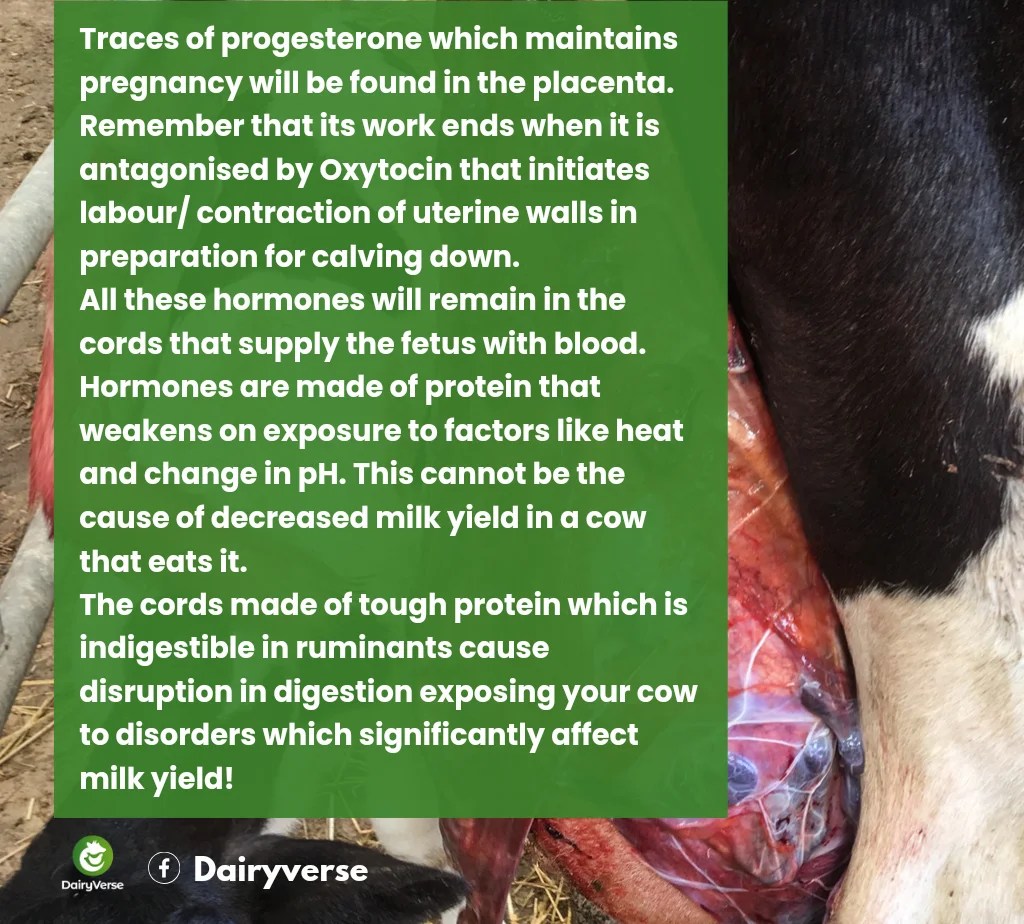
Never allow your cow to eat placenta

Do you keep a dairy cow so that they can just rear their calves or for commercial milk production?

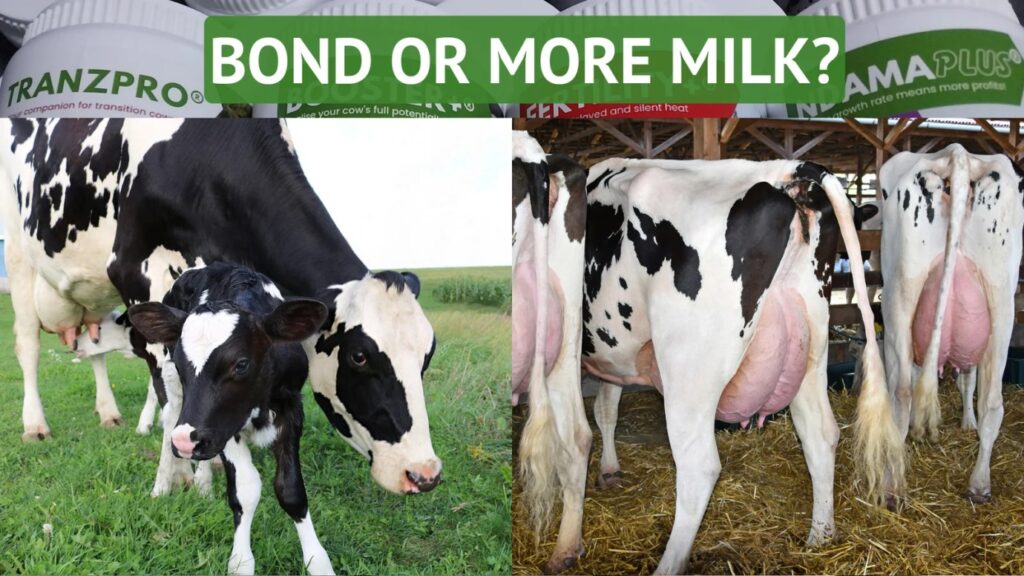
In advanced dairy production systems, we do not allow a newborn calf to even suckle her mother a single moment. We do bucket feeding and therefore creating the bond between the cow and the calf by allowing them to eat placenta is a lame argument!
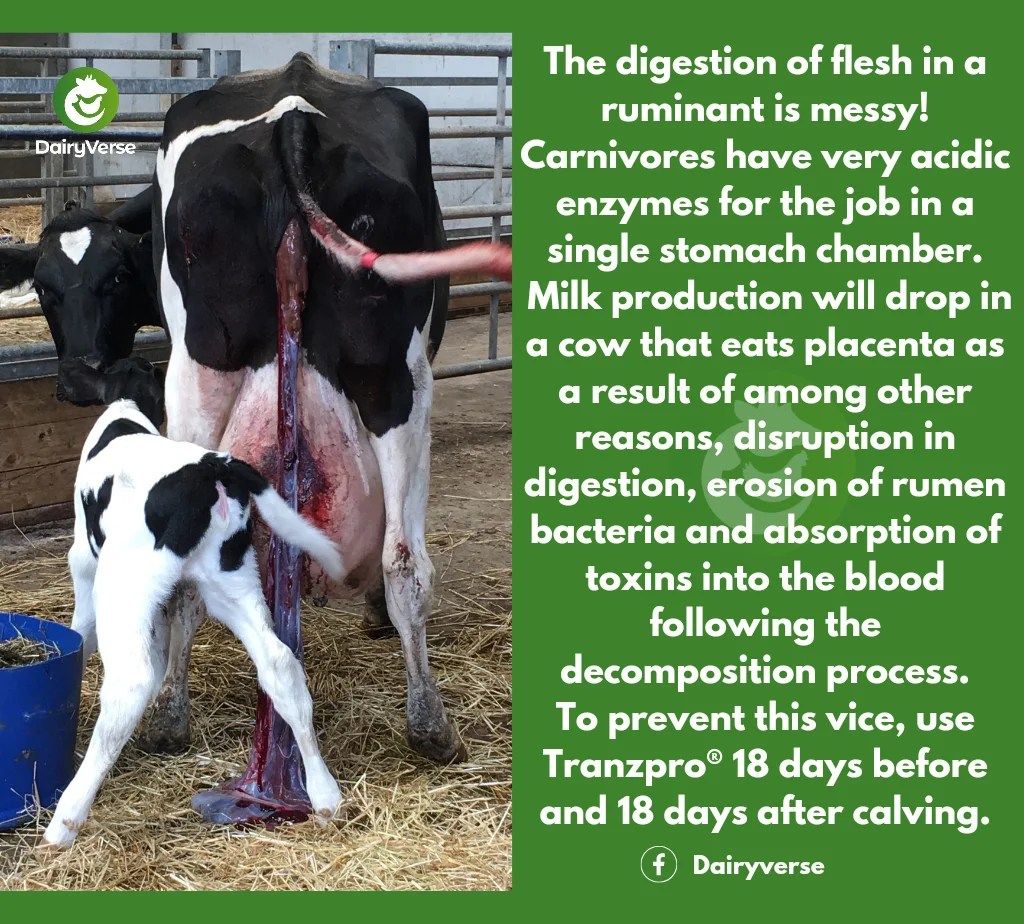
You can’t shy away from the fact that there will be digestive disturbances when a cow feeds on flesh. It will erode essential microflora from the rumen and risk allowing toxins cross into the blood leading to adverse health effects.

Furthermore, during early lactation we need the cow to be free from any metabolic challenges – (related to feeding). If we aren’t careful, diseases like ketosis and milk fever can set in. Coupled with the physiology/normal phenomenon where animals that recently calved down decline in appetite, what do you think will be the effect to milk yield?

Does placenta have hormones that can boost milk yield? Yes it does but they will be of no use in this context. Here are the reasons;

Why do cows crave for the placenta?
The placenta is rich in nutrients fats, oils, protein and trace/micro elements that are normally deficient in a cow’s body especially after calving yet she needs more of them. This attracts the cow to consume it.

Can we prevent it from occurring?
Yes, it is possible to prevent this VICE! It is a vice since it compromises the well being of the animal. You can be able to prevent then from falling victim by preparing your cow better for the milking/lactation phase. Providing them with supplements that help in proper steaming up not only deals with the vice but also puts her in a position to reach peak production faster.

To get Tranzpro®, click here.

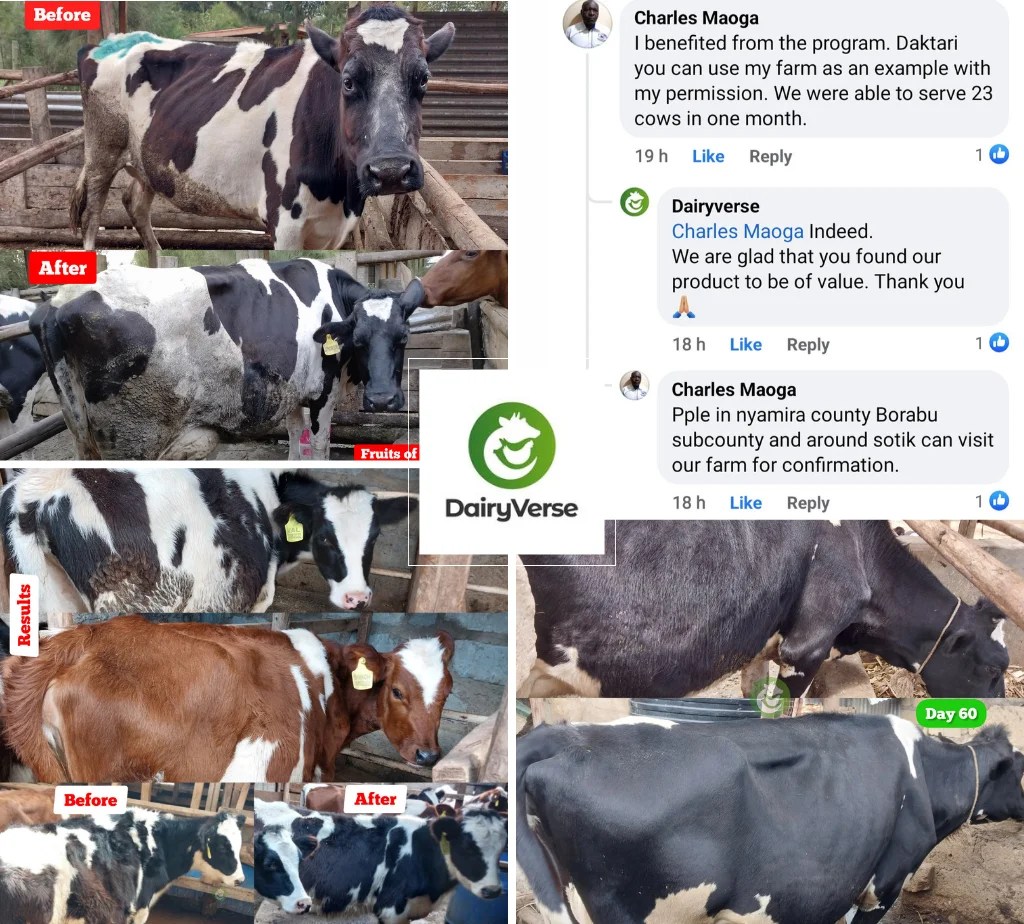
Have you heard about Restore® program?

Restore® is a 3-month program to revive health, improve body condition, eliminate silent and delayed onset of heat and increase milk yield in dairy cattle. Dairyverse Experts will visit your farm on Day 1, Day 30 and Day 60 for interventions leading to achievement of the aforementioned goals. We offer this service in all parts of Kenya. The following are sample success stories;

Could you like us to visit your your farm? We visit individual farms. If you could like us to visit yours in 2025, kindly follow this link to express your interest;
👉 https://bit.ly/Restore®_County_Tours


Understanding Abortion in Dairy Cows: Causes and Timing

Did you know that abortions in dairy cows can be caused by a variety of factors? Here are some key points:

Causes:

1. Infectious Diseases: Bacterial infections like trichomoniasis, leptospirosis, and viral infections such as Bovine Viral Diarrhea can lead to abortions.

2. Nutritional Deficiencies: Lack of essential vitamins (A and E), selenium, and iron can cause abortions.

3. Heat Stress: High environmental temperatures can lead to fetal hypotension and hypoxia.

4. Toxins: Ingestion of toxic substances like nitrates (A good example Potato fruits), aflatoxins, and certain plants (e.g., Ponderosa pine needles) can result in abortions.

5. Genetic Abnormalities: Some genetic factors can cause early embryonic death or abortion.

Timing:

– Abortions can occur between 42 days and 260 days of pregnancy.

– Losses before 42 days are usually considered early embryonic deaths (EEDs), while those after 260 days are termed stillbirths.

Here’s a classification of the causes of abortions in dairy cows based on their timing:

Early Abortions (First Trimester 1 to 3 months):

Infectious Diseases: Such as leptospirosis, trichomoniasis.

Nutritional Deficiencies: Especially vitamins A, E, and minerals like selenium.

Genetic Abnormalities: Inherited issues causing embryonic death.

Toxins: Exposure to toxic plants or substances early in pregnancy.

Mid-Term Abortions (Second Trimester 3 to 6 months):

Bovine Viral Diarrhea (BVD): Often leads to abortions mid-pregnancy.

Brucellosis (Occurs 5 to 7 months)

Environmental Stress: Heat stress or severe weather conditions.

Management Practices.

Late Abortions (Third Trimester 6 to 9 months):

Infectious Diseases: Brucellosis often causes late-term abortions.

Physical Trauma: Injuries or mishandling.

Toxins: Certain plant toxins ingested late in pregnancy (e.g., Ponderosa pine needles).

Mismanagement during this critical growing period take preventive measures and ensure the health of their herd. 🐄💚

Prevention and Treatment

  1. To correct nutritional deficiencies like protein and trace elements supplements, provide your cow with our strategic supplements for example Booster+. To learn more, please click here.
  2. Artificial insemination with proper hygiene standards is a key method of preventing contraction of infectious diseases like brucellosis and trichomoniasis. Avoid handmating or use of bulls for insemination.
  3. In the unfortunate case where infection has occured and there is repeat breeding or conception failure or abortion, ensure that the cow is treated promptly. The most common techniques include uterine irrigation. Contact your veterinarian for diagnosis, treatment and advice on the way forward.