Mastering the Transition Period for Peak Dairy Production

The success of any profitable dairy enterprise hinges on how well a farmer manages the cow’s transition period—the critical 60 days around calving. This period, encompassing the dry period and early lactation, is where the foundation for the cow’s entire next production cycle is laid. A well-managed transition, drawing from best practices championed by experts in the East African dairy sector, ensures smooth calving, maximum milk yield, and timely re-conception.

This comprehensive guide details the crucial steps from stopping milking to achieving peak production and securing the next pregnancy.

Phase 1: Ending Lactation and The Dry Period

The golden standard in dairy farming is the 365-day calving interval, which necessitates a 305-day lactation period followed by a 60-day dry period. Adhering to this cycle is non-negotiable for sustainable high production.

1. Stopping to Milk Your Cow & The 305-Day Standard

The decision to stop milking—the Drying Off process—should be calculated to ensure the cow receives a full 60 days of rest before her expected calving date (estimated at around 7 months or 220 days of gestation).

The Dangers/Risks Associated with Milking a Cow More Than 305 Days After Calving

Extending lactation beyond the ideal 305-day window poses several significant risks that severely undermine farm profitability:

Over-conditioning (Fat Cow Syndrome): Cows in late lactation naturally partition nutrients away from milk production and towards body reserves. Milking past 305 days, especially when pregnant, increases the risk of the cow becoming over-conditioned (Body Condition Score, or BCS, > 3.5). This excess fat predisposes her to severe metabolic disorders like Ketosis and Milk Fever (hypocalcemia) after calving, drastically reducing early lactation performance and health.

Poor Feed Efficiency: Milk yield drops dramatically in late lactation. Every kilogram of feed consumed produces less milk, meaning the cow spends more time in an inefficient state, reducing overall profitability.

Reduced Lifetime Yield: A cow needs 60 days to rejuvenate her udder and prepare for the next lactation. Missing this window compromises the following lactation’s peak and total yield.

Whether Shortening the Lactation Cycle is Good or Bad for the Farmer’s Income

Shortening the lactation cycle (e.g., drying off at 280 days) is generally detrimental to the farmer’s income. While it ensures a proper dry period, it sacrifices valuable milk that the cow could still produce efficiently, thus reducing the total annual milk income. The goal is to maximize milk in 305 days while guaranteeing the 60-day dry rest.

2. The Process of Drying Off

Drying off involves the deliberate, usually abrupt, cessation of milking. To minimize pressure and mastitis risk, the cow’s milk yield should ideally be reduced to less than 12 kg per day in the week leading up to drying off.

Abrupt Cessation: The most common and recommended method is to abruptly stop milking once the target date is reached.

Immediate Treatment: On the day of drying off, the cow’s udder must be thoroughly cleaned and treated. A Dry Cow Therapy (DCT) antibiotic infusion is inserted into all four quarters (to clear existing subclinical infections), followed by an Internal Teat Sealant (ITS), which forms a physical barrier against new infections during the dry period.

3. Changes in Feeding During Drying Off (The Far-Off Period)

Once dry, the cow enters the “Far-Off” period (Days 60 to 21 pre-calving). The feeding strategy is crucial for BCS management and preventing milk fever.

Lower Energy/Protein: The diet must be drastically reduced in energy and protein compared to lactation to prevent over-conditioning. Focus on quality, bulky roughage like good quality hay or dry straw.

Limit Calcium: This is counter-intuitive, but limiting calcium intake during the Far-Off and Close-Up periods primes the cow’s system to efficiently mobilize her own calcium reserves after calving. This is the cornerstone strategy for Milk Fever Prevention.

4. The Mineral Licks to Use During the Dry Period

Mineral supplementation during the dry period must be specialized to prevent Milk Fever.

Low-Calcium Mineral Licks: These mineral mixes are formulated with low calcium and often include Anionic Salts (e.g., magnesium chloride, calcium sulfate). Anionic salts create a negative charge (lowering the dietary cation-anion difference, or DCAD) in the cow’s blood, forcing her body to activate mechanisms to pull calcium from her bones. This activation prevents the sluggish response that causes Milk Fever post-calving.

Essential Trace Elements: Licks should still provide essential trace elements (like Selenium, Copper, Zinc, and Vitamin E) crucial for the cow’s immune system and calf development.

Phase 2: Steaming Up and Udder Rejuvenation

The last three weeks (21 days) before calving constitute the Close-Up Period, also known as Steaming Up. This phase is the highest-impact nutritional strategy for high production.

5. What is Steaming Up?

Steaming Up is the practice of gradually introducing high-energy, high-protein concentrate feed to the cow’s diet during the last 3 weeks of pregnancy.

The Goal: The primary aim is to prepare the rumen microbes for the high-concentrate diet of early lactation, increase the cow’s nutrient intake to meet the demands of the rapidly growing foetus and udder, and prevent the severe Negative Energy Balance (NEB) that follows calving.

6. How to Do Steaming Up Properly

Steaming Up must be done gradually to avoid digestive upset (acidosis):

Start 21 Days Pre-Calving: Move the close-up cows into a separate, clean pen with access to fresh water.

Gradual Increase: Begin feeding the lactation concentrate (or a specialized dry-cow ration) in small quantities (e.g., 1 kg per day).

Ration Target: Gradually increase the concentrate to the level of 3 to 6 kg per day by the day of calving. The exact amount depends on the cow’s expected peak yield and BCS, but must be introduced in small increments over the 3 weeks.

High-Quality Roughage: Ensure the cow still has access to highly palatable, quality roughage (hay or silage) to maintain rumen fill and health.

7. Udder Development and Rejuvenation Before and After Calving

The dry period is the only time the udder tissue can repair, develop, and rejuvenate new milk-producing cells.

  • Before Calving: The dry period allows for the regeneration of mammary gland tissue, significantly increasing the capacity of the udder for the next lactation. The final stages of development occur during Steaming Up, as the concentrated nutrients fuel cell growth and the final surge of colostrum formation.

  • After Calving: Within the first few hours, the cow must be properly milked out (especially the high-quality colostrum) to relieve pressure and initiate the full function of the mammary gland. Continued proper milking frequency and let-down (oxytocin release) are vital for the full rejuvenation of the cells and maximizing daily yield.

8. The Role of Supplementation using Tranzpro

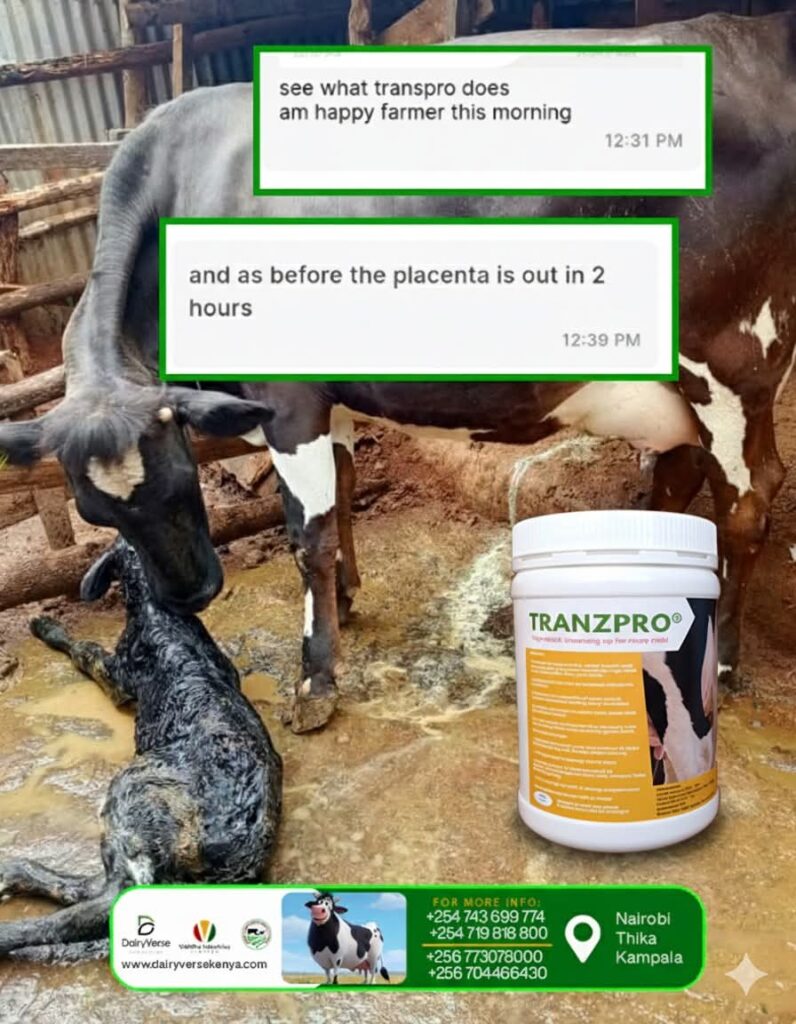
Specialized supplementation is critical during the close-up period to bridge the nutrient gap and mitigate transition disorders.Tranzpro (a supplement providing protein, energy, trace elements, and a rumen feed stimulant) plays a vital role by initiating a 54-day nutritional program focused on protecting the cow’s health and boosting performance:

Application Phase Days Role of Tranzpro®
Pre-calving 18 days before calving Prepares the rumen microflora for the sudden increase in feed intake post-calving. Supplies bypass protein and readily available energy to meet the demands of the foetus and udder development, ensuring smooth calving and reducing the risk of stillbirths.
Post-calving Continue for 36 more days after calving Provides critical protein and energy precursors to support the rapidly increasing milk production while the cow’s appetite is lagging (NEB period). The trace elements and rumen feed components help maximize dry matter intake and mineral status, reducing the incidence of Ketosis and Milk Fever, and accelerating the onset of heat.

Phase 3: Early Lactation and Peak Production

The period from calving up to 100 days is the most demanding and crucial for profitability. The goal is to maximize milk yield before the inevitable post-peak decline.

9. Early Lactation Strategies

The primary challenge in early lactation is the Negative Energy Balance (NEB), where the cow’s energy output (milk) exceeds her energy input (feed).

  • Maximize Dry Matter Intake (DMI): Cows cannot eat enough immediately after calving to meet their energy needs. The strategy is to feed a highly palatable, high-energy-density diet (concentrates/dairy meal) frequently throughout the day to encourage intake.

  • Forage Quality: Provide the highest quality hay/silage available to ensure rumen health and nutrient density.

  • Water: Ensure unlimited access to clean, fresh water, as milk is 87% water.

10. How to Attain Peak Milk Yield and How to Navigate Reduced Dry Matter Intake

Peak production is the point (usually 30–60 days post-calving) where a cow reaches her maximum daily milk yield potential. This peak yield largely determines her total lactation volume.

To maximize peak yield, especially while DMI is reduced:

  • High-Octane Ration: Feed a high-density dairy meal (20–24% crude protein) formulated with readily available energy (starches and sugars).

  • Strategic Feeding: The cow’s DMI typically lags behind her milk production curve. To navigate this, feed smaller amounts of concentrate more frequently (e.g., 3-4 times daily) to keep the rumen stable and active.

  • Body Reserves: Accept that the cow will lose some weight (up to 10% of body weight) in the first 60 days, as she mobilizes fat to fuel milk production. Effective Steaming Up (using supplements like Tranzpro) minimizes this loss.

11. How to Handle Illnesses During Early Lactation

The transition period accounts for nearly 75% of all disease incidents. Rapid and correct management is vital:

  • Milk Fever (Hypocalcemia): Treat immediately with IV or subcutaneous calcium solution. Prevention (DCAD diet during the dry period) is the best cure.

  • Ketosis (Acetonemia): Typically occurs 2–6 weeks post-calving due to excessive fat mobilization (severe NEB). Treat with glucose precursors (Propylene Glycol) and IV dextrose.

  • Mastitis: Monitor udder health daily. Treat clinical mastitis with intra-mammary antibiotics and anti-inflammatories, following veterinary guidance.

12. How and When to Deworm Your Cows During Early Lactation

Deworming during early lactation is important to maximize nutrient absorption and minimize stress on the cow, but timing is crucial.

Timing: Consult your local veterinarian, but a common best practice is to deworm the cow 30 to 45 days after calving. This avoids compounding stress immediately post-calving and helps ensure the cow can fully utilize the high-nutrient feed being supplied to maximize peak yield. Use a broad-spectrum dewormer effective against both internal and external parasites.

13. How to Ensure That Your Cow Comes on Heat 45 to 60 Days After Calving

Achieving a timely pregnancy is the biggest determinant of a 365-day calving interval and, therefore, farm profitability. The goal is to breed the cow within the Voluntary Waiting Period (VWP), aiming for successful conception by 60–90 days post-calving.

Minimize Negative Energy Balance (NEB): This is the key. The cow will not release hormones (Luteinizing Hormone, or LH) needed for a proper heat cycle until her energy balance begins to stabilize. Steaming Up and maximizing DMI (with the help of supplements like Tranzpro) in early lactation shortens the NEB period.

Mineral and Vitamin Status: Ensure adequate intake of reproductive minerals like Phosphorus, Selenium, and Vitamin A/E.

Heat Detection: Maintain accurate records and use aids (tail paint, heat detection patches) to spot signs of oestrus early, as cows in NEB often exhibit weak heat signs.
The Importance of Deworming Your Cattle: A Vital Routine in Dairy Farming

Deworming is often overlooked in dairy farming, yet it is a critical routine management practice that can significantly impact the health and productivity of your cattle. Parasitic infections can lead to weight loss, reduced milk yield, and overall poor performance, making regular deworming essential for maintaining a thriving herd. Here’s a comprehensive guide on when and how to deworm your cattle effectively, based on expert recommendations.

Why Deworming Matters

Internal parasites, such as worms, can cause a range of health issues in cattle, including anemia, digestive problems, and stunted growth. For dairy farmers, this translates to lower milk production and increased veterinary costs. By implementing a consistent deworming schedule, you can prevent these issues, ensuring your cattle remain healthy and productive.

Deworming Schedule by Cattle Category

The deworming frequency and method vary depending on the age and reproductive status of the cattle. Here’s a tailored approach:

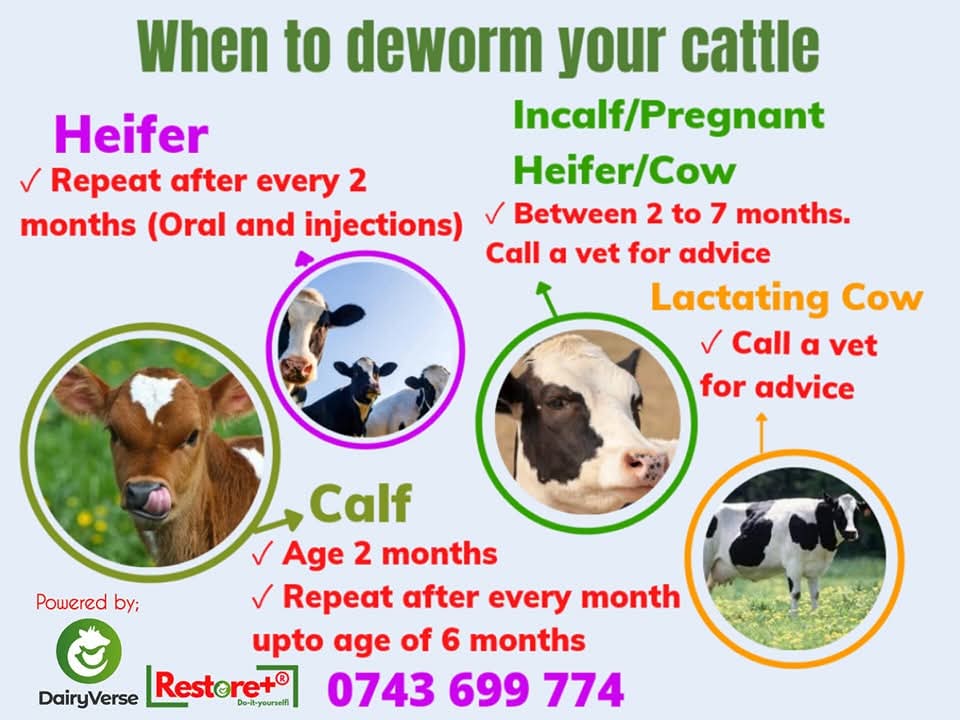
Calves: Begin deworming at 2 months of age. Repeat every month until the calf reaches 6 months to protect their developing immune systems.

Heifers: Deworm heifers every 2 months using a combination of oral treatments and injections to maintain optimal health as they mature.

Incalf/Pregnant Heifers and Cows: Deworm between 2 to 7 months of pregnancy. Always consult a veterinarian for advice to ensure the safety of both the cow and the calf.

Lactating Cows: Deworming should be guided by a veterinarian to avoid any adverse effects on milk production or quality.

Best Practices

Veterinary Consultation: Always seek advice from a vet, especially for pregnant or lactating cows, to determine the safest and most effective deworming products and schedules.

Regular Monitoring: Observe your cattle for signs of parasitic infection, such as weight loss or lethargy, and adjust your deworming plan as needed.

Record Keeping: Maintain a log of deworming dates and treatments to ensure consistency and track the health of your herd.

Partnering with Experts

Powered by DairyVerse and Restore+, this guide emphasizes the importance of professional support. For personalized advice or to schedule a consultation, contact the experts at 0743 699 774.

Conclusion

Deworming is a simple yet powerful practice that can safeguard your cattle’s health and boost your dairy farm’s productivity. By following a tailored deworming schedule and consulting with veterinarians, you can ensure your herd thrives. Don’t underestimate this routine—make it a cornerstone of your dairy management strategy today!


Why Ayrshire Cattle Are a Good Choice for Nigeria’s Sahel Region

The Ayrshire breed of cattle can be a valuable addition to dairy farming in Nigeria’s Sahel region due to their productivity and adaptability under managed conditions.
Below are key reasons, followed by a comparison with the White Fulani and other native Nigerian breeds to provide a comprehensive perspective.
High Milk Production: Ayrshires are known for their high-quality milk, with a fat content of around 4.7% and potential yields of up to 30 liters per day under optimal conditions (average 10 liters/day). This makes them ideal for meeting Nigeria’s growing dairy demand, especially in urban areas near the Sahel, where milk consumption is rising.

Moderate Heat Tolerance: Although Ayrshires are Bos taurus cattle, adapted to cooler climates, their medium body size (average 450 kg) and efficient feed conversion allow them to cope better in the Sahel’s hot, dry climate compared to heavier breeds like Holsteins. With shade, water, and proper nutrition, they can thrive, as demonstrated in tropical regions like Kenya.

Disease Resistance with Management: The Sahel region, particularly northern Nigeria, has areas cleared of tsetse flies since the 1950s (e.g., parts of Kano and Bornu States), reducing the risk of trypanosomiasis for exotic breeds like Ayrshires. While not naturally trypanotolerant, Ayrshires can be raised successfully with veterinary care and trypanocides.

Crossbreeding Potential: Ayrshires can be crossed with indigenous breeds like White Fulani or Sokoto Gudali to combine their high milk yield with the hardiness and disease resistance of native cattle. This approach has been effective in other African countries, improving dairy productivity while maintaining adaptability to local conditions.

Efficient Feed Utilization: Ayrshires produce high milk yields on moderate-quality forage, which is critical in the Sahel, where grazing resources are limited during the dry season (January–June). Their medium size reduces feed requirements compared to larger exotic breeds, aligning with the region’s pastoral and mixed crop-livestock systems.

Longevity and Fertility: Ayrshires are noted for their fertility and long productive lifespans, as seen in Kenyan breeding programs. This ensures consistent reproduction and herd sustainability, with heifers typically producing milk by two years of age.

Comparison with White Fulani and Other Native Nigerian Breeds
To understand the suitability of Ayrshires, it’s helpful to compare them with indigenous Nigerian breeds like the White Fulani, Sokoto Gudali, Muturu, and N’Dama, which are naturally adapted to the Sahel and other Nigerian environments. Below are key characteristics of these native breeds and how they complement or contrast with Ayrshires.

White Fulani (Bunaji):
Description:
A Zebu (Bos indicus) breed, the White Fulani is one of Nigeria’s most common cattle breeds, widely raised by Fulani pastoralists in the Sahel and northern regions. They have a distinctive white coat, long horns, and a hump, with an average weight of 250–350 kg for cows.
Adaptability: White Fulani are highly adapted to the Sahel’s arid climate, with excellent heat and drought tolerance. They can survive on sparse vegetation and migrate long distances during the dry season, making them ideal for nomadic pastoral systems.
Milk Production: They produce 2–5 liters of milk per day, significantly less than Ayrshires, but their milk is sufficient for traditional pastoralist needs. Their milk has a higher fat content (around 5–6%), suitable for local dairy products like butter and cheese.
Disease Resistance: While not fully trypanotolerant, White Fulani have better resistance to tropical diseases than Ayrshires, though they are still susceptible to trypanosomiasis in tsetse-infested areas.

Advantages:
– Their hardiness, low maintenance costs, and ability to thrive in harsh conditions make them a staple for Sahelian farmers. They require minimal infrastructure compared to Ayrshires.
Crossbreeding Potential: Crossing White Fulani with Ayrshires can produce hybrids with improved milk yield (closer to Ayrshire levels) while retaining heat tolerance and some disease resistance, making them a practical choice for smallholder farmers aiming to balance productivity and resilience.

Sokoto Gudali:
Description:
Another Zebu breed, the Sokoto Gudali is larger than the White Fulani (350–450 kg for cows) and has a shorter hump and horns. It is common in northwestern Nigeria, including the Sahel region.
– Adaptability: Like the White Fulani, Sokoto Gudali are well-suited to the Sahel’s dry climate and can tolerate heat and limited water availability. They are often used in mixed farming systems.
Milk and Meat Production: They produce slightly more milk than White Fulani (3–6 liters/day) and are valued for both milk and meat, with good carcass quality. However, their milk yield is still lower than Ayrshires.
Disease Resistance: They have moderate resistance to tropical diseases but are not trypanotolerant, requiring similar disease management as White Fulani in tsetse-prone areas.
Advantages:
– Their dual-purpose nature (milk and meat) and adaptability make them versatile for Sahelian farmers. Crossbreeding with Ayrshires could enhance milk production while maintaining some environmental resilience.

Muturu:
Description:
A small, trypanotolerant Bos taurus breed (150–200 kg), the Muturu is native to southern Nigeria but has been raised in northern regions with tsetse presence.
Adaptability: Muturu are less suited to the Sahel’s extreme aridity compared to Zebu breeds but excel in tsetse-infested areas due to their natural trypanotolerance, making them a low-risk option in partially cleared zones.
Production: They produce very low milk yields (1–2 liters/day) and are primarily valued for meat or cultural purposes. Their small size limits their commercial dairy potential compared to Ayrshires.
Advantages:
– Their disease resistance and low feed requirements make them ideal for low-input systems, but they are not a direct competitor to Ayrshires for dairy production.

N’Dama:
Description:
A trypanotolerant Bos taurus breed (200–300 kg), introduced to Nigeria from West Africa, the N’Dama is less common but valued in tsetse-prone areas.
Adaptability: Like Muturu, N’Dama are better suited to humid or semi-arid regions with tsetse presence rather than the dry Sahel. They have good heat tolerance but require more water than Zebu breeds.
Production: Milk yield is low (1–3 liters/day), and they are primarily used for meat. Their productivity is lower than Ayrshires for dairy purposes.
Advantages:
– Their trypanotolerance is a significant advantage in areas where tsetse control is incomplete, but their limited milk output makes them less competitive for dairy-focused systems.

Complementary Strategies
Crossbreeding: Ayrshires can be crossed with White Fulani or Sokoto Gudali to create hybrids that combine Ayrshire milk production with the heat tolerance and disease resistance of native breeds. For example, in Kenya, Ayrshire crosses with Zebu breeds have improved dairy output while maintaining adaptability, a model that could work in Nigeria’s Sahel.
Management Systems: White Fulani and Sokoto Gudali thrive in extensive pastoral systems, while Ayrshires require semi-intensive or intensive systems with better infrastructure (e.g., shade, water, and veterinary care). Farmers could maintain native breeds for resilience and Ayrshires or their crosses for commercial dairy production.
Disease Control: In tsetse-free zones, Ayrshires are viable, but in areas with residual tsetse presence, Muturu or N’Dama may be better for low-input systems, or White Fulani crosses with Ayrshires could balance productivity and disease resistance.

Challenges and Considerations
Climate: The Sahel’s extreme heat and dry season (January–June) favor White Fulani and Sokoto Gudali over Ayrshires, which need shade and water to avoid heat stress. Native breeds require less intervention to survive harsh conditions.
Cost and Infrastructure: Ayrshires are more expensive to acquire and maintain, requiring housing, supplemental feed, and veterinary care. White Fulani and Sokoto Gudali are cheaper and better suited to low-input systems, while Muturu and N’Dama require minimal resources but offer lower productivity.
Market Access: Ayrshires’ high milk yield is advantageous if farmers have access to dairy markets in urban centers like Kano. Native breeds, with lower yields, are better for subsistence or local markets with limited infrastructure.

Conclusion
Ayrshire cattle are a strong choice for dairy production in Nigeria’s Sahel region, particularly in tsetse-free zones with adequate management, due to their high milk yield, efficient feed use, and crossbreeding potential. However, native breeds like White Fulani and Sokoto Gudali offer superior heat and drought tolerance, making them ideal for extensive pastoral systems. Muturu and N’Dama, while trypanotolerant, are less suited for dairy due to low yields but excel in disease-prone areas. A mixed strategy—using Ayrshires for commercial dairy and crossing them with White Fulani or Sokoto Gudali for resilience—could optimize productivity in the Sahel.
#dairyfarmingnigeria #dairyfarming #ayrshire #dairyverse #dairyversemarketplace


Do not fear anything, dairy farming is extremely profitable!

Dairy farming success story. Meet Mr. Peter Kamau from Njabini, South Kinangop, Nyandarua county. At the foot of Aberdare Ranges, lies a beautiful and vibrant dairy farm. This farm bustling with life and youthful glow drew our attention. We visited the young man who has put his foot forward and decided to invest in a mega dairy project.

From a distance, you will tell the zeal and the hardwork put in establishment of the expertly crafted dairy business. From the barn to the dairy cows kept, health precautions employed, precision in feeding, fodder conservation, milk hygiene protocols in place, you can’t help but marvel at jewel!

Mr. Kamau gladly welcomed us to his farm and educated us on how he goes about management of his mega dairy farm that has defied the status quo. To start with, Nyandarua County is known for the cold weather, fertile soils that cause the fields yield more Kikuyu grass all year round. This together with the low cost involved inspires dairy farmers to prefer extensive dairy production system that is characterized by paddocking, rotational grazing and tethering over zero grazing. Extensive dairy production system limits profitability since the yields tend to be lower as a result of unbalanced rations and skewed supplementation. On the other hand, zero grazing serves to help dairy investors get maximum benefits from their farm investments through increased milk yield and fosters animal welfare.

The first step that Mr. Kamau took was to establish fodder. This has helped him escape the loop that forces many prefer letting their animals graze around the fields. The next step was construction of state-of-the-art mega dairy barn, not the usual small-scale cowsheds. He has put together a double sided comprehensive dairy barn that has a capacity of holding 30 dairy cows made of metal and properly concreted floors. The barn offers enough space for dry feeds (hay and staw), concentrates store, silage bunkers, fodder processing space, security control room, well kept cubicles partitioned with metal bars, clean troughs for fodder and water, open resting and socialization area allowing the cows get sunlight, properly ventilated structure ensures constant flow of air and buffers them against cold at night. Additionally, the milking parlor is well constructed allowing for a workspace during milking and easier handling of animals during routine management practices and treatment. Not forgetting that the whole structure is well fitted with CCTV cameras allowing the owner to access the proceeding of the farm remotely in realtime and the calfpen constructed in the right way, raised above the ground leval and properly slated to ensure that the calves are shielded from cold and other vices that occur as a result of cold weather and moisture.

Mr. Kamau has also chosen good breeds of dairy cows with the right dairy characters. All the cows we saw had superb dairy characters. His cows are producing between 25 and 38 litres of milk each. This potential has been realized through hardwork and consistency. All the cows are in good body condition signaling good health which is a prerequisite in realization of success in any dairy farming venture. The calves are growing fast, thanks to the elaborate feeding model adopted.

This story is not only an inspiration to us but also any other dairy investor already practicing dairy farming or planning to kick of this journey as Mr. Kamau says,”Do not fear anything, just start…dairy farming is extremely profitable…”

Take the next step today!

To reach out to Mr. Kamau, call our team via 0719818800 | 0734725728 | 0707198516

or

WhatsApp:- https://wa.me/254743699774

Useful Links:

Get our milk record card template here:– https://dairyversekenya.com/product/milk-record-card/

Calf Rearing Guide:- https://dairyversekenya.com/product/calf-rearing-guide/

High-yield Dairymeal Formula:- https://dairyversekenya.com/product/highyield-dairymeal/

Watch Full Video:

Mr. Kamau’s dairy success

To get our supplements, visit our office located in Nairobi CBD at RNG Plaza 5th Floor Suite OF9 along Ronald Ngala Street.

You can also buy online on; https://www.dairyversekenya.com/shop

Find us on social media;

Facebook:- https://facebook.com/dairyverse

Instagram:- https://Instagram.com/dairyverseke

Tiktok:- https://www.tiktok.com/@dairyverse?_t…

X:- https://x.com/dairyverse_ke?s=09


Understanding Common Dairy Cattle Diseases: Foot and Mouth Disease (FMD) and Lumpy Skin Disease (LSD)

Livestock diseases are a major concern for farmers worldwide, as they can lead to significant economic losses and reduced productivity. Two prevalent diseases affecting livestock today are Foot and Mouth Disease (FMD) and Lumpy Skin Disease (LSD). In this article, we will break down their causes, signs, and the control measures you can adopt to protect your herd.


  1. Foot and Mouth Disease (FMD)

FMD is a highly contagious viral disease that primarily affects animals with divided hooves, such as cattle, sheep, goats, and pigs. The disease spreads rapidly through the air, making early detection and preventive measures critical.

Key Signs and Symptoms:

  • Excessive salivation

  • Blisters in the mouth and on the hooves

  • Difficulty or inability to stand

Treatment and Control:

Antibiotic Cover: Used to prevent secondary infections.

Vaccination: Farmers are advised to vaccinate livestock with Fotivax multivariant every three months.

Recovery Boost: Administer Booster+® to previously infected animals to enhance their recovery rate.

Early intervention and routine vaccination are crucial in managing FMD outbreaks. Farmers should isolate infected animals and sanitize affected areas to limit the spread.


  1. Lumpy Skin Disease (LSD)

LSD is another viral disease that mainly affects cattle and, to a lesser extent, sheep and goats. Unlike FMD, LSD is transmitted through biting insects, such as tsetse flies and mosquitoes, making insect control a key aspect of prevention.

Key Signs and Symptoms:

  • Nodules, 1–2 inches thick, appearing on the body

  • Swelling of the front or hind limbs

  • Inability to stand

Treatment and Control:

Antibiotic Cover: Helps to prevent bacterial complications.

Vaccination: Use Lumpivax Neethling strain once a year to protect livestock.

Managing the insect population around farms through insecticide sprays, proper drainage, and clean environments can significantly reduce LSD transmission.

Best Practices for Farmers

Vaccination Schedule: Regular vaccinations as recommended above are vital for disease prevention.

Early Detection: Monitor livestock daily for any signs of illness.

Hygiene and Biosecurity: Maintain clean shelters and implement biosecurity measures to prevent the entry and spread of pathogens.

Isolate Infected Animals: Separate symptomatic animals immediately to protect the rest of the herd.

Educate Farm Workers: Ensure all workers understand the signs and know how to act in case of outbreaks.

Final Thoughts

Diseases like Foot and Mouth Disease and Lumpy Skin Disease highlight the importance of preventive measures in livestock farming. By staying informed and proactive, farmers can minimize losses and ensure healthier herds. Regular veterinary consultations and adherence to vaccination schedules can go a long way in safeguarding livestock and sustaining productivity


Understanding the Dutch Dairy Miracle: Why the Netherlands Outperforms Kenya and Nigeria in Milk Production

When you look at the global dairy industry, the Netherlands stands out as a small yet powerful giant. Despite having a cattle population of just 3.8 million in 2022, the Netherlands produced an astonishing 14.5 billion liters of  milk. In contrast, Kenya, with a cattle population of 23.5 million, and Nigeria, with 20.9 million cattle, managed to produce only 4.5 billion and 0.53 billion liters of milk, respectively. This discrepancy begs the question: Why does the Netherlands, with far fewer cows, outperform these larger African nations in milk production?

Key Factors Behind the Netherlands’ High Milk Production

  1. Advanced Dairy Farming Technology:

    • The Netherlands is a global leader in dairy farming technology. From automated milking machines to sophisticated herd management systems, Dutch farmers have embraced innovation at every level. These technologies optimize the health, nutrition, and productivity of each cow, leading to higher milk yields.

  2. Selective Breeding and Genetics:

    • Dutch dairy farmers have invested heavily in selective breeding programs aimed at improving the genetic makeup of their cattle. The result is a breed of cows that are not only healthier but also more productive. These cows produce more milk per day compared to the average cow in Kenya or Nigeria, where breeding programs may not be as advanced or widespread.

  3. Efficient Feed and Nutrition Management:

    • The quality and consistency of feed are critical factors in milk production. In the Netherlands, cows are fed a highly nutritious diet that is carefully formulated to meet their specific needs. This diet often includes high-quality forages, grains, and supplements that enhance milk production. In contrast, many Kenyan and Nigerian farmers rely on less consistent and lower-quality feeds, which can limit milk output.

  4. Comprehensive Farmer Education and Support:

    • The Dutch government and private sector have invested in extensive farmer education programs. Dutch farmers have access to continuous training and support, which helps them stay updated with the latest farming techniques and technologies. In Kenya and Nigeria, however, access to such training and resources is often limited, leading to less efficient farming practices.

  5. Excellent Veterinary Services and Herd Health Management:

    • In the Netherlands, veterinary services are readily available, and there is a strong focus on herd health management. This ensures that cows remain healthy and productive throughout their lives. Diseases and health issues are promptly addressed, reducing the chances of milk production declines. In contrast, many Kenyan and Nigerian farmers struggle with access to veterinary care, which can lead to lower productivity.

Strategies to Increase Milk Production in Kenya

To improve Kenya’s milk production, several strategies can be implemented, drawing from the Dutch example:

  1. Investment in Dairy Farming Technology:

    • Solution: The Kenyan government, in collaboration with the private sector, should invest in modern dairy farming technologies. This includes subsidizing the cost of automated milking machines, cooling systems, and herd management software to make them accessible to small-scale farmers.

  2. Enhancing Breeding Programs:

    • Solution: Kenya should develop and expand selective breeding programs. By collaborating with international breeding experts and establishing local breeding centers, Kenyan farmers can access high-quality breeds that are more productive and resilient.

  3. Improving Feed Quality and Availability:

    • Solution: The Kenyan government and agricultural organizations should focus on improving the quality and availability of livestock feed. This could involve promoting the cultivation of high-quality forage crops and providing subsidies for feed supplements. Additionally, educating farmers on proper nutrition and feed management is essential.

  4. Expanding Farmer Education and Training:

    • Solution: Establishing more agricultural extension services and training centers across the country will help farmers stay informed about best practices in dairy farming. This can include workshops, online courses, and farmer field schools focusing on modern farming techniques, animal health, and efficient farm management.

  5. Strengthening Veterinary Services:

    • Solution: Improving access to veterinary services is crucial. The government should invest in training more veterinarians and deploying them to rural areas. Mobile veterinary clinics and telemedicine services can also help reach farmers in remote locations, ensuring that herd health issues are addressed promptly.

  6. Creating Cooperative Models:

    • Solution: Encouraging the formation of dairy cooperatives can help small-scale farmers pool resources, access better markets, and invest in shared infrastructure such as cooling plants and processing facilities. Cooperatives can also serve as platforms for collective bargaining, reducing the cost of inputs and increasing profitability.

  7. Encouraging Public-Private Partnerships:

    • Solution: Public-private partnerships can play a significant role in enhancing the dairy sge, technology, and capital necessary to modernize the dairy industry.

Conclusion

While the Netherlands may have a smaller cattle population, its success in  milk production is a result of a combination of advanced technology, selective breeding, efficient feed management, and comprehensive farmer support. By adopting similar strategies and tailoring them to the local context, Kenya can significantly boost its milk production, ensuring food security, improving livelihoods, and reducing dependency on imports. The journey may require substantial investment and policy shifts, but the potential benefits make it a worthwhile endeavor for the future of Kenya’s dairy industry


How to manage a Dry Cow

A cow or heifer during the last 8 weeks of pregnancy is referred to as a Dry Cow. Feeding your incalf animal at this stage is critical. It should be taken seriously because failure to that has devastating effects, she may fail to stand up before or after calving and  milk yield may be affected negatively after calving.
Nutrition plan should change at 7 months incalf. You should swicth from use of heifer mineral lick or milk producing animal mineral lick that has high calcium to Dry mineral lick. Ensure that you provide the incalf animal with enough fodder and concentrates. We recommend use of high energy concentrates like maizegerm upto 4 Kg per day. This will ensure that she has the correct body condition score.

Did you know that your incalf animal should not show more than 3 ribs?
We recommend reduction of the amount of silage provided to the cow by 50%. This will serve to prevent twisting of the abomasum. You should substitute it with higher quality feeds (Bhoma rhode hay or Fresh Super Napier grass) in order to prevent starvation
You should stop milking your cow at least 8 weeks to calving. Mastitis prevention should be done. The type of mastitis that affects dry cows is called summer mastitis. There are intramamary infusion preparations that are commercially available for this purpose.
Introduction of dry mineral lick. This type of mineral contains low amounts of Calcium. It helps your cow mobilize Calcium to enhance health and prevent risk of milk fever.

Udder development is key for higher yields.

Proper steaming up and transitional cow management will help you hit a profitable milk-yield peak faster, counter reduced appetite and problems like milk fever and ketosis at a go!

Steaming up should begin three weeks prior to calving. This helps prepare your cow for higher milk production after parturition. This is done through provision of high quality feeds like dairymeal upto 5 Kg/day, Tranzpro® 18 days before calving and 36 days after calving and slightly higher quantity of dairymeal during the last 2 weeks (Upto 5 Kg per day). During the last week of pregnancy, do not introduce mineral lick suitable for lactating cows because it might disrupt calcium balance in blood leading to milk fever. Keep observing for eminent signs of calving so that proper is given to the dam and the calf at parturition.

After calving down, milk the cow and give your calf colostrum before 6 hours are over. Additionally, feed your cow with mineral lick meant for milking cows that typically has high levels of Calcium. Reintroduce high quality fodder as well and the right quantities of dairymeal. To learn more on how to make Total Mixed Ration, click here.


Feeding a dairy calf from birth to 12 months of age

Feeding is fundamental in establishment of a strong foundation for a profitable dairy herd. We have to start with the basics. A dairy calf should be fed well right from birth to maturity. This will prepare her to produce more  milk and gather more value. You will get more milk and no cases of delayed or silent heat.

The first 3 Days of life;
A calf should be fed on clean and high quality colostrum alone. The colostrum should be warm, provide her with colostrum directly from the dam. In commercial dairy farms, we don’t allow the calf to suckle.
Provide her with a total of 6 litres of colostrum a day. Water should be introduced to her early enough in order to train to differentiate it from milk. This will be important to prevent health conditions like blood in urine.
Learn more on how to feed her:-

2 Weeks of age;
You should introduce starter pellets upto 50 grams per day. Soft solid feeds such as sweet potato vines should also be introduced. This will help in development of the rumen part of the stomach.

1 Month of age;
She should be fed on 3-4 litres of cow milk per day together with about 120 grams of starter pellets. Feeding frequency should be twice a day.
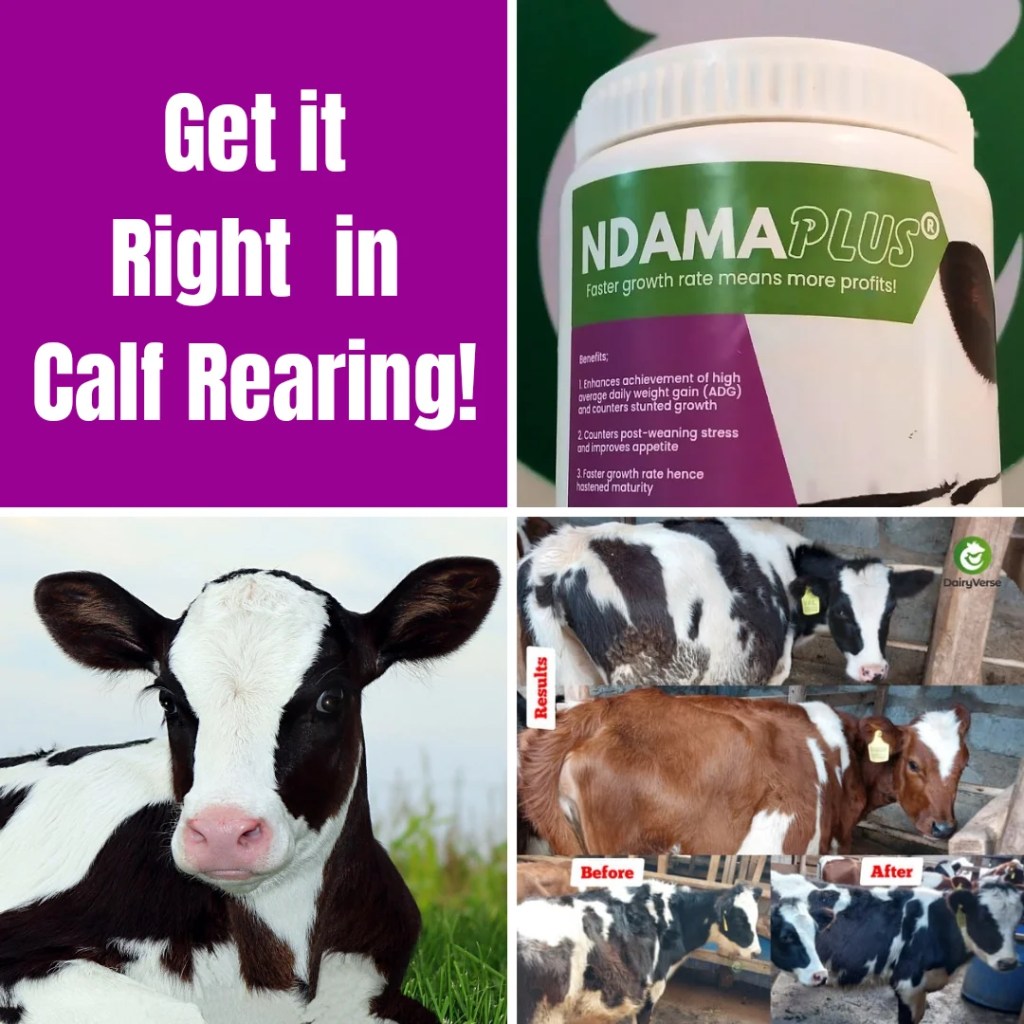
At one month of age, you should deworm your calf and introduce Ndamaplus at the rate of 12.5 grams mixed with the soaked pellets.

2 Months of age;
Continue providing your calf with 2-3 litres of cow milk and starter pellets. Ensure that you deworm her and continue using the right mineral lick.

3 Months of age;
Prepare your calf for weaning. Provide her with 1-2 litres of milk and finisher pellets. Deworm her and continue using mineral lick and introduce mineral block. Remember to continue using Ndamaplus®️ in order to prevent stress that comes after weaning. It helps your cow to grow faster.

4 Months of age;
Provide her with calf weaner meal. She is is wean off. Provide her with adequate amounts of hay and silage. Deworming should be done as well. This ensures that she is well ushered into the next phase of life.

5 – 12 Months of age
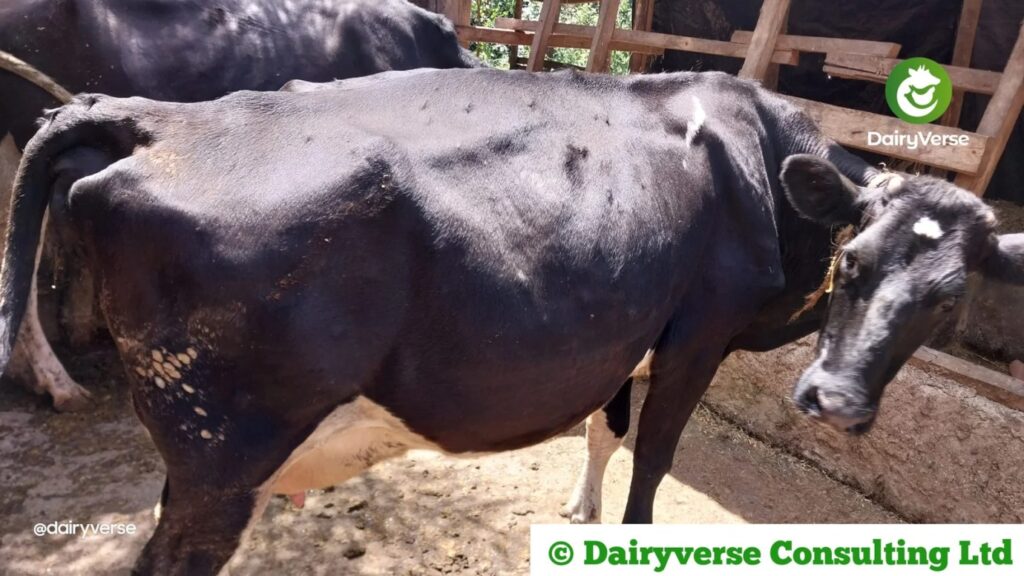
In most cases, this phase becomes the hardest to most dairy farmers. Their growth slows down, health becomes poor, some calves fail to stand up and they may die. You may have experienced these challenge before. Do not be afraid, we will show you how to go about this phase properly and incase you have young stock that are already suffering you can contact our team of experts for help.
Introduce dairymeal to your dairy calf at the rate of 1kg per day. Provide her with high quality feeds for example high quality corn silage and bhoma rhodes. Majority of us fail to provide enough quantity of fodder to our fast growing calves at this age that contributes to poor growth rate. Our standard at Dairyverse Consulting is ad libitum provision of fodder;- self limit. Allow them to have enough of the fodder because their bodies have a high demand for energy that is primarily gotten from these feed sources.
To help in proper formation of bones and body structure provide her with mineral licks rich in calcium. Past 6 months of age, ensure that you deworm your calf after every 2 months. This eliminates competition for nutrients and helps the calf to grow faster.
Ensure that your managers and farmhands observe your calf closely in order to have her in good health. Provide comfortable housing as well.

Proper application of the aforementioned best practices will bring you admirable results;- Timely onset of heat and high  milk yield after calving.


Say YES to faster growth in calves, improved fertility and more milk yield!

Embraced across Africa by all dairy investors! Don’t be left behind. These are the silver bullets in realization of your cattle’s best growth, production and reproduction potential!

Ndamaplus®️ – Helps your calf aged 3 -12 months meet average daily weight gain and thus mature faster among many other benefits!

More benefits of Ndamaplus include;

  • It Enhances achievement of average daily weight gain and counters stunted growth.
  • Counters post weaning stress and improves appetite.
  • Enhances faster growth rate and early maturity.
  • Boosts calf’s immunity.
  • Facilitates timely onset of heat.

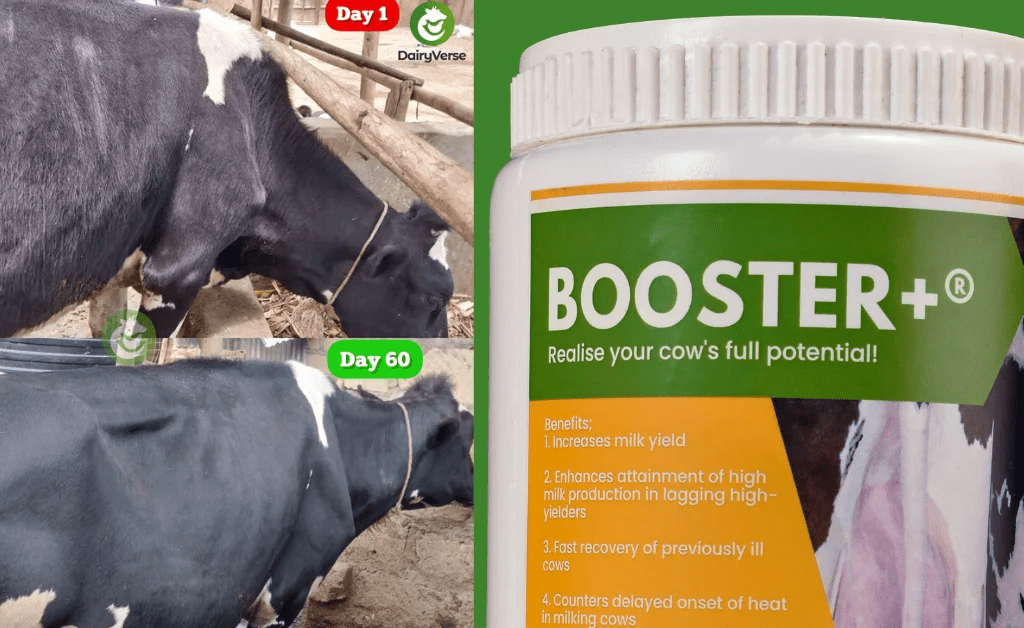
Booster+®️ – Helps you realise your cow’s full milk-yield potential. She will hit peak production and fix poor body condition and silent heat and delayed onset of heat in milking herd!

More benefits include;

  • It increases milk-yield and enhances achievement of peak production in cows.
  • Enhances attainment of high  milk production in lagging high yielders.
  • Fast recovery of previously ill cows.
  • Counters delayed onset of heat in milking cows.
  • Improves body condition and counters stunted growth.

Fertility+®️ – This is the solutions to delayed onset of heat and silent heat in heifers! The following are its benefits;

  • It counters delayed and silent heat.
  • Prepares heifers for prominent heat signs.
  • Boosts fertility and enhances conception.
  • Counters reproductive challenges like dystocia and retained afterbirth.

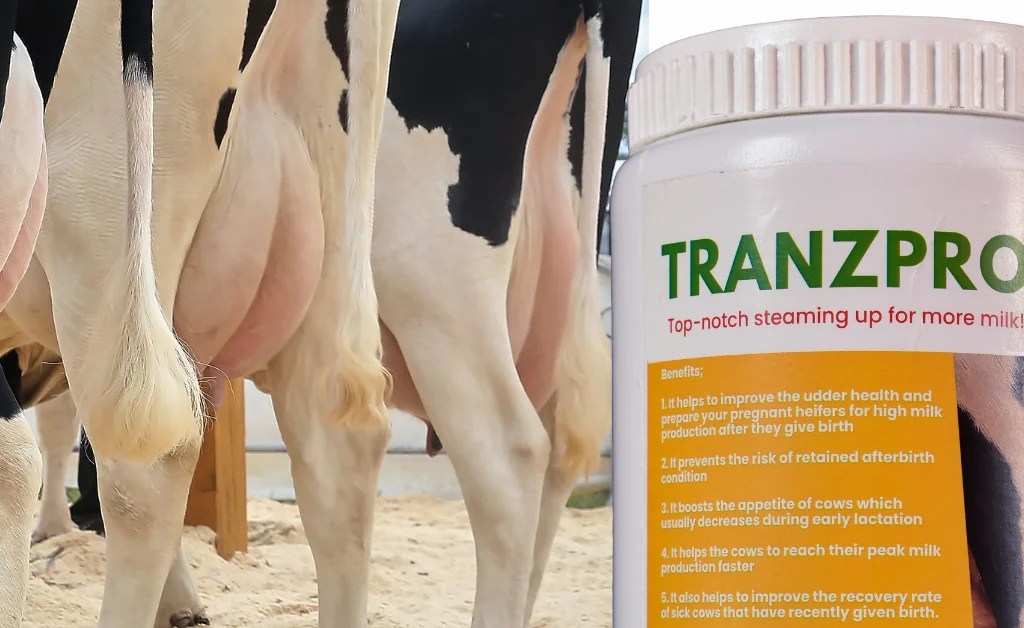
Tranzpro®️ – Works on your incalf cow 18 days towards calving and 18 days after calving. This product enhances multiplication your cow’s udder cells, steams her up, enhances her appetite and ensures that she hits peak production early!

  • Improving udder health and getting pregnant heifers ready for high milk production after giving birth.
  • Preventing the risk of retained afterbirth condition.
  • Boosting the appetite of cows, which usually decreases during early lactation.
  • Helping cows reach peak milk production faster.
  • Improving the recovery rate of sick cows that have recently given birth.

We are committed to help you create more wealth.


The danger of using DCP on your incalf heifer or cow

We highly discourage use of high Calcium minerals on heifers and cows at advanced stages of pregnancy. High calcium mineral sources should be limited when the animal is 7 Months incalf.

The major reasons for this include;
1. The animal during late stages of pregnancy needs to train her body to utilize Calcium stored in body reserves – the bones as opposed to that provided through the diet.
2. Provision of high dietary Calcium will hinder the body from training the necessary glands and organs from releasing Calcium into the blood on need basis and this will lead to  milk fever after calving.
3. High amounts of Calcium will lead to overgrowth of the developing calf which will in turn result in difficulties while giving birth (Dystocia). This leads to excessive stress on the animal and causes low production after calving. In adverse cases death of the calf or the dam may occur.

So what minerals should we provide the incalf heifer or cow during the last trimester?
You should only provide mineral licks that have low amount of Calcium. 5% Calcium will be ideal to stimulate the body to function normally and enhance supply of blood Calcium preventing the animal from the risk of milk fever and enhance milk production. Calcium is important in manufacture of milk. Mineral  supplements that contains high levels of protein help in proper development of the udder. This ensures that your cow produces more milk after calving.

Tranzpro®️ a high protein and energy supplement should be introduced 18 days before calving and used for 36 more days after parturition (after calving). It boosts her immunity, maintains her appetite and body condition. To buy Tranzpro®️ please click here.

Learn more on proper care of incalf cows, click here.