Address
304 North Cardinal
St. Dorchester Center, MA 02124
Work Hours
Monday to Friday: 7AM - 7PM
Weekend: 10AM - 5PM
Address
304 North Cardinal
St. Dorchester Center, MA 02124
Work Hours
Monday to Friday: 7AM - 7PM
Weekend: 10AM - 5PM
Deworming is often overlooked in dairy farming, yet it is a critical routine management practice that can significantly impact the health and productivity of your cattle. Parasitic infections can lead to weight loss, reduced milk yield, and overall poor performance, making regular deworming essential for maintaining a thriving herd.

Deworming is often overlooked in dairy farming, yet it is a critical routine management practice that can significantly impact the health and productivity of your cattle. Parasitic infections can lead to weight loss, reduced milk yield, and overall poor performance, making regular deworming essential for maintaining a thriving herd. Here’s a comprehensive guide on when and how to deworm your cattle effectively, based on expert recommendations.
Why Deworming Matters
Internal parasites, such as worms, can cause a range of health issues in cattle, including anemia, digestive problems, and stunted growth. For dairy farmers, this translates to lower milk production and increased veterinary costs. By implementing a consistent deworming schedule, you can prevent these issues, ensuring your cattle remain healthy and productive.
Deworming Schedule by Cattle Category
The deworming frequency and method vary depending on the age and reproductive status of the cattle. Here’s a tailored approach:
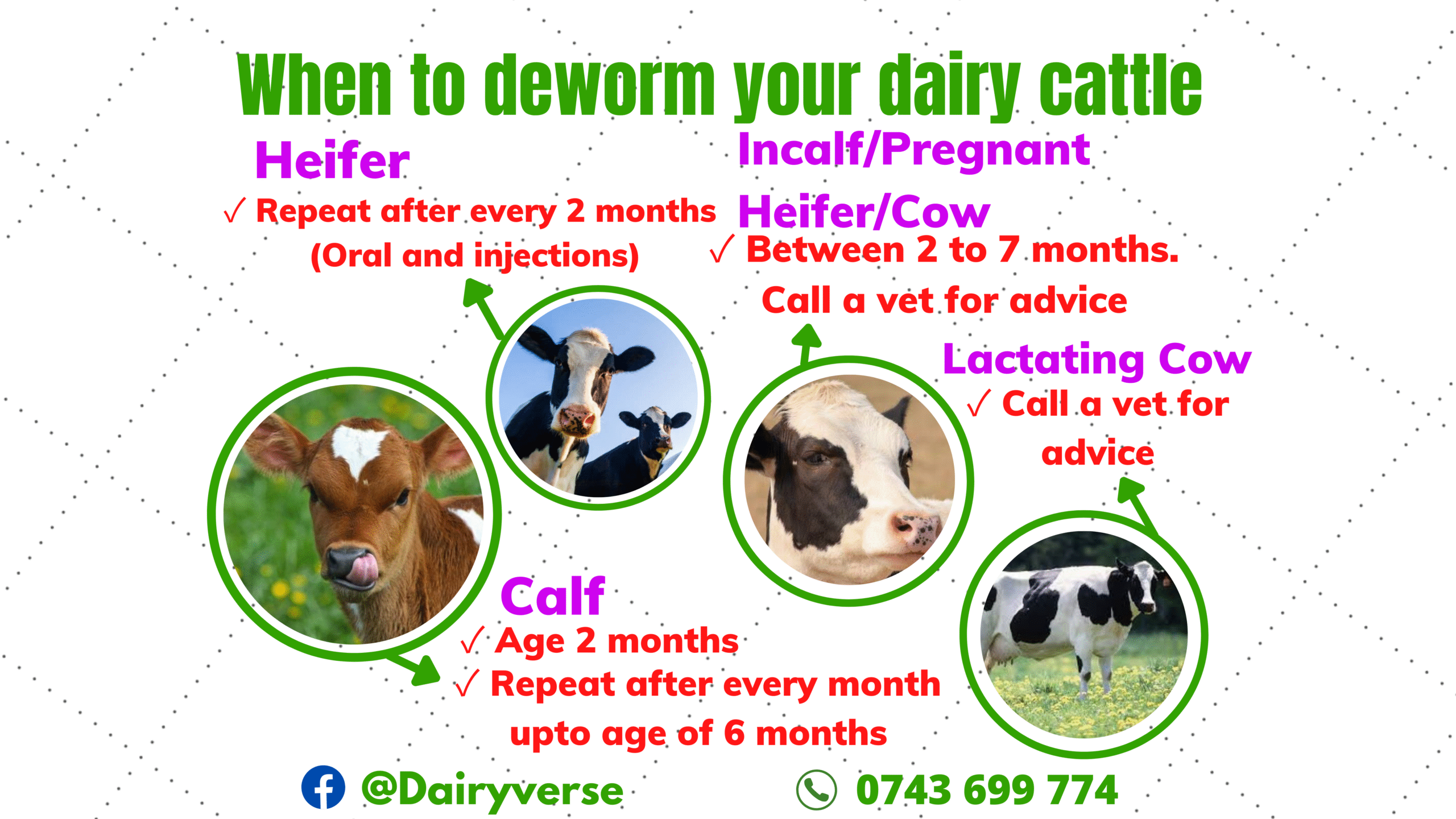
• Calves: Begin deworming at 2 months of age. Repeat every month until the calf reaches 6 months to protect their developing immune systems.
• Heifers: Deworm heifers every 2 months using a combination of oral treatments and injections to maintain optimal health as they mature.
• Incalf/Pregnant Heifers and Cows: Deworm between 2 to 7 months of pregnancy. Always consult a veterinarian for advice to ensure the safety of both the cow and the calf.
• Lactating Cows: Deworming should be guided by a veterinarian to avoid any adverse effects on milk production or quality.
Best Practices
• Veterinary Consultation: Always seek advice from a vet, especially for pregnant or lactating cows, to determine the safest and most effective deworming products and schedules.
• Regular Monitoring: Observe your cattle for signs of parasitic infection, such as weight loss or lethargy, and adjust your deworming plan as needed.
• Record Keeping: Maintain a log of deworming dates and treatments to ensure consistency and track the health of your herd.
Partnering with Experts
Powered by DairyVerse and Restore+, this guide emphasizes the importance of professional support. For personalized advice or to schedule a consultation, contact the experts at 0743 699 774.
Conclusion
Deworming is a simple yet powerful practice that can safeguard your cattle’s health and boost your dairy farm’s productivity. By following a tailored deworming schedule and consulting with veterinarians, you can ensure your herd thrives. Don’t underestimate this routine—make it a cornerstone of your dairy management strategy today!


This so much enlightenment.Thank for everything.I would like to learn more from you about dairy farming
You are very welcome! At Dairyverse, we always say that an enlightened farmer is a profitable farmer. We love sharing knowledge because your success is our success.
There are three great ways you can keep learning with us for free:
Dairyverse TV on YouTube: We regularly post practical videos breaking down feed formulation, cow comfort, calf rearing, and how to maximize your milk yields.
Our WhatsApp Broadcast: We share weekly tips, simple checklists, and feed charts right here to help you manage your herd better.
Direct Farm Consultation: Whenever you have a specific problem on the farm, you can text us right here and our technical team will help you troubleshoot it.
To help me send you the most relevant learning materials right now, what is the biggest challenge you are currently facing on your farm?
A) High cost of commercial feeds
B) Low milk yields / poor production
C) Silent heat / breeding failure
D) Calf diseases and slow growth
Just reply with A, B, C, or D and I will send over a free guide to get you started!
INTERESTING APP WITH GOOD INFO
Thank you very much