Address
304 North Cardinal
St. Dorchester Center, MA 02124
Work Hours
Monday to Friday: 7AM - 7PM
Weekend: 10AM - 5PM
Address
304 North Cardinal
St. Dorchester Center, MA 02124
Work Hours
Monday to Friday: 7AM - 7PM
Weekend: 10AM - 5PM
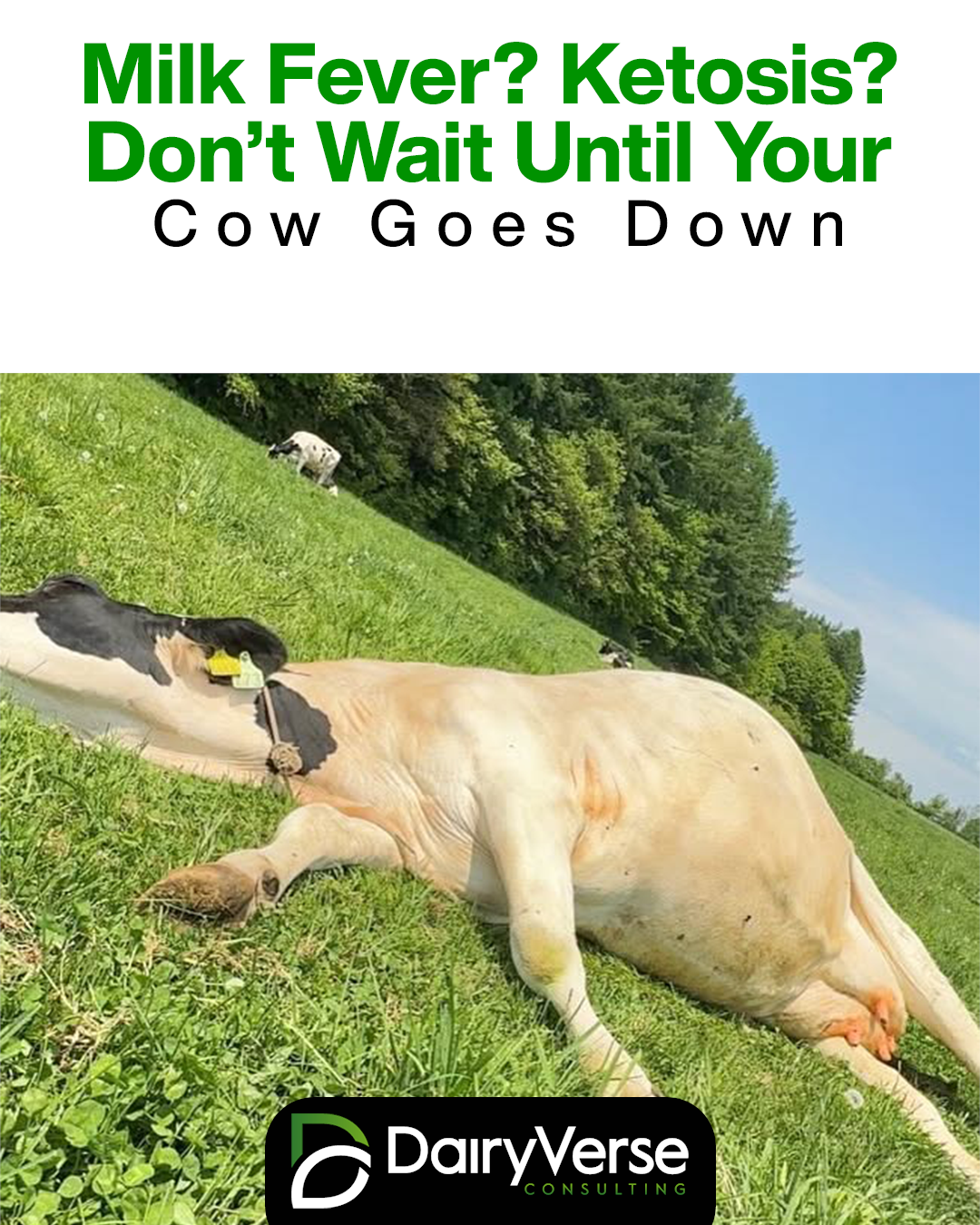
Your cow looks fine… until she calves. Then suddenly, she struggles to stand. She’s shaky, dull-eyed, or worse, down and unable to rise. What started as a normal calving ends with panic, calls to the vet, and the fear of losing one of your best milkers.
These are signs of milk fever and ketosis, two of the most common and costly metabolic disorders in dairy cows. The scary part? They often hit the highest-producing animals, the very cows you’ve invested most in.
Milk fever (hypocalcemia) happens when a cow’s body can’t keep up with the sudden demand for calcium after calving. Calcium is not just for bones, it’s critical for muscle function, heart rhythm, and nerve transmission.
Without enough calcium:
It’s called “fever”, but temperature isn’t the problem—the cow is literally drained of her ability to function.
Ketosis occurs when a cow enters negative energy balance after calving. Her body starts breaking down too much body fat to produce milk, leading to toxic buildup (ketones) in the blood.
Symptoms include:
It often creeps in silently—a hidden loss-maker that reduces milk, delays conception, and slows recovery after calving.
🟠 Feeding gaps during the dry period
🟠 Lack of transition diet planning
🟠 Imbalanced minerals (like calcium, magnesium, and phosphorus)
🟠 Sudden drop in feed intake post-calving
🟠 High-producing cows with unprepared metabolism
The cow’s body shifts dramatically during calving. If it’s not supported properly during the final dry weeks and early lactation, her system crashes.
Metabolic disorders are one of the top causes of:
And the most frustrating part? They’re preventable.
At Dairyverse, we focus on building strong transitions, not just strong cows. That’s why RestoreX® supports:
✔️ Calcium & magnesium balance before and after calving
✔️ Liver function and energy metabolism
✔️ Appetite stimulation and feed efficiency
✔️ Immunity and smooth post-calving recovery
It’s not a cure—it’s a support system for the cow’s most vulnerable phase.
When a cow goes down after calving, the damage is already done. The real solution is preparing her early, understanding her energy needs, and supporting her with more than just feed volume.
Because milk fever and ketosis don’t knock at the door, they barge in when no one’s looking.
Prevention is power. And it starts before the milk does.