Feeding a calf properly from birth lays the foundation for a productive, healthy dairy cow. The right nutrition at every stage ensures high milk yield, early maturity, and reduced health risks such as delayed or silent heat.
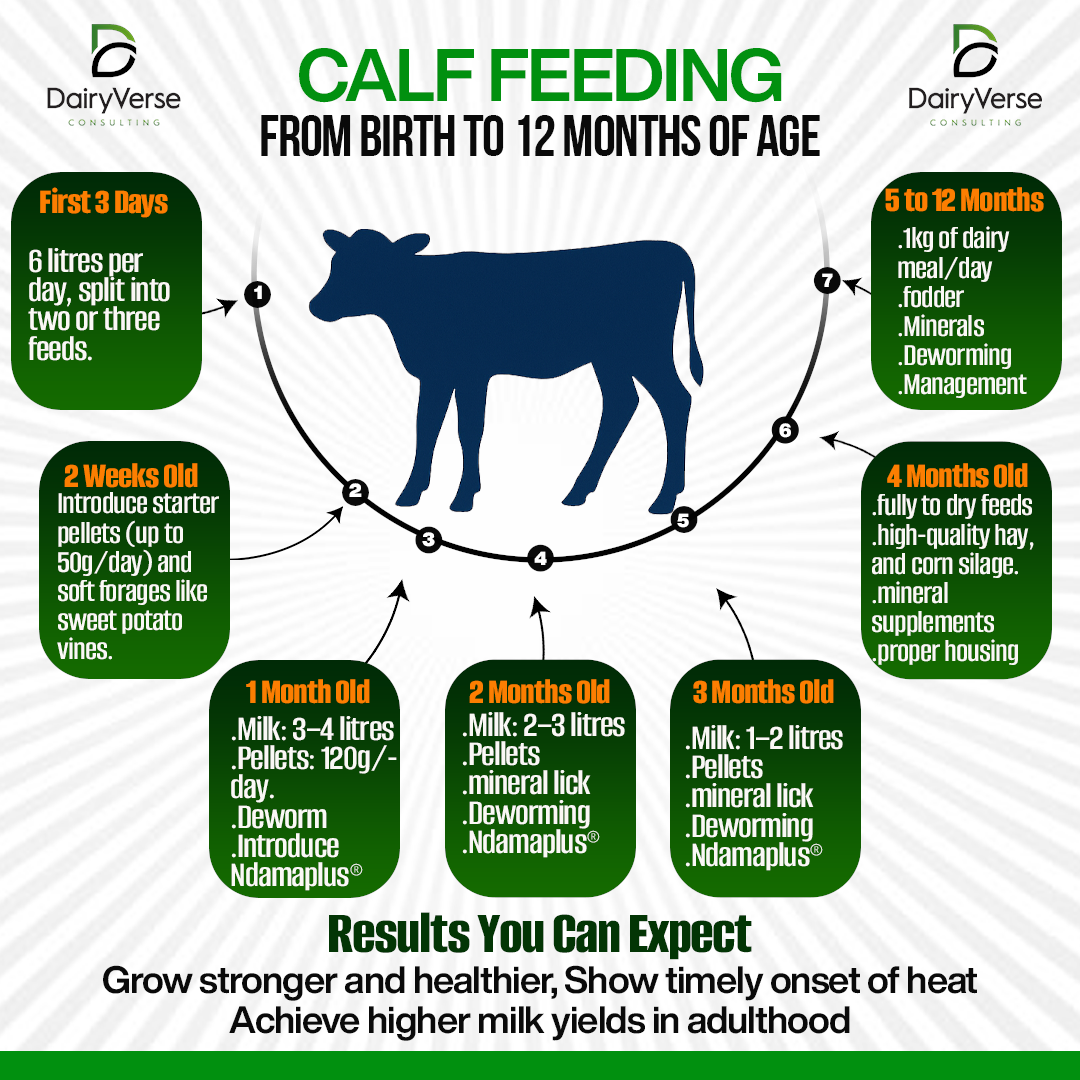
🔹 First 3 Days – Colostrum is Life
From the moment a calf is born, she must be fed high-quality colostrum—warm and fresh from the mother.
- Amount: 6 litres per day, split into two or three feeds.
- Tip: Do not allow her to suckle directly in commercial setups—use a bottle or bucket feeder.
- Hydration: Introduce clean water early. It helps her differentiate it from milk and prevents conditions like bloody urine (hematuria).
🔹 2 Weeks Old – Start the Rumen Journey
This is when we begin developing the rumen with soft solids.
- Feeds: Introduce starter pellets (up to 50g/day) and soft forages like sweet potato vines.
- These feeds promote rumen development, key for future digestion of roughage.
🔹 1 Month Old – Building the Base
By now, the calf is growing quickly and needs more energy.
- Milk: 3–4 litres/day (preferably whole cow’s milk).
- Pellets: 120g/day.
- Deworming: Deworm at this stage to remove internal parasites.
- Supplements: Introduce Ndamaplus® (12.5g/day) mixed into soaked pellets for immunity, growth, and stress reduction.
🔹 2 Months Old – Transition Phase
- Milk: 2–3 litres/day.
- Pellets: Continue starter pellets.
- Supplements: Maintain mineral lick use.
- Deworming: Repeat deworming.
- Maintain Ndamaplus® supplementation.
🔹 3 Months Old – Weaning Time
Begin preparing the calf to be fully weaned.
- Milk: Reduce to 1–2 litres/day.
- Pellets: Shift to finisher pellets.
- Minerals: Introduce a mineral block.
- Continue Ndamaplus® to reduce weaning stress.
- Deworming: Stay on schedule.
🔹 4 Months Old – Fully Weaned
- Transition fully to dry feeds.
- Feeds: Start on weaner meal, high-quality hay, and corn silage.
- Continue mineral supplements and proper housing.
🔹 5 to 12 Months – The Growth Stretch
This phase can be tough. Many calves experience slowed growth, weak health, or even death due to poor feeding. Here’s how to avoid it:
- Feeds: Provide 1kg of dairy meal/day, free-choice (ad libitum) access to hay and silage.
- Use high-quality fodder like Bhoma Rhodes or corn silage.
- Minerals: Continue mineral lick rich in calcium for bone development.
- Deworming: Every 2 months after 6 months of age.
- Management: Ensure proper housing, fresh water, and attentive observation by farm staff.
✅ Results You Can Expect
By following this structured feeding plan, your calves will:
- Grow stronger and healthier
- Show timely onset of heat
- Achieve higher milk yields in adulthood
For advice or struggling calves, reach out to Dairyverse Consulting—we’re here to help you raise champions.



Grateful for the guidance